

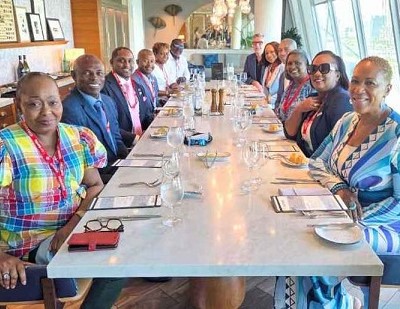
Amid the aftermath of Hurricane Melissa in October this year, Caribbean tourism ministers, directors and executives gathered aboard Royal Caribbean’s Icon of the Seas this month for an “Iconic Summit” hosted during the Caribbean Tourism Organization’s (CTO) second annual Caribbean Weekend in Miami, to discuss the cruise industry’s pivotal role in recovery and long-term resilience and growth.
Royal Caribbean International President and CEO Michael Bayley detailed his company’s rapid response to the crisis, including delivering more than 100 pallets of essential supplies, generators, food and water to Jamaica’s port of Falmouth, working with partners to support distribution in hard-hit areas, and helping to provide meals in affected communities. In a candid discussion with CTO Secretary-General & CEO Dona Regis-Prosper, Bayley said the company sees itself as part of the Caribbean community: “I think over the years we’ve always tried to support the Caribbean communities. Especially in times of crisis, we answer the phone, and we try our best.”
CTO Chairman Ian Gooding-Edghill, Barbados’ Minister of Tourism and International Transport, thanked Royal Caribbean and his regional partners for their compassion and generosity in supporting Jamaica and Haiti in the aftermath of Hurricane Melissa.
He also stressed the importance of building bridges between governments and the private sector, between countries and industries, and between challenges and shared opportunities. “The future of Caribbean tourism depends on our ability to reimagine together — to innovate, to collaborate and to believe in the boundless potential of our region,” he said, emphasizing data-driven policy, stronger connectivity and growth that prioritizes local communities.
Bayley called for “master planning” to ensure destinations can manage sustainable tourism development. He highlighted opportunities for cruise lines and destinations to collaborate and expand pathways to employment for Caribbean youth, including meeting with Caribbean labor ministers and industry leaders to address long-standing barriers to workforce participation. In addition, he elaborated on Royal Caribbean Group’s focus on forward-thinking sustainability initiatives such as environmental technologies, shore power systems, and resilient port development.
As the region welcomed millions of cruise visitors in 2025 despite setbacks, the summit delivered a clear message: with storms growing fiercer and more frequent, the Caribbean’s tourism engine remains vital to economies and jobs — and resilience must be built into every plan.
The event also featured cultural touches, including a Wizard of Oz performance and an appearance by the ship’s “Chief Dog Officer,” Rover, but the tone remained purposeful — including a call for all hands-on deck, and a reminder that tourism is everyone’s business.