Colors: Blue Color

Former NBA star, Shaquille O’Neal, knows a lot about basketball, but he’s also showing the world that he knows a thing or two about athletic footwear. He has proven his success by selling millions and millions of pairs of affordable shoes for kids at Walmart.

Shaq’s line of footwear is attracting a different market niche than the Michael Jordan Nike-Air Jordan lines, which sell for around $200. Shaq is focusing on selling footwear that is affordable — as little as $12.70, or $67.99 for his Reebok Shaq Attaq line. All of them are priced much lower than the Jordan line, offering budget-friendly shoe options for kids.

This isn’t Shaq’s first time at the rodeo, or should we say basketball game. In 2004, he partnered with Payless ShoeSource to sell his Dunkman athletic sneakers for under $40. His lines include his Shaq Zip-Up Basketball and Shaq Retro High-Top models which are sold online and in-store at Walmart locations across the country.

Although some critics are not as enthused about Shaq’s new line of budget-friendly footwear, the 7-foot former NBA basketball star who boasts winning championship titles with the Los Angeles Lakers and Miami Heat is not at all deterred. He has shown that not only can he play basketball, but he has a head for business. So, if the shoe fits, wear it!

O’Neal once posted on his Facebook page: “Laugh all you want, the Shaq brand has sold over 150 millions pairs of affordable shoes for kids @Walmart”


Haringey takes pride in its diversity and our Muslim community are a vital part of that. November has been Islamophobia Awareness Month, and as it comes to a close, I believe that it is an important time for us all to reflect on the discrimination that Muslims face in daily life and also pledge to work tirelessly together to defeat it.

This council has been taking steps to address Islamophobia locally. We held a series of webinars on Islamophobia during last month’s National Hate Crime Awareness Week and have established a Hate Crime Delivery Group which meets every three months to discuss police responses to hate crimes and how to improve outcomes for victims.

From November 2019 to October 2020, the number of Islamophobic hate crimes reported in Haringey has fallen 37% on the previous year. This is a bigger fall than the London average and shows positive progress. However, we know there is much more to be done to combat Islamophobia, and we lead on doing so.

Discrimination isn’t always as direct as hate crime. It can be unconscious. Latent. Hidden. Pervasive.

Studies show that the majority of references to Muslims in the British press are negative, and this taints the prism through which many people view the whole community.

Islamophobia awareness challenges each of us to look at our own behaviour, and to question our own views.

The responsibility falls on all of us to renounce negative stereotypes and assumptions whenever and wherever we encounter them, to challenge institutional prejudices, to help reduce stigmas that Muslims encounter on a regular basis, and to show our Muslim community that we stand alongside them against hate, now and at all times. 

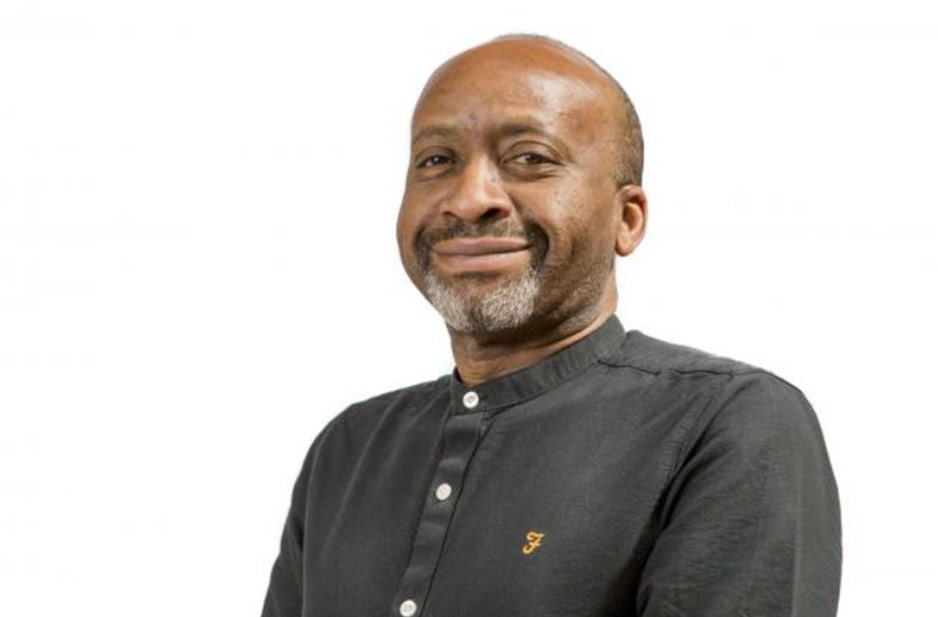
Councillor Joseph Ejiofor, Leader of Haringey Council

Under new Christmas advice, Santa's grottos will be allowed in all tiers if they're in venues that are permitted to be open and door-to-door carol singing will also be permitted, it has been confirmed in the government guidance. But people living in tier three in England, cannot attend a school nativity play - instead, they will have to live stream it or watch a recording.

Rules vary across the different nations of the UK and in different tiers.

Nativity plays will have to be performed within existing school bubbles, with no mixing across groups. Audiences in tier one and tier two areas will be subject to restrictions as well - like social distancing.

Santa's grottos can open if they are in venues that are permitted according to the tier that region is in. But "appropriate Covid-secure measures" like social distancing have to be in place as well.

Some have already made arrangements for Father Christmas to speak to children via video-streaming sites, instead of face to face.

Carol singing - and carol services - can take place, as long as those attending adhere to the advice on singing safely, which has been put together with the help of Public Health England. Its advice includes singing in well-ventilated areas and keeping distance from each other. Door-to-door carol singing is allowed too, but in groups of a maximum of six.

Special rules have to be in place because singing increases the risk of transmitting the virus through small droplets and aerosols in the air. The number of people at a carol event should be limited as well. Those performing professionally or as part of a supervised activity for under 18s are not limited in number, but should still follow the performing arts guidance - including things like wearing masks and managing capacity.

For any indoor events, joining in with singing will not be allowed this year. But people can sing if they are outside. Christmas bubbles can be in place from December 23 to 27, to allow up to three households to spend the festive period together.

People, in all tiers, can attend places of worship for services from December 2, but the rules on who you attend with depends on which tier you live in, with no indoor mixing allowed outside of tier one. However, people in the same Christmas bubble can attend together.

Christmas volunteering - which can be a key part of the season for many - is allowed, but it is recommended you do this from home.

The rules on shopping depend on whether the shop is indoors or an outdoor market - and on the tier you live in. This will not change for December 23 to 27 when bubbles are in place, and includes Boxing Day sales.

While Brits flocked to stores to stock up on paper and pasta during the first lockdown, they are now being urged to ensure they look after the third ‘p’ – their pets – during the UK’s new lockdown.


The whole country has been forced to adapt to a change in routine as the UK has gone on lockdown.


But family members with waggy tails have had to adapt too. And with many pet owners reporting changes in their pet’s behaviour since the start of social-distancing, even if they’re enjoying the constant company, it’s time to pay special attention to all our four-legged friends.


Experts say every pet will respond to lockdown in different ways. And some pets, accustomed to their owners leaving home during the week, may be confused or even stressed by the changes.


While the Government has recommended walks and outdoor exercise just once per day per member of the household, it means that homes with two or more people should take turns walking the dog, but households with one member must limit their dog walking to once per day – another confusing change for pets.


And pets who experience changes to their exercise schedule might well display behavioural problems such as restlessness, destructive chewing, going to the toilet inside or barking and whining.


So keeping on top of household cleaning is essential.


Susan Fermor, spokeswoman for Dr Beckmann – the makers of the new Pet Stain & Odour Remover, said: “We love our pets here at Dr Beckmann and there’s no doubt that they’ve been affected by lockdown as much as we have. The changes that come with this new lockdown can cause them huge stress, which can cause problems with their behaviour.


“We can’t stress enough the importance of looking after pets during this new lockdown, especially if they’re feeling out-of-sorts. That can result in increased mess in our homes too – with that change adding even more to their stress.


“So, with pets potentially being at home more, keeping your home clean is really important to help alleviate that stress, making things seem more normal for them too.”


Dr Beckmann has issued guidance on how to keep your home clean if you have pets, during lockdown.


Top Ten Extra Care Cleaning Tips for Pet-Loving Homes During Lockdown:


  1. Carpets - Whether it’s muddy paw prints or an abundance of dog/cat hairs, carpets are the battleground for all pet stains. If you’ve found that you’ve got mud on the carpet, resist the temptation to wipe at the stain. Let the mud dry and scrape off the dried dirt, then tackle the mark with a stain remover. Dr. Beckmann’s Pet Stain & Odour Remover is always handy to have in the cupboard – perfect for your mucky pups


  1. Floor - Floors often have unseen dirt and germs and need a deeper clean, especially when your pets are roaming free. Brushing hard floors and then mopping with anti-bacterial products is a good way to keep on top of the dirt and germs


  1. Pillows & cushions - These items will be getting some extra use during lockdown, who doesn’t enjoy cuddles with their pooch on the sofa?! As a result of this, these items need to be washed regularly. Place cushion covers in the washing machine and for cushion pads or pillows use a non-bio detergent and tumble dry


  1. Bedding - Similarly to the above, lockdown will potentially see people let their dog sleep in the bed with them. A treat for our pets, but can soon lead into a dirty disaster for us. To get rid of pet odour from your sheets, check the car label and then wash them on the hottest temperature possible. Hotter water can kill most germs and bacteria and will remove pets smelly scent


  1. Front doors - Door knobs, handles and letterboxes are common items that are usually forgotten about when doing your cleaning chores. When your four-legged friend is all hyped up ready for its daily walk, it’s likely that they’ll jump up at the front door – eager to escape lockdown. It’s important to regularly wipe down the front door with soap and water and apply a surface cleaner to the objects. Save money and time by not leaving the metal lift unwiped, the longer it is left the harder it’ll be to clean afterwards


  1. Clothes - Pet hair can get all over our clothing as many dogs aren’t hypoallergenic so use a roller or sticky pad to remove any pet hair from clothes before washing them. Tests have proven that washing your clothes at 60 degrees with a good detergent can be just as effective 


  1. Furniture - Similar to our clothes, as our pets lay on them for hours on end (alongside us) dog and cat hair can often remain on furniture, the best approach is to use a sticky roller or pad to remove visible pet hair followed by using the vacuum cleaner to capture any unseen hair and dust


  1. Car - Keeping your car clean is a tough task, especially when you’re driving home from a woodland walk. Invest in seat covers, which are easy to take off and place in the washing machine. If you don’t have covers, tackle tough seat stains with washing-up liquid and warm water. Use a damp cloth and sponge the stain until it disappears


  1. Stairs - As we spend more time in lockdown, the stairs will be getting extra use, so you’ll need to keep on top of these regularly. Firstly, tackle your stairs with a vacuum to make sure you remove all the extra dirt and debris. Then use Dr. Beckmann’s Carpet Stain Remover’s brush head to clean your stairs of stubborn stains and marks. If you have a pet in the home, then the Pet Stain & Odour Remover does the trick and helps eliminate the pet’s odour


  1. Pet bed and accessories - A pet’s bed, toys, blanket and any other accessory you have in the house have a tendency to pick up the strong pet odour, as they are used daily. Make sure you clean these regularly, a machine-washable pet bed is advised. Simply place the bed and the other accessories in the washing machine for a deep cleanse, which will leave the products smelling fresh and fur free (fingers crossed)


Dr Beckmann Pet Stain & Odour Remover is available on: dr-beckmann.co.uk


Sandwich residents stayed at home as the Mayor of the town led a hugely scaled back Remembrance Sunday service.


Only a handful of people attended the ceremony at the war memorial in Market Street while the hundreds who would usually turn out paid their respects from the familiar surroundings of their homes.


The Mayor of Sandwell, Councillor Doctor Ann Jaron, took part in a private ceremony for Remembrance Sunday at the war memorial in Dartmouth Park, West Bromwich.She was joined by the Deputy leader of Sandwell, Councillor Maria Crompton, the town lead for West Bromwich, Councillor Steve Melia, John Speller MP for Warley and Shaun Bailey MP for West Bromwich West.In honour of those who made the ultimate sacrifice, a bugler played The Last Post followed by the exhortation.


A two minutes silence was observed before the bugler played Reveille. There were prayers and blessings before a single wreath was laid by Cllr Graeme on behalf of the town.


The video was broadcast live on Sandwell Council's Facebook page and residents can watch the recording at: www.2343ec78a04c6ea9d80806345d31fd78-gdprlock/sandwellcouncil


Cllr Dr Ann Jaron said: “We were unable to commemorate these tragic losses in ceremonies attended by so many for the past 100 years because we are fighting a new battle, the tiny yet deadly enemy of Covid-19.


“Although we are unable to remember the fallen in the same way as usual that does not mean our respect has waned. It must not."Earlier The Mayor of Sandwell paid tribute at each of the other Sandwell towns; Oldbury, Rowley Regis, Smethwick, Tipton and Wednesbury. 

The UK's four nations have backed plans to allow some household mixing "for a small number of days" over Christmas.


It comes as Prime Minister Boris Johnson is due to unveil on Monday a tougher three-tiered system for England - to be introduced at the end of the current lockdown on 2 December.


The 10pm closing time for pubs and restaurants could also be relaxed.

Work to finalise the arrangements for a UK-wide approach to restrictions this Christmas is ongoing.


It is said that one option that has been discussed is that three households could be allowed to meet up "over a number of days, maybe five days".


The Cabinet Office said ministers from England, Scotland, Wales and Northern Ireland had endorsed a "shared objective of facilitating some limited additional household bubbling for a small number of days".


But they have emphasised that the public will be advised to "remain cautious", and that "wherever possible people should avoid travelling and minimise social contact".


Discussions are continuing - including about travel arrangements - but it is hoped agreement on the joint approach can be reached this week. The Scottish government said "no agreement has been reached".


In respect of Northern Ireland, ministers have also "recognised that people will want to see family and friends across the island of Ireland, and this is the subject of discussions with the Irish government", the Cabinet Office said.


More areas are set to be placed into the higher tiers in England, with ministers to identify the which areas will be in which tier on Thursday.


Some local measures will be the same as those in the previous three-tier system, which was in place in England until the current lockdown began. But some tiers will be strengthened, according to Downing Street.


The PM will detail the strengthened tiered system in a statement to the House of Commons on Monday, but full details of Christmas plans are not expected until after the first ministers of Scotland, Wales and Northern Ireland have consulted their own cabinets.


There have been calls by a cross-party group of MPs and peers for the PM to guarantee that church services will go ahead this Christmas, as current lockdown restrictions forbid most religious services.


The government's Scientific Advisory Group for Emergencies (Sage) is expected to publish research saying the previous tiered restrictions in England were not strong enough.


But 70 Tory MPs have said they will not back the proposals without evidence.

In a letter to the prime minister, the recently-formed Covid Recovery Group (CRG) said it cannot support a tiered approach unless it sees evidence measures "will save more lives than they cost".


MPs are expected to vote on the new tier system in the days before it comes into force.


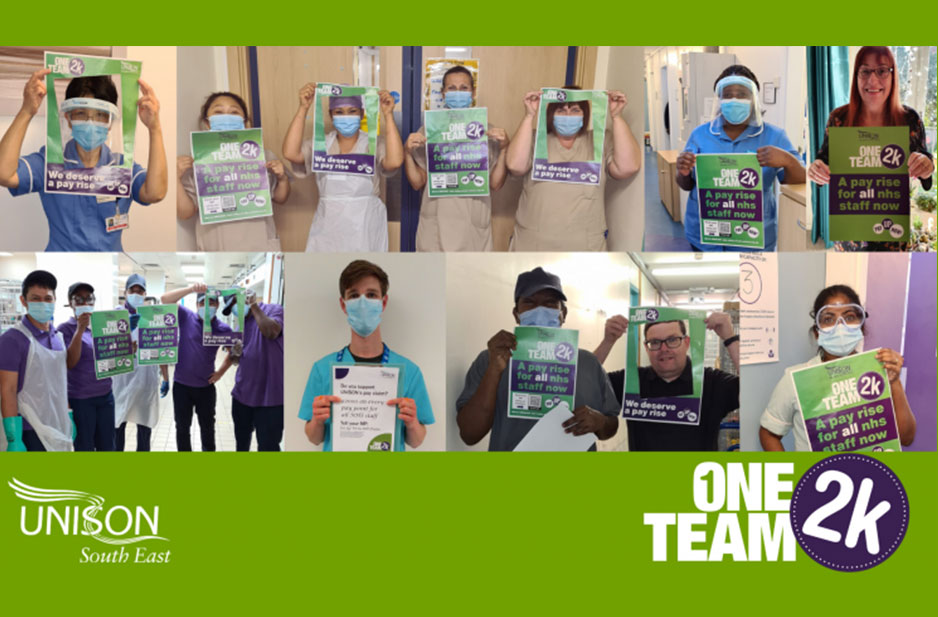
Health workers in the West Midlands urge local MPs to back early pay rise for exhausted staff and to protect the NHS


Health staff across the West Midlands – including nurses, paramedics, cleaners, domestics and porters – are writing to the region’s 59 MPs asking them to back UNISON’s call for NHS staff to get an early pay rise in time for Christmas.  


Staff employed in hospitals, clinics and ambulance stations across the West Midlands are urging local politicians to put their case to the government for a significant pay rise of at least £2,000 for every worker across the NHS.  


The NHS pay rise is due next April, but health workers, already worn out from the early stages of the pandemic, say bringing the increase forward would help staff feel more valued as the second wave surges.  


Bringing the planned wage rise forward a few months would also place the NHS in a better position to face the future, say West Midlands health workers.  


The pandemic has affected staff profoundly and many may choose to leave the NHS, such are the levels of exhaustion says UNISON. Raising pay this year could persuade staff to change their minds and make the NHS more attractive to thousands of much-needed recruits, adds the union.  


With the arrival of winter, the second virus wave and the increasing rates of infection, UNISON believes now is the perfect time for the government to show the high regard in which ministers say they hold NHS staff.   


UNISON West Midlands regional head of health Franco Buonaguro  said: “Health workers are exhausted from the first virus peak. They’re now dealing with the second wave and a backlog of cancelled treatments. 


“We can rely on them as always to protect and care for us all. But staff are fearful and anxious because they know what lies ahead. 


“Now is the time for a significant pay rise from the government. Workers doing the job would then feel valued, and an increase could attract much-needed new recruits.”     


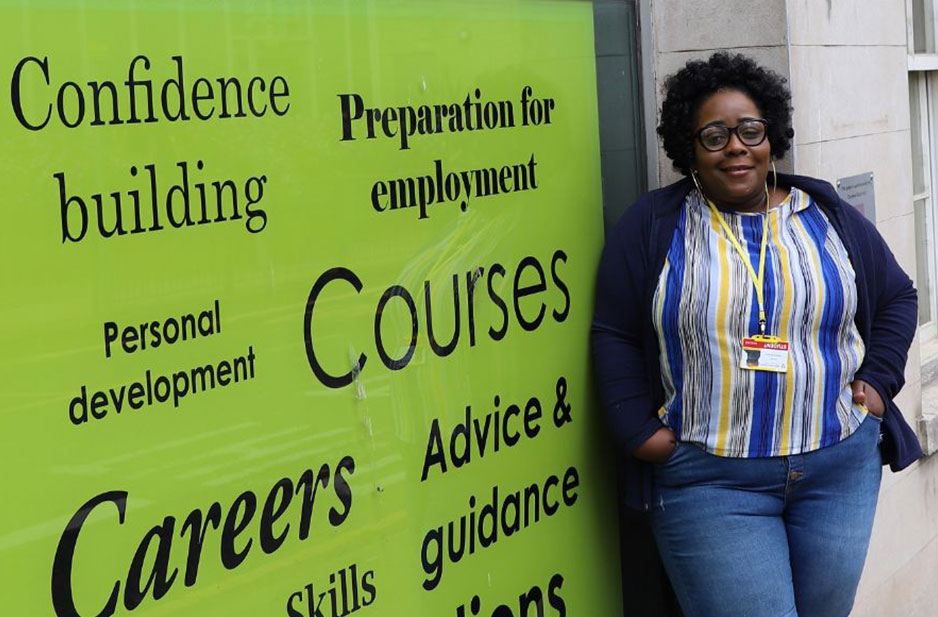
A woman who moved to the UK to seek urgent treatment for her son has been recognised for transforming her life through learning with Adult Education Wolverhampton.

Karen Hanley-Brooks was a finalist at this year’s Festival of Learning, the biggest celebration of lifelong learning in England.

She grew up on the Caribbean island of St Kitts, but dropped out of school early because she wanted to work. She said: “Little did I know that education was the foundation I needed to build on.

“In 2016 my children and I had to move to the UK because my son needed urgent medical support for his autism.

“Being a single mother of two without any family living here was very challenging, and I saw that going back to learning was the only way to better myself and to have a brighter future.”

Karen’s learning journey began with an Entry Level 3 Functional Skills English course with Adult Education Wolverhampton. Through her hard work and dedication, she quickly progressed to a GCSE course and volunteered with the Talk English programme to help others improve their English language skills.

She said: “Learning has given me hope and confidence and built my self-esteem. Both my experience of dealing with my non-verbal son and the English language skills I have gained at Adult Education Wolverhampton have allowed me to help other people whose first language is not English.

“My greatest motivators are my children, especially my son who never allows his disabilities to discourage him from being the best he can be. Through learning, I have not only developed knowledge and skills for myself but am able to use these to help my children develop their own lives in a positive way.”

Tutor Craig Watkiss said: “Karen’s dedication to her children shines through when she talks about her improvements in class and she is rightly proud that her skills enable her to better support them. Her hard work and dedication to improving her skills has also resulted in her achieving a Grade 5 qualification in GCSE English Language, including a distinction for her spoken assessment, which is yet another terrific achievement. She is a credit to herself, her children and to Adult Education Wolverhampton.”

Also nominated for this year’s Festival of Learning were BSL (British Sign Language) student Jay Portman, who said: “With the skills acquired with Adult Education Wolverhampton, I plan to progress to a level 5 counselling diploma and continue my journey improving peoples’ wellbeing. This course has really helped me to focus and forge a career pathway as a counsellor, which fits perfectly with my life goal of assisting others.”

There were also nominations for the Life Skills Tale of 2 Cities project, which widened the horizons of 10 Wolverhampton students with learning disabilities by joining them with students attending classes at two arts organisations in Gloucester, and the All4Art art cooperative, providing students with opportunities for further learning, development of skills and support with their mental health and wellbeing.

Councillor Dr Mike Hardacre, the City of Wolverhampton Council’s Cabinet Member for Education and Skills, said: “Each year we are proud to be part of the Festival of Learning to highlight the benefits of learning, celebrate the achievements of adults in Wolverhampton who have used education to transform their lives, and to encourage everyone to embrace lifelong learning.

“This year we submitted four nominations to the awards, two individual learners and two groups, all truly inspiring, each highlighting the benefits of learning and the inspiring confidence that this brings. I would like to congratulate them, and in particular Karen on her outstanding achievement.”


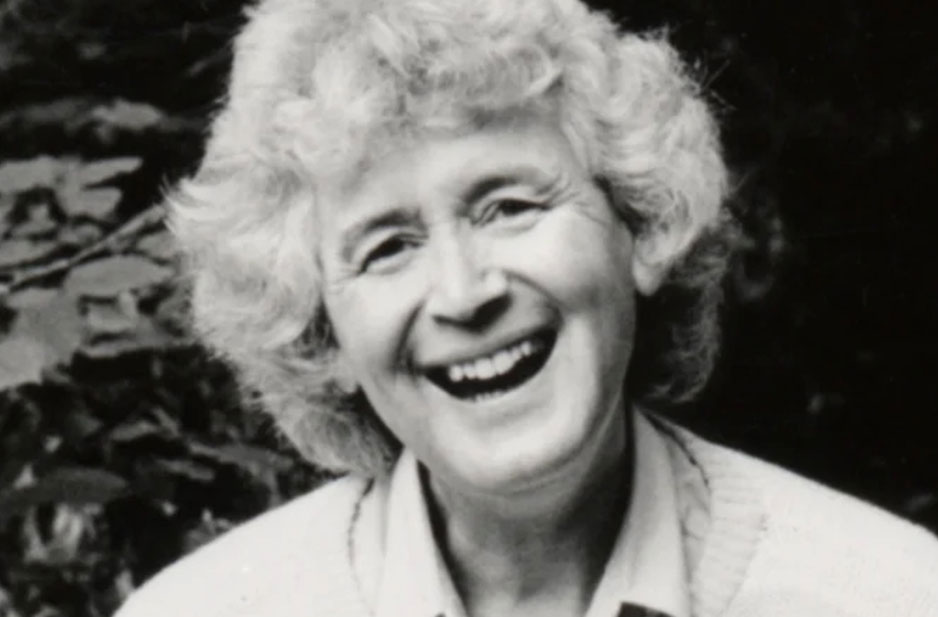
Prolific travel writer, journalist, soldier and novelist Jan Morris has died aged 94.

Morris wrote more than 40 books including a notable trilogy about Britain's empire, Pax Britannica, during the 1960s and 70s.

In 1972, she transitioned from male to female, undergoing gender reassignment surgery and changing her name from James to Jan.

Her son Twm announced her death, saying she was on her "greatest journey".

"This morning at 11.40 at Ysbyty Bryn Beryl, on the Llyn, the author and traveller Jan Morris began her greatest journey. She leaves behind on the shore her life-long partner, Elizabeth," he said.

Elizabeth was Morris's wife before Morris transitioned - they had five children together and stayed together, later entering a civil partnership. One of their children died in infancy.

Morris told Michael Palin in 2016: "I've enjoyed my life very much, and I admire it. I think it has been a very good and interesting life and I've made a whole of it, quite deliberately.

"I've done all of my books to make one big, long autobiography. My life has been one whole self-centred exercise in self-satisfaction!"

She is arguably most famous for her widely admired travel writing, and Palin said: "She's kind of a non-fiction novelist. She creates an image and a feeling of a place that stays in your mind."

Author Kate Mosse, whose books include Labyrinth, paid tribute to an "extraordinary woman".

Journalist Katherine O'Donnell added her "public visibility and account of her transition... let others like me know they were not alone".

Labour MP for Cardiff North Anna McMorrin added that Morris was "an incredible writer, pioneer and historian".

Morris's book Venice, about the Italian city, is considered to be a classic by The Guardian.

Palin said it was "one of the most influential books of my life".

"Her description of the city transcended any conventional travel writing I've come across. Morris's heart and soul was in the book. It was like a love affair," he said.

"Her book started my own love affair with the city, which has lasted all my life. And as a writer she taught me the importance of curiosity and observation."

The author also wrote fiction, however, and her book Last Letters from Hav made the Booker Prize shortlist in 1985. It was a novel written in the form of travel literature.

Morris was particularly renowned as a journalist for announcing the ascent of Everest, in an exclusive scoop for The Times in 1953.

'Powerful and beautifully written'

Travelling as James, she accompanied Edmund Hillary as far as the base camp on the mountain, to witness the historic attempt on the summit.

The news was announced on the same day as the Queen Elizabeth's coronation. Later, in 1999, she accepted a CBE from the Queen, but said it was out of politeness.

Morris wrote about her transition in her 1974 book Conundrum, which was hugely successful.

She wrote in the book about having surgery in a clinic in Casablanca. The Guardian described it as a "powerful and beautifully written document".

The writer told the Financial Times in 2018 she did not think her gender reassignment had changed her her writing, saying: "Not in the slightest. It changed me far less than I thought it had."

She added that she did not think she would have achieved more as a man.

When not abroad, her home was in Gwynedd in Wales, where she held staunchly nationalist views and was honoured by the Eisteddfod for her contribution to Welsh life.


Obituary: Jan Morris, a poet of time, place and self


Jan Morris

Born

James Humphry Morris[1]:4
2 October 1926
ClevedonSomerset, England

Died

20 November 2020 (aged 94)[2]
PwllheliWales

Occupation

Writer

Nationality

Welsh

Genre

Non-fiction, travel writing

Spouse

Elizabeth Tuckniss

(m. 1949)​

Children

5 (1 died in infancy)

Website

janmorris-blog.tumblr.com


Jan MorrisCBEFRSL (2 October 1926 – 20 November 2020) was a Welsh historian, author and travel writer. She was known particularly for the Pax Britannica trilogy (1968–1978), a history of the British Empire, and for portraits of cities, including OxfordVeniceTrieste, Hong Kong, and New York City. She published under her birth name, James, until 1972, when she had gender reassignment surgery after transitioning from male to female.

She was a member of the 1953 British Everest expedition, which made the first ascent


Jan Morris, who has died at the age of 94, was one the finest writers the UK has produced in the post-war era.

Her life story was crammed with romance, discovery and adventure. She was a soldier, an award-winning journalist, a novelist and - as a travel writer - became a poet of time and place.

She was known also a pioneer in her personal life, as one of the first high-profile figures to change gender.

Born 2 October 1926 in Somerset and named James, it was while sitting under the family's piano - at the age of three or four - that Morris made a decision. Feeling "wrongly equipped" as a boy, there was only one conclusion. Morris should have been a girl.

Morris attended Lancing College in West Sussex and then the cathedral choir school at Christ Church in Oxford, attending lessons in gorgeous "fluttering white gowns". "Oxford made me," she later wrote.

The heady mixture of High Anglican ceremony and the city's architectural majesty sensitised Morris to an aesthetic that was to influence her as both a writer and a human being.

As a teenager, training as a newspaper reporter in Bristol involved interviewing the victims of bombing raids at the height of the Second World War.

Morris tried to join the Navy but was ruled out by colour-blindness, instead joining the 9th Queen's Royal Lancers.

A spell at Sandhurst was followed by a posting as an intelligence officer that led to stints in Italy and Palestine by way of two more cities that came to be inspirations: Venice and Trieste.

Demobbed in 1949, Morris returned to Christ Church to read English, and seized the opportunity of a 12-month fellowship at the University of Chicago to visit every state of the union.

The result was a first book, Coast to Coast. "I love the idea of America," she later wrote. "It has let itself down very badly since in many ways, but that doesn't mean to say I don't admire and love the core values."

Everest scoop

Upon graduating, Morris indulged a fascination with the Arab world by taking a job at a news agency in Cairo. That experience eventually led to a job at The Times.

In 1953, Morris brought the newspaper a world exclusive, travelling with Edmund Hillary as far as the base camp on Everest to witness the historic attempt on the summit.

It was a physically arduous assignment. "I was no climber, was not particularly interested in mountaineering. I was there merely as a reporter."

When Hillary and Tenzing Norgay returned in triumph, The Times had exclusive access to the expedition - but the reporter was terrified that someone else might break the news first.

Morris sent a coded message from a telegraph station: "Snow conditions bad stop advanced base abandoned yesterday stop awaiting improvement." Back in the newsroom, they knew what it meant.

The news was famously splashed on the day of the Queen's coronation. The world's highest mountain had been conquered and a new Elizabethan age had begun.

Later that year, Morris married Elizabeth Tuckniss, the daughter of a tea planter. It was, they both recalled, love at first sight - and a partnership that would produce five children and last for 70 years.

Suez shockwaves

In 1956, Morris left the Times - unable to support the newspaper's editorial line in the Suez crisis. After joining the Manchester Guardian, as it was still called, the journalist set out to witness the looming conflict first-hand.

Allegations that Britain and France had secretly persuaded Israel to launch an invasion of Egypt had been hotly denied by all three countries. Morris discovered evidence that this was a pack of lies designed to give the two European powers an excuse to intervene and re-take the all-important canal.

Morris witnessed the fighting in the Negev desert and canal zone before flying to Cyprus to file a dispatch and escape Israeli censorship. While waiting for a flight, the writer struck up conversation with French pilots who said they had played a pivotal role in the attack.

"They told me quite frankly that they had been in action in support of the Israelis during the Negev fighting and had used napalm," Morris later recalled. British pilots, they claimed, had also been involved.

The Manchester Guardian went with his story. It sent shockwaves through the British establishment and shamed both nations into withdrawing their forces. It was an incendiary revelation that caused huge embarrassment to Prime Minister Anthony Eden. A few months later, he resigned.

A writer who travels

In the 1960s, Morris left journalism, preferring to be simply known as a "writer who travels" rather than a "travel writer".

Morris wrote about places that were inspirational - Oxford, Venice, Spain and the Arab world - with the dream of capturing the history, style, spirit and challenges facing every major city in the world.

Most dear of all was the trilogy on the history of the British Empire: Pax Britannica. Morris described it as "the intellectual and artistic centre-piece of my life". Later, the author would reject the suggestion of being too kind to this period history.

"There was a whole generation of very decent people, many of whom were genuinely devoted to the welfare of their subject peoples," she later said. Although, she conceded, the end was a mess.

In the same year, Morris began taking female hormones in the first stage of the life-long ambition to become a woman. Elizabeth, who had always known of her husband's conviction, was supportive.

Morris had a high public profile and the publicity that surrounded it was stressful. As same-sex marriages were not then possible, they were required to get divorced. But as a family, they stayed together and remained tight-knit.

Morris wrote about the process in her worldwide bestseller Conundrum - published in 1974. It describes the clinic in Casablanca where she had surgery and her subsequent adjustment to life as a woman with a female partner. She was generous to those who found it awkward and "the kindly incomprehension of sailors and old ladies".

She was forced to ignore warnings from doctors that the procedure could change her personality and even affect her ability to write. The book was the first to be published under the name Jan. There was a sense in which all that travelling was a symptom of forces beyond her control. It was "an outer expression of my inner journey".

The couple moved to a remote corner of north-west Wales. Jan embraced her father's Welsh identity - becoming a convinced nationalist - and continued to write. Her output was prodigious. In all, she wrote more than 40 books - so many that she was often a little hazy about the exact number.

There were works on places she had visited, essays, memoires and some well-received novels. One work remains unpublished because she did not want it made public until she died. "It's at the publisher's waiting for me to kick the bucket," she breezily told one reporter.

On Oxford - the first city to inspire her - she wrote: "The island character of England is waning as the wider civilization of the West takes over. Soon it will survive only in the history books: but we are not too late, and Oxford stands there still to remind us of its faults and virtues - courageous, arrogant, generous, ornate, pungent, smug and funny."

And on Venice - perhaps her most celebrated work - she recalled the "smell of her mud, incense, fish, age, filth and velvet" and predicted that "wherever you go in life you will feel somewhere over your shoulder, a pink castellated, shimmering presence, the domes and riggings and crooked pinnacles".

Her biographer and agent, Derek Johns, described what he thought made her writing so distinctive. "She involves the reader," he wrote, "while she remains unobtrusively present herself; who uses the particular to illustrate the general, and scatters grace notes here and there like benefactions. She is a watcher, usually alone, seldom lonely, alert to everything around her."

In 2018 - by now in her tenth decade - Jan Morris published In My Mind's Eye, a personal work collecting the musings of her everyday life.

The world had become kinder to people who had changed their sex, she told one journalist. Kindness and marmalade were her two essentials in life.

She was still living in Abergavenny with Elizabeth - with whom she had entered a civil partnership - although the "subtle demon of our time, dementia, is coming between us", she wrote.

As far as death was concerned, though, they had prepared for it. As a writer, Jan had chosen the words for their eventual headstone with some care. "Here are two friends," it will say, "at the end of one life."


 

A much-loved bishop and pioneer was laid to rest as the congregation of Mount Peniel Church of God in Christ Apostolic in Stafford and the wider community lined the streets to pay tribute to Bishop Dr. Joshua Emanuel Brooks who died following a short illness at his home.


Well-known and well-respected as a community leader, Bishop Brooks first arrived in the UK from St Catherine in Jamaica in 1956, before first settling in Dudley, then moving to Stafford in 1957 and later becoming a landlord to immigrants from countries such as his native homeland, Ghana, Nigeria and other countries.


He also set up services such as feeding the homeless and teaching people to drive for free.


His passion attracting hoards of people to his Mount Peniel Church of God in Christ Apostolic from across the region before setting up churches in Wolverhampton and the USA.


He also lectured at schools and colleges in Stafford and acted as minister for Drake Hall Prison Eccleshall, Stafford Prison and Winson Green Prison Birmingham.


Married for 62 years to his wife Catherine, he is survived by nine of his children, who have taken up roles as pastors, church ministers and entrepreneurs.


He was 91.

A Wolverhampton business has been praised after raising more than £25,000 to support the city’s NHS Trust tackle the Covid-19 pandemic.

SCP Forgeco Ltd, based in Meadow Lane Bilston, used the money it raised to source PPE, coveralls and hand sanitiser for New Cross Hospital to help NHS staff on the frontline. The donation has been praised by Councillor Stephen Simkins, City of Wolverhampton Council Cabinet Member for City Economy, who said: “This is a remarkable achievement and demonstrates the spirit of generosity shown throughout Wolverhampton.

“It underlines the ‘One City’ approach taken to tackling the pandemic and I’d like to thank the SCP Group, other businesses in the construction industry and the general public who came together to support the NHS.”

The scaffolding fitting manufacturer supplies equipment to construction sites across the globe. But following a family bereavement in April for SCP Forgeco’s Managing Director, Ranjit Dale, and witnessing the huge demand for PPE at New Cross Hospital, he launched a fundraising campaign.

His family kickstarted it with a £10,000 donation and many of the company’s customers in the construction industry, plus the general public, donated generously to reach the bumper figure of £25,755. The company then secured an agreement with a UK supplier to provide large numbers of PPE equipment suitable for NHS staff at New Cross Hospital.

Mr Dale said: “After seeing the amount of PPE that was used daily by the staff, I wanted to see if I could help. At that point I felt it was my duty using our UK connections to source the necessary PPE and this led to our very successful just giving fundraiser. I would like to personally say thank you to everyone in my company, associated companies, family, friends and everyone that donated to our cause.”

Rachel Robinson, Community and Events Fundraiser at The Royal Wolverhampton NHS Trust, said: “We are very grateful for SCP Group’s generosity and wonderful donation. Our staff are doing a fantastic job in exceptionally challenging circumstances and this donation will help keep them and the people they are caring for safe.”

SCP Forgeco is one of many city businesses to benefit from City of Wolverhampton Council’s Aim for Gold programme which provides business and investment advice and access to grants.

Councillor Simkins added: “We’ve been working closely with SCP Forgeco for some time now and it’s good to see that despite the pandemic, they remain strong. The ‘Aim for Gold’ programme is open to all small and medium sized businesses in the City of Wolverhampton. The support we can offer can be critical, especially in these difficult times. It gives the businesses the support they need to help them continue to thrive and grow, and to look ahead to better times once the pandemic is over.”

To check the eligibility criteria and to register your interest for the council’s Aim for Gold programme, visit: www.investwolverhampton.com/aimforgold.

Despite the bounceback for retail following the first nationwide lockdown, interest in Black Friday has fallen dramatically since the closure of non-essential shops, according to research from PwC. Just 36% of West Midlands consumers are either interested or planning to buy something in the Black Friday sales, compared to 56% last year. 


Before lockdowns were announced in England and Wales, Black Friday spending in the UK was estimated to increase by 8% to £8.4bn this year. However, a major shift in enthusiasm for the event means overall Black Friday spending will instead decline by 20%, from £7.8bn in 2019 to £6.2bn this year.


Interest in spending on Black Friday has fallen the most amongst 18-25 year olds, from 82% to 44%. In fact, 25-34 year olds are now more likely to be shopping over Black Friday than under 25s, who had been the keenest age group before the English lockdown was announced.


Given the closure of non-essential physical stores in England and COVID-19 restrictions across the UK, it’s no surprise that this year, 81% West Midlands consumers expect to do their Black Friday shopping online. This acceleration in the move to online shopping for Black Friday is mirrored by a shift across wider retail this year.  


As online shopping increases again in lockdown 2.0, retailers and delivery companies already stretched to capacity will face huge logistical challenges. However, one difference in restrictions in this lockdown is that non-essential retailers may offer click and collect services and this is expected to account for 8.5% of Black Friday spending in the West Midlands, with highest interest amongst 25-34 year olds (15%). 


Promisingly, (41%) consumers in the West Midlands interested in Black Friday will spend more than last year. For these consumers, forced savings from cancellation of holidays and going out less are being redirected into retail.  


Almost a third of people surveyed (32%) in the West Midlands, said they would be doing more of their Christmas shopping over the Black Friday sales this year. This is as much a result of concerns about the ability to get to shops, avoiding crowds or receiving timely deliveries in December, as it is about wanting to secure a bargain. 

As in previous years, the survey also found a gender divide in habits on Black Friday, with men intending to spend over 50% more than women, reflecting their interest in big ticket electrical and technology items. Women are more likely to be looking for Christmas presents and health and beauty products, which this year overtook fashion amongst their top 3 sale shopping categories. 


Sarah Phillips, Retail & Consumer Leader at PwC in the Midlands, said;“Black Friday continues to be a critical sales period for many retailers, and an integral part of promotional activity in the run up to Christmas. Lockdown 2 could not have come at a worse time, as retailers were beginning to get back on their feet and recoup losses from earlier in the year. With the outlook to Christmas uncertain, retailers will be fighting for every pound of consumer spend over Black Friday, whilst hoping that the restrictions don't last beyond 2nd December.

“However, we know that consumers are resilient and there is no doubt they will return to shops, as we saw when the first lockdown was lifted and when the firebreak lockdown ended in Wales. In the meantime, retailers who can continue to prove their adaptability and reliability in responding to customers needs will benefit. For example, operating click and collect services on Black Friday is a key difference for this lockdown and will be a saving grace for some. Being accurate on stock availability and delivery times will be rewarded.  

“Recent announcements of new vaccines’ being developed will help lift the nation’s mood and so it’s still all to play for in December and much opportunity for the nimble retailers to pick up sales.”

Also known as the Festival of Lights, Diwali is one of the biggest celebrations in the Sikh, Hindu and Jain calendar. Fireworks, candles and oil lamps, as well as special meals with family and friends, usually add to the festive mood.


This year, however, restrictions on social gatherings because of the pandemic and the current lockdown, means that many public events have been cancelled.


Diwali celebrations go ahead for 2020, but with a technological twist. And as one of the annual events caught up in the nationwide lockdown, Diwali cannot go ahead as normal but organisers of the usual city centre festivities have come up with an alternative.


Normally the Festival of Lights event is held on Victoria Square in Birmingham city centre, but due to Covid-19 restrictions, this year’s celebration is being held virtually via social media. Diwali on the Screen is featuring new and traditional singing, folk dance and performances from established and up and coming acts.


The Consul General of India, Birmingham, Dr Shashank Vikram, said: "Diwali is perfect example of community cohesion and these joint celebrations are perfect representation of how darkness continues to be defeated and UK’s multiculturalism is celebrated.


"At a time of great national and international difficulty, the need for festivals that brings light into our world has never been more important.


"I hope that, even though celebrated virtually this year, its message of light, hope and joy will resonate the same feeling.”


The free-to-watch online event is being streamed.

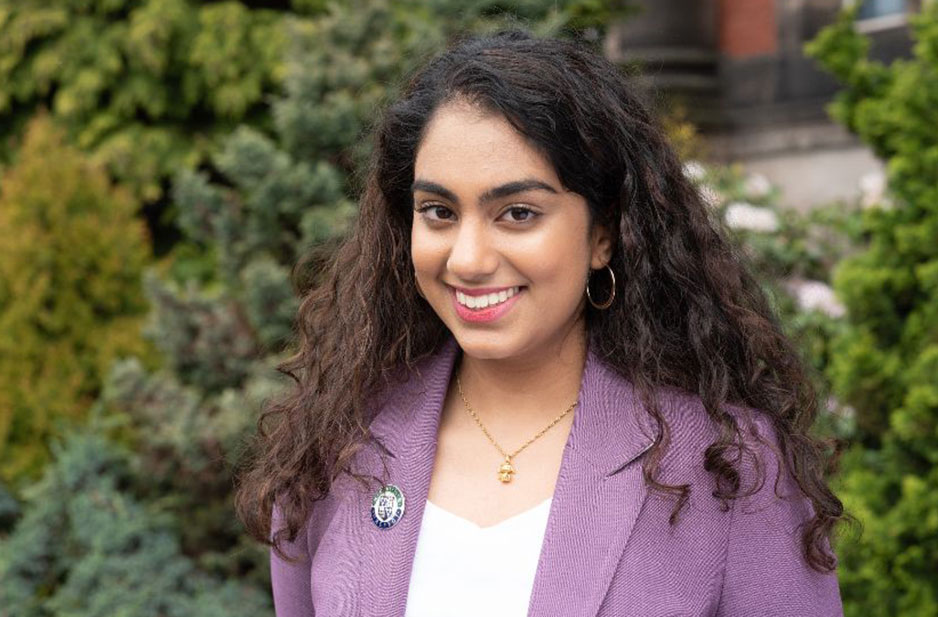
Despite the coronavirus pandemic, 26 extraordinary people from across the UK are being recognised with the coveted British Citizen Award. One of them is Sophia Kaur Badhan from Sutton Coldfield, West Midlands. Due to the current government restrictions banning large gatherings indoors, the usual grand medal presentation ceremony at The Palace of Westminster is unable to take place. For the first time in its history, Sophia Kaur Badhan and the remaining 25 medalists will receive their BCA medals by courier, together with a video message from some of the Patrons and an invitation to the House of Lords at a date yet to be determined, when it is safe to do so.


The British Citizen Award (BCA), in association with One-Stop, is now in its fifth year and recognises exceptional people who positively impact their communities. Sophia is honoured with a BCAh for Services to Healthcare.


In 2016 whilst studying her GCSE’s Sophia was diagnosed with an eating disorder and was hospitalised for 7 months.  Whilst she underwent an intensive treatment and rehabilitation programme Sophia struggled significantly with her mental health. On her return to school, she recognised the need to support educational establishments in helping to recognise, guide and support students at risk of similar diagnoses. 


Sophia took this on as her personal responsibility and as a result she has since had great success in educating young people on how to spot the signs of a serious change in their mental health and how to reduce the stigma surrounding eating disorders. During the last 5 years she has organised, executed and designed a series of events to support this important initiative. 


In 2018 Sophia led a school-wide campaign asking over 1,000 students to wear funky odd socks for the day in order to ‘Sock it to Eating Disorders’,  raising money for the charity BEAT. Within school, Sophia was also a lead Anti-Bullying Ambassador, which means she led a team of 15 pupils and 2 teachers to improve responses to bullying in school.


In addition to her work within her own school, Sophia has been appointed a Diversity Lead for the mental health youthboard ‘Think4Brum’, which is part of Birmingham Women's and Children's NHS Foundation Trust.  Sophia has represented Think 4 Brum on a national level at the Royal College for Paediatric and Child Health Conference, sharing her experience and her insights to over 300 clinicians.  This led to Sophia being a representative for young people at health-related events and meetings and she now sits on a number of advisory boards to support provision across the city and beyond.


Jonny McQuarrie, Managing Director from BCA partner One Stop, said:“Every time a new group of medalists are selected we are reminded of the great voluntary work that takes place across the nation. We serve many communities through our One Stop convenience stores and we know how vital this work is.


“The individuals that are being recognised reflect all that is good about community spirit.  It is important, now more than ever, for us to be involved in the BCA awards and we are privileged to play a small part in helping them to be recognised. Our congratulations go to all 25 honourees”,


Messages of support were sent via video from One Stop, Experian, Specsavers, Places for People and Objective HR who have all continued to support the BCA throughout the pandemic. Co-Founder of The British Citizen Award, Mike Faulkner said: “Whilst it is bitterly disappointing not be able to present these people with their medals in person, we are determined to recognise them for their exceptional endeavours. Thanks to our sponsors, supporters and patrons they will still have the full British Citizen Award experience when we can safely gather indoors in larger numbers.


“The 26 medalists’ commitment to others and to making society better for everyone, was the driving force for us to unite them with their medals at the earliest opportunity. Whilst some recognition programmes are regarded as elitist, The BCA remains accessible to everyone who has not been recognised by the Crown for their selfless endeavours and welcomes nominations year-round. By highlighting the commitment of people like Sophia we aim to make positive impact in the community the norm rather than the exception”.


The British Citizen Award was established in 2015, and recognises true community heroes who would otherwise likely be overlooked. Dubbed ‘The People’s Honours’, many recipients have subsequently been selected to receive a Queen’s Honour after their endeavours have been recognised with a BCA.


Each Medal of Honour bears the words ‘For the Good of the Country’ and are presented to only a small number of exceptional individuals twice yearly. The British Citizen Award is widely viewed as the nation’s way of recognising extraordinary, everyday people for exceptional endeavor and are truly representative of today’s multicultural Britain.


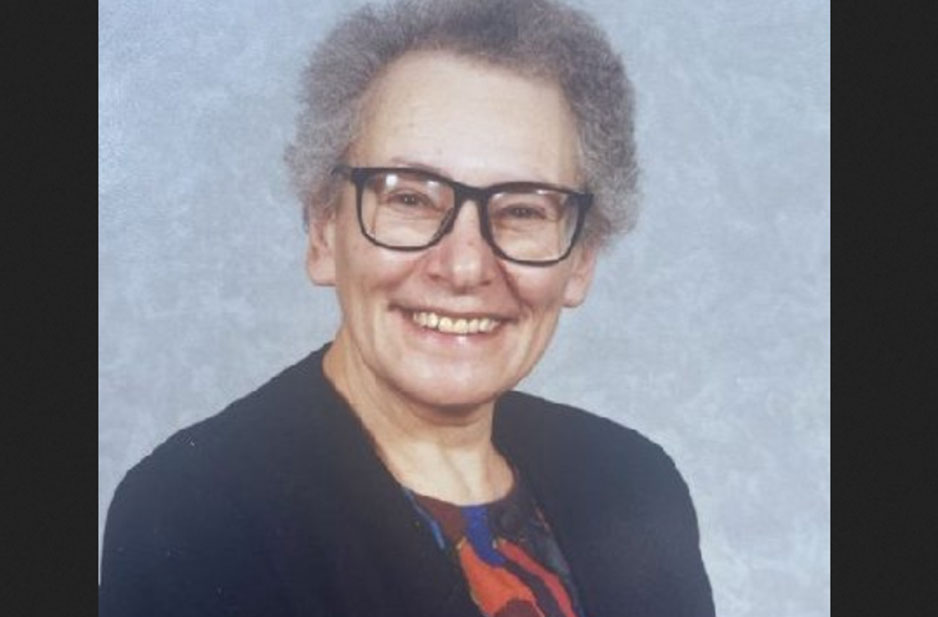
The first and only female leader of Birmingham City Council has died.

Theresa Stewart died after a "long illness", her son, Henry, posted on Twitter, adding his mother's illness was not coronavirus-related.


The current council leader, Ian Ward, said she was "an amazing, inspirational and compassionate woman, who made a huge difference" to her city.


Mrs Stewart was a member of the Labour Party for 72 years, her son said.


She was elected as a Labour councillor for Billesley ward in 1970 and held her seat for 31 years, becoming council leader between 1993 and 1999 and led campaigns on women's rights, she met Nelson Mandela and, again, was – and still is - the city council's first - and so far only - female leader


The deputy leader of Birmingham's Labour administration, Brigid Jones, said Mrs Stewart encouraged her to become a councillor, adding she was "an absolute inspiration".


Former cabinet member and one-time acting leader of the Labour Party, Harriet Harman, said Mrs Stewart was a "pioneer" for women's equality and representation, adding she was a "truly exceptional woman".


Mrs Stewart also served as the city's mayor.


When she gained the position of leader of Europe's largest local authority in 1993, it made her one of the most influential women in politics at the time. She was hugely influential in the second city - and still its only female leader.


During her time as a councillor, she helped find the Birmingham Pregnancy Advisory Service, and campaigned to make sure family allowance was paid directly to mothers.


Her son Henry described how she saw her role as a Labour councillor as "doing for poor people what lawyers do for rich people".


He also described how, aged 87, she was still out campaigning door-to-door for the party during the 2017 General Election.


The multitude of tributes from across the political spectrum in Birmingham and beyond is testament to a woman described as a political icon.


She was 90.

A kit to control bleeding has been placed at the scene of a stabbing.


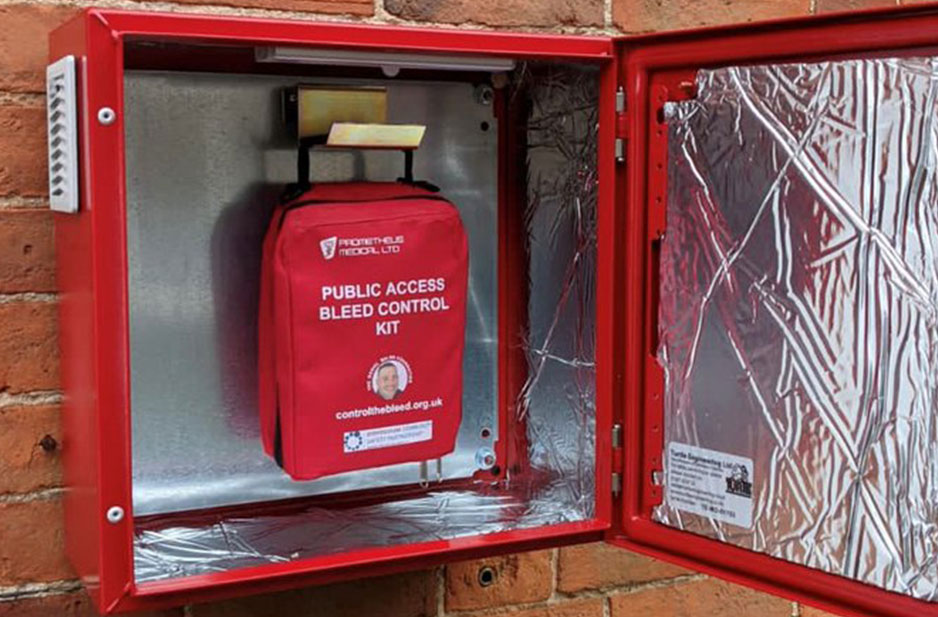
The bleed-control kit, mounted in a cabinet on a wall, was installed on Hurst Street, Birmingham where a woman was critically injured in a series of stabbings in the city in September. It follows a campaign by Lynne Baird, whose son Daniel, 26, was killed in a dispute outside a pub in the city in 2017.


The bleed control cabinet, which contains a tourniquet, bandages, scissors and gloves which can be used by members of the public,and isaccessed through a code provided by the ambulance service, is designed to prevent a catastrophic bleed while paramedics travel to the scene of a stabbing.


Working in partnership with the Daniel Baird Foundation, Turtle Engineering designed and built the cabinet in the UK and have worked closely with West Midlands Police on the location of the first installation.


Mrs Baird said she believes the kits could save lives and hopes they will be installed around the country.


“We were delighted with this joint collaboration with Turtle Engineering”, she said. “These public access kits are a vital tool in saving lives, so we are very excited that the UK’s first cabinet containing these kits is now installed in Birmingham.

“We hope this will be the first of many and look forward to seeing more of them nationwide soon.”


West Midlands Ambulance Service chief executive Anthony Marsh said: "When I met Lynne last year, I was moved by her determination not to let other mothers go through what she has had to bear.


"As we see in cardiac arrest cases, every second counts, so the more bleed kits we can get on our city centre streets the better."


Designed to prevent a catastrophic bleed before an ambulance arrives, the bleed-control kit costs £500 fully installed.