
Colors: Blue Color


Wolverhampton has been selected as the opening city for next year’s prestigious British Art Show 9 – and one of the artists selected to exhibit is already finding his feet as an Artist in Residence at the University of Wolverhampton.

Hayward Gallery Touring, which organises contemporary art exhibitions at galleries, museums and other publicly funded venues throughout Britain, has announced the new dates and full list of artists for British Art Show 9 - the biggest touring exhibition of contemporary art in the UK.

The exhibition will travel to Wolverhampton Art Gallery and the Wolverhampton School of Art (6 March - 30 May 2021), before it heads to Aberdeen (3 July - 3 October 2021), Plymouth (6 November 2021 - 13 March 2022) and Manchester (6 May - 4 September 2022). 

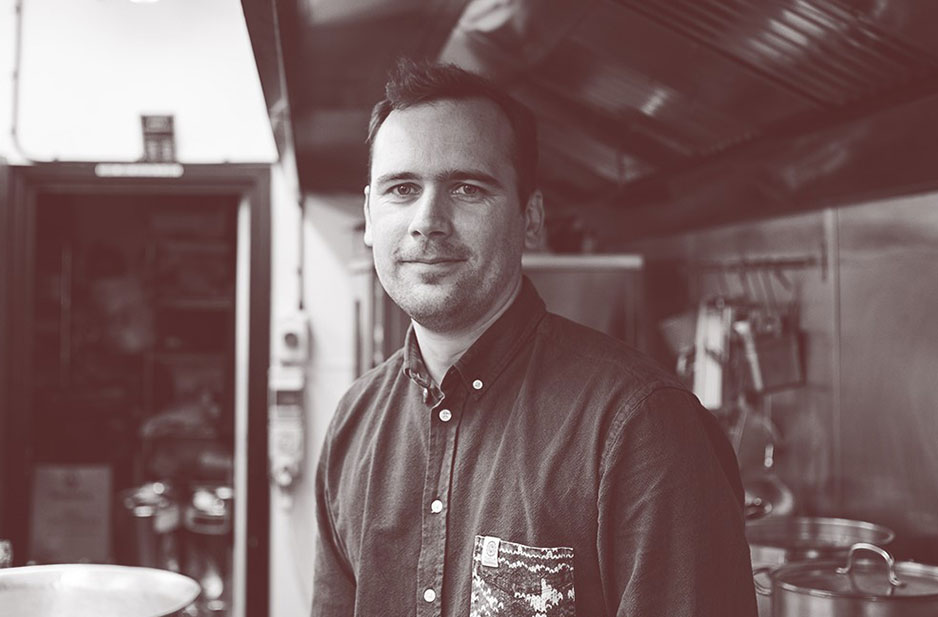
Mark Essen, an Artist, Project Designer and Educator based in Birmingham, will have work on display at the exhibition. He is currently an AA2A Artist in Residence in the School of Art.

The AA2A project is a national set of schemes, providing visual artists and designer makers with the opportunity to undertake a period of research or realise a project, using workshop and supporting facilities in fine art and design departments of Higher and Further Education institutions.

Mark Essen said: “The University of Wolverhampton can trace its roots back to 1835 when it was formerly the Wolverhampton Mechanics' Institute and School of Art and I’m interested in exploring these roots through my residency.

“The British Art Show coming to Wolverhampton is really important for the City and across the West Midlands region. This show comes to Wolverhampton at a time when culture has a potential to lead a trajectory towards social rehabilitation within post-coronavirus life. 

“Working with the University is an opportunity to explore its past and it’s also a chance to address the many changes we need to make for the future and a cultural investment for people in the area.”

Mark studied sculpture at the Royal College of Art and Fine Art at Birmingham City University. His projects include;  Modern Clay - a socially engaged ceramic studio coop based in Digbeth, Birmingham; Utopia Bricks, Social enterprise brickworks;   Hinterlands – Canal and River trust commission program Birmingham Mainline canal in Birmingham and Sandwell, and he is also associate artist with the Growing Project, Grand Union. 

He is a founding member of artist-run space Grand Union in Birmingham and has participated in residency programmes at Wysing Arts Centre, Edinburgh Sculpture Workshop, The New Gallery Walsall, Doremifasolasido - Florence Arts Centre, UK-Korea exchange co-ordinated by Grizedale Arts & Wysing Arts Centre and Wolverhampton University. He has exhibited work at Jerwood Space London, Workplace Gateshead, Tate St Ives, Hauser & Wirth, Somerset and also the New Contemporaries.

The British Art 9 exhibition is renowned for its high volume of visitors to its touring cities and is widely recognised as a significant marker of recent developments in contemporary art, unrivalled in its scope and national reach.
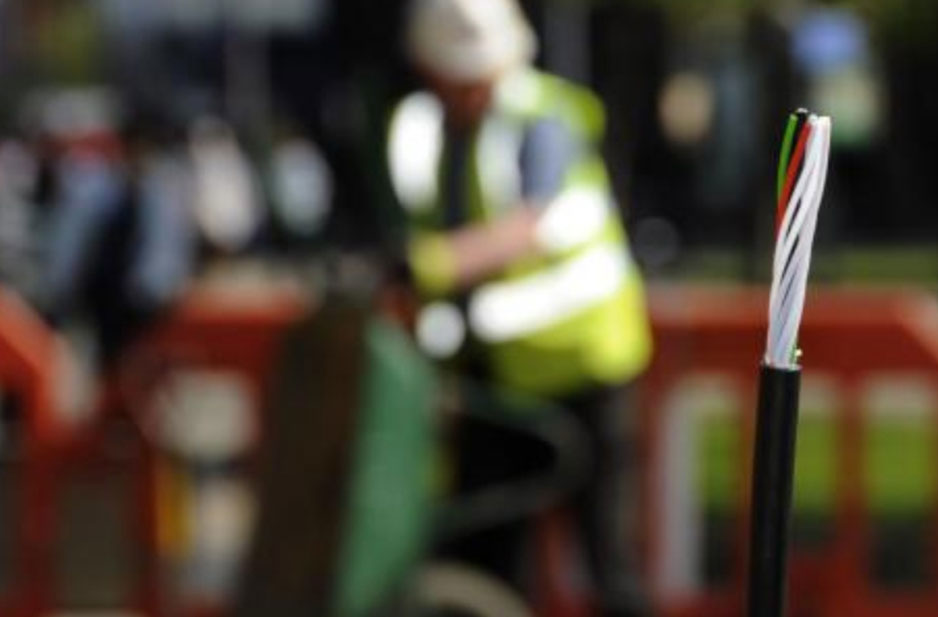

 

CityFibre - the UK’s third national digital infrastructure company - has become the latest employer to sign the Wolves at Work pledge.
 
Its commitment includes supporting Wolverhampton residents into jobs and work experience, as well as upskilling its workforce and its supply chain to help nurture new talent while developing the first full fibre network in the city.
 
CityFibre is bringing £50million of private investment to the city that will enable every home and business to benefit from access to a full fibre broadband network. 
 
Once constructed, Wolverhampton will be one of the best digitally-connected areas in the country.
 
CityFibre is now one of more than 600 businesses that have pledged their support to the Wolves at Work programme, which has helped almost 5,500 local people into work since it was established as a partnership with the Department for Work and Pensions in 2017.
 
The network it is delivering will provide lightning-fast digital connections to everyone and everything – from the family at home and children at school, to the workplace - and even traffic lights and CCTV cameras.
 
It’s pledge builds on CityFibre’s recent national announcement of a three-year recruitment and training programme providing up to 10,000 people with jobs as part of up to £4billion being spent on rolling out full fibre infrastructure to over 100 towns and cities.
 
This supports the Council’s ambitions to futureproof the city’s digital infrastructure by enabling the rollout of next generation technology as outlined in Wolverhampton’s Digital Infrastructure Strategy (https://www.wolverhampton.gov.uk/business/digital-infrastructure-strategy).
 
City of Wolverhampton Council Leader, Cllr Ian Brookfield, said: “This is a challenging time for our families and businesses. The coronavirus crisis has highlighted the importance of having a strong and effective digital infrastructure to support us to stay safe, keep businesses going and, most importantly, save lives.
 
“CityFibre is rolling out this digital technology across our city to help bolster our economic recovery and future growth and we are delighted they have joined the Wolves at Work pledge to help our local residents into jobs get access to vital jobs and training.
 
“In Wolves at Work we are fortunate to have an excellent and well-established model of what collaborative working can achieve when it comes to getting people into and keeping them in work, as well as supporting businesses with skills development.
 
“The Wolves at Work partnership with CityFibre is now needed more than ever to help drive our recovery from this current crisis and reconnect people to job opportunities.”

Bashir Ahmed, CityFibre’s City Manager for Wolverhampton, added: “We are delighted to sign the Wolves at Work pledge as we commit to prioritising nurturing local talent. The digital infrastructure world is becoming increasingly critical in today’s society as we rely upon digital connections more and more. I am confident that there will be many young people who will thrive on the opportunities greater connectivity will create. Wolverhampton’s digital future is a bright one and I am looking forward to construction of our network beginning, unlocking unlimited possibilities for both business and residents.”
 
City of Wolverhampton Council’s Cabinet Member for Education and Skills, Councillor Dr Michael Hardacre, added: “The Wolves at Work team have forged a strong relationship with CityFibre, which will reap great rewards for city residents and their families.
 
“These are uncertain times for people and it is critical that they get the right advice and support.
 
“The Wolves at Work programme enables us to better connect residents to opportunities like the ones on offer with CityFibre.”
 

People in Wolverhampton with their own vehicles and a few hours to spare each day are being encouraged to join a team of volunteer drivers.
 
Children and Family Support Volunteers transport children and young people to and from school and adults to day services in and around Wolverhampton.
 
To become a Children and Family Support Volunteer, drivers must be over 21, have their own transport and will be required to undergo an enhanced DBS check. All volunteers will receive reimbursement for mileage as well as child protection, safeguarding, health and safety and first aid training to enable to them to carry out this important role.
 
In line with standards set by the Royal Society for the Prevention of Accidents standards, passengers are expected to travel in the back of the vehicle, so social distancing can be achieved. In order to further protect volunteers and drivers, personal protective equipment, or PPE, will be provided where appropriate.
Volunteers are usually asked for a commitment of at least six months but, in light of current circumstances, this has been reduced to three as the City of Wolverhampton Council recognises that many people may be keen to volunteer but are not currently in a position to make a long-term commitment.
 
Councillor John Reynolds, the City of Wolverhampton Council's Cabinet Member for Children and Young People, said: "We have a small group of dedicated volunteer drivers who transport children to and from school and adults to and from day opportunities, but many of our volunteers are having to shield and isolate during the pandemic.
 
“We would love to hear from anyone who has their own vehicle, enjoys driving and wants to give something back to the local community by joining our excellent team."
 
For further information, please contact Lisa Sidaway, Volunteer Co-Ordinator, on 01902 556703 or by emailing This email address is being protected from spambots. You need JavaScript enabled to view it..

“I joined to get my voice heard”, Citizens’ Panel member talks about hopes for the West Midlands
 
Members of the new Citizens’ Panel set up to help guide the West Midlands’ recovery from Covid-19 have been putting forward their views
 
The group, which is made up of 36 residents representing the diverse make-up of the region, are spending this month (June) learning about the impact of coronavirus on communities, and will help guide what recovery plans should focus on.
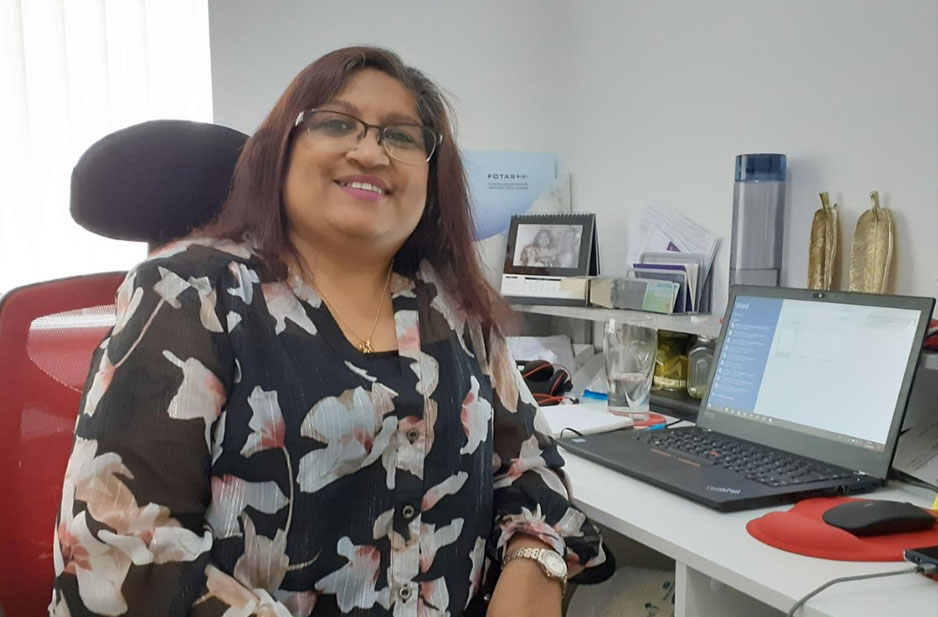
Panel member and IT project manager Punita Bhakta has been sharing her thoughts about the recovery of the West Midlands. She said: “I joined the Citizens’ Panel because I wanted to know more about what councils and government are doing to make the world restart again. I wanted to put my stance on this to a certain degree and make my voice heard.
 
“I think really the main thing to focus on is to get businesses and shops back up and running again in the manner they need to, purely so we can function again and people can go out and about and do their purchases, run their businesses and get the economy back up.”
 
The Citizens’ Panel has been commissioned by the West Midlands Recovery Co-ordination Group (RCG) - a collaboration of senior officials from the region’s local authorities, emergency services and Local Enterprise Partnerships.
 
This community engagement will complement the region’s ongoing economic recovery work, which is being spearheaded by the Economic Impact Group, which brings together business leaders, central government, banks, trade unions and local authorities.
 
The panel is now half way through its programme of meetings and group sessions which are being held online. The sessions involve members sharing their experiences, considering evidence on impacts from expert witnesses, and deliberating over challenging trade-offs, before putting forward a set of recommendations to the RCG.
 
Cllr Brigid Jones, the chair of the Citizens’ Panel steering group and WMCA portfolio holder for inclusive communities, said: “The panel members have been learning how key decisions that affect them and their communities are made.
 
“They are spending a considerable amount of their own time taking in a lot of information about how the region is run.
 
“They will be able to use their new-found knowledge to make suggestions about how to tackle the challenges that lie ahead.”
 
The RCG will use the recommendations of the Citizens’ Panel to help inform the region’s political leaders on their post-Covid-19 recovery plans.
 
The programme is being delivered by BritainThinks, an independent insight and strategy agency, and is supported by Engage Britain, which is a charity focused on bringing together people with different views, knowledge and experience to help tackle the biggest challenges facing the country.

Access to a decent life and dignity are rights that all citizens should be able to enjoy on a daily basis. While the words "sharing" and "solidarity" are less and less obvious to realize in a fast-paced, individualistic world, there are still simple ways to help, a little extra, those around us who are in need. You don't have to be a great philanthropist to make yourself useful and help the people around you to live better. In an era where there are still many inequalities that continue to widen, it is possible to do our part every day. Through many small acts, the snowball effect works and improves life little by little for our entire village, town and society.

Here's how, with simple gestures, you can contribute in 2017 to improving the lives of many people around you effortlessly. If you can donate your time as a volunteer, you can also bring back your old objects to associations or make a donation to support a cause, we tell you all about it here.

1. Acting as a volunteer
The associative and cooperative sectors in Quebec are full of possibilities. Whether it's personal assistance or the development of your neighbourhood through more political involvement, there are a multitude of choices to give a few hours a week of your time.

Here are a few ideas | Connecting Communities :

Retirement homes are often looking for people to give a little time to the elderly during special events or regularly to spend time with the elderly.

There are associations that help school children with difficulties with homework help after school.

In organizations helping immigrants with integration, you can help in many ways such as learning French, help with writing a CV, etc.
2. Give a second life to your used items
Do you regularly clean your wardrobe, attic or garage and have all sorts of household items, furniture, clothes that you no longer use? Why not give them to an association that will take care of redistributing them to people who need them or selling them to reinvest in rehabilitation.

Next time you have items you no longer know what to do with, think of the Salvation Army, Renaissance or Emmaus. These are non-profit organizations that reinvest the profits from sales in reintegration, in other words they train unemployed people and help them reintegrate into the job market. This is a wonderful virtuous circle!

The little extra? They often come to your home to pick up large items, such as household appliances, for example.

3. Organize a collection
If you have the soul of a leader and are ready to take a significant action, why not organize a collection yourself? Whether it's money or basic necessities, there are many ideas, just get started!

With your entourage, friends, family and colleagues, choose an association, a school, a retirement home, a rehabilitation centre, near your home for example, and collect objects or donations that are likely to help them.

Set a maximum time limit for your collection and advertise around you. There's nothing like getting together to help a cause.

4. Walk or run for a cause
There are many diseases for which effective cures have yet to be found, and research is expensive. Whether for genetic, degenerative or infectious diseases, research is more essential than ever if they are to be eradicated one day.

By taking part in a walk or a run, by raising funds in your entourage for every kilometre you walk or run, for example, you can help medical research in a great way.

5. Make a donation, support a cause | Connecting Communities !
You don't really have the time to volunteer, or objects to donate, why not make a donation and support a cause that directly affects children?

Sponsoring children living in countries with few resources is a great way to give, it's useful and very effective.

For less than one euro a day, you can sponsor a child who will be able to go to school, have clothes and a minimum of food every day.

The little extra? A sponsorship is a very enriching life experience! The organizations give you a feedback allowing you to get to know your godchild better and maybe one day go and meet him or her in his or her country!

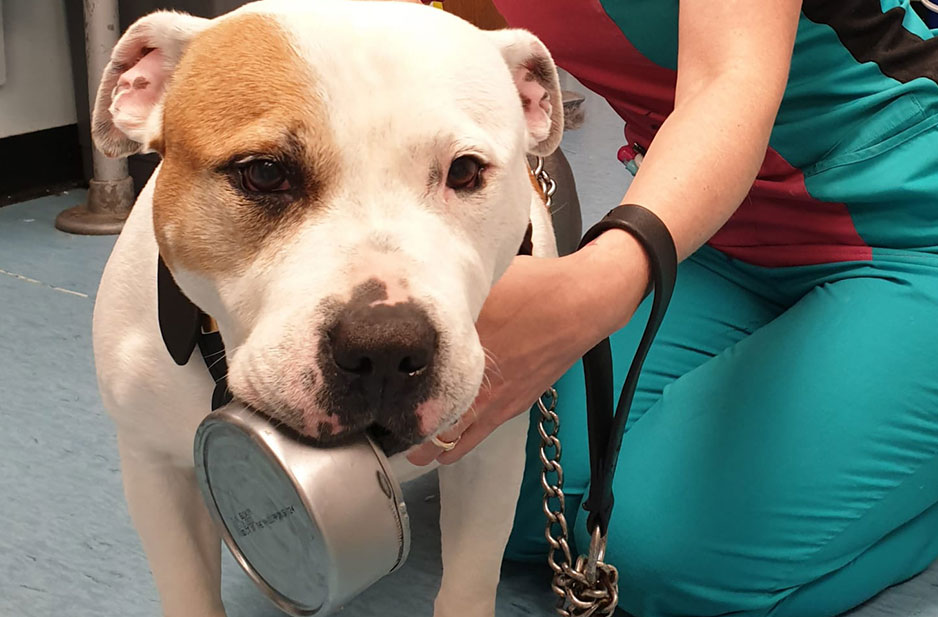
A hungry hound ended up needing emergency treatment from charity vets at PDSA after getting her tongue stuck in a can of tuna.

Bonnie, a ten-year-old Staffordshire Bull terrier cross, had been given her favourite fish as a teatime treat, but when her owner put the discarded tin in the recycling bin, Bonnie saw her chance for an extra helping!

Owner Louisa Davis (45) from Nottingham said: “We heard some scuffling in the kitchen and the next thing we saw was a tuna can stuck to her face! It was shocking to see. Her tongue was trapped in the can and I tried to remove it myself but the tin was so sharp I didn’t want to make it worse and badly cut her. I called PDSA to see if they could help, and they told me to bring her straight in.”

Louise took Bonnie to Nottingham PDSA Pet Hospital, where vets are running an emergency-service during the Coronavirus lockdown. Bonnie was seen immediately for urgent treatment. She was becoming increasingly distressed, and the stuck tin was causing her pain.

PDSA Vet Sarah Campbell explained that removing the can would be too risky to do with her awake as she was becoming more anxious. She was given an anaesthetic so it could be removed safely by the vet team. She said: “Once she was under the anaesthetic the can was relatively easy to remove. We were able to carefully remove it so the cut to her tongue was small and luckily she didn’t need any stitches.

“It was a very unusual case to see, which could have become very serious if the tin had cut the tongue deeply. But thankfully we were able to remove the can safely and Bonnie was able to go home the same day to recover from her ordeal.”

Louisa said she was incredibly grateful to PDSA for the treatment Bonnie received, especially during lockdown when many vets are only open for emergencies. She added: “Bonnie has never done anything like this before but it’s a lesson learnt and we’ll be keeping a close eye on her to avoid something like this happening again.”

In times of uncertainty and hardship, much-loved pets like Bonnie will still need emergency care. That’s when PDSA steps in to help, but they are facing a crisis and need your help.

PDSA’s veterinary care – which is a lifeline to so many owners across the UK – costs £60 million a year to run. But with retail shops closed and fundraising events cancelled, the charity is losing around £3 million a month in income.

And with the country plunged into financial uncertainly, and more than a million extra Universal Credit claims, PDSA expects the number of pets needing care will increase by around 50,000.

Please help today by donating to ensure much loved pets have a tomorrow www.pdsa.org.uk/appeal.


Seven new sites have been added to Haringey Council’s council housing programme, as part of ambitious plans to deliver homes for residents across the borough.

Construction has already started on 331 council homes at seven other sites, and these additional locations will mean that every ward of the borough could have a site for new social housing.

The sites were agreed at a meeting of Haringey’s Cabinet last night, and their potential for development of new council homes will now be explored in more detail.

The new sites are all on council-owned land in Bounds Green, Fortis Green, Hornsey, St Ann’s, Stroud Green and White Hart Lane, and have been identified as potentially suitable locations to build new council homes. Any proposals will be discussed with residents in the areas.

Meanwhile, the Roundway N17 site will be removed from the programme in favour of utilising the land to build a children’s home.

Cabinet also agreed to progress delivery schemes at four additional sites across the borough that had already been included in the Housing Delivery Programme.

Approval was given to appoint Cuttle Construction to convert vacant Council-owned shops into two Council-rented homes at 43 Finsbury Road N22 and 27 Harvey House N8.

NFC Homes Limited has been contracted to complete new build developments of seven Council-rented homes: four at Mount View Court N8 and three at Romney Close N17.

The four homes at Mount View Court will be four-bedroom properties. It is crucial for the council to build large family homes that are so needed in our borough, as so few are delivered by any other house builders.

The council is working hard to minimise the effects of the pandemic on the programme, with the planning authority moving to virtual committee meetings and resuming essential consultations to ensure that crucial projects can continue to be considered and decided upon.

Councillor Emine Ibrahim, Cabinet Member for Housing and Estate Renewal, said: “This council’s priority is to start a new era of council homebuilding in Haringey. After decades without new council homes, the progress made over the last two years is striking – work has started on 331 homes and we’ve identified potential sites right across the borough, in every single ward, to deliver more.

“Now more than ever, we are only too aware of the vital need for safe and decent homes for our residents, and the global coronavirus pandemic has exposed even more clearly how desperate this need is across the country.

“In Haringey, we are determined to address that, and our programme will not just deliver good quality homes, but will also support good local jobs at a decent wage and help local businesses to build Haringey’s economy”.
 

The UK public feel that any sense of ‘community togetherness’ that has been built during the coronavirus crisis will disperse as soon as it is over says a new study commissioned by the Jubilee Centre for Character and Virtues at the University of Birmingham .

A poll undertaken by Populus of 2,088 adults in the UK found that older generations and women have felt a stronger sense of community togetherness recently, compared with younger generations and men, who have not felt this to the same degree. Conversely, there was the opposite generational gap identified in terms of those who agreed that community togetherness would disappear after the crisis is over, with those aged 45-64 being most negative (61%), compared with less than half of those aged 18-24 (46%).

This suggests that there has been a marked generational divide in how people have responded to the crisis. This is highlighted further in responses from 18-24 year olds to the valuing of health of older generations today over longer-term economic prosperity. Younger people disagreed with this statement in larger numbers (13%) than those aged over 45 (9%).

The importance of character in times of crisis was highlighted, as 68% of the British public valued ‘being compassionate/caring’ in their top 3 most valued character strengths seen in those around them – an identical figure to a preliminary poll conducted in April 2020; they also valued it the most in terms of personal well-being (25%). Yet, concerns over the lack of community spirit were further emphasised.

Findings showed that less than a quarter of the British public have given their time to benefit others during the crisis. Of those who have, 18-24 year olds and those aged 55-64 have volunteered the most, with women volunteering more than men, and the East Midlands and South East being the areas of the country where people have volunteered the most. There was a decline in the value placed on the civic character strengths of ‘being of service’ and ‘having community awareness’ in the people around us, compared to the April 2020 poll. Instead, the British public placed greater value on ‘being resilient’; this is suggestive that the public mood has moved to one of self-preservation over community togetherness.

Commenting on the findings, Aidan Thompson, Director of Strategic Initiatives in the Jubilee Centre, said; “Strengths of character have helped everyone to negotiate a path through these uncertain and unprecedented times. This poll reflects the continued importance of character in how we treat those around us and those we look up to. Good character development benefits both the individual and the community, so whilst notions of ‘community togetherness’ may seem as though they are dwindling, continuing to provide opportunities to serve the public good are essential to cultivate a character-full society”.

Other notable findings include: 

Good judgement is valued more by older generations than younger ones as important to one’s wellbeing;
Older people have felt a stronger notion of community togetherness during the crisis than younger people, but were more likely to agree that it would disappear once the crisis is over;
The public value having ‘good judgement’ (71%) and ‘being wise’ (40%) in senior leaders and politicians in greater numbers than in the first poll;
A large majority (71%) of the public support following government lockdown guidelines as an expression of civic duty, though only 56% of 18-24 year olds agreed, compared with 87% of those over 65 years.


West Midlands faith groups have come together to show their solidarity with the UK’s Black community, following the recent tumultuous events around the world.

The region’s Faith Steering Group, which is convened by Mayor of the West Midlands Andy Street, has issued a statement of solidarity, calling on all organisations in the region to commit to building an inclusive community.

This was unanimously agreed at the group’s latest online meeting which focused on the theme of community cohesion.

The joint statement of the Faith Steering Group and the Mayor says:“The Mayor and Faith Steering Group are united in offering our support and solidarity to the Black community in the UK. Black Lives Matter, and our thoughts and prayers are with all those who have experienced inequality as well as those who are protesting peacefully.

“Our diversity in the West Midlands is one of our most powerful assets. Our faith communities are made up by people of all races and ethnicities, and we are made stronger by the connections between us. This has been evident throughout the Covid-19 crisis, when people of all faiths and backgrounds have come together to support their communities.

“It is more important than ever that we work together for a fairer and more inclusive future. We must make sure that everyone in the West Midlands has equal access to opportunities and the same chance to succeed in life. We must rebuild an inclusive collective community where everyone respects and values each other.

“We believe that now is the time for action. We ask for all organisations to work with their colleagues, members and customers to review their practices and to commit to making improvements. We must all work to create meaningful opportunities for change.

“Together, we must stand up and reinforce the principles of equality, social justice and compassion and move forward into a fairer future.”

In 2018 the Mayor launched the Faith Action Plan to form the basis for strong collaboration between the Mayor’s office, the West Midlands Combined Authority (WMCA) and the region’s faith groups.

The Faith Steering Group webinars have been held regularly since the start of the Covid-19 lockdown to share information, advice and support among religious groups across the West Midlands.


Sandwell Children’s Trust have launched an innovative new campaign to recruit foster carers, following on from the success of their online ‘Lockdown Stories’ from foster carers, telling of their fostering experiences during the Covid-19 lockdown, which have reached over 20,000 people on Twitter.
 
The ‘Superheroes’ campaign can be seen in more than 50 poster sites all across Sandwell as well as appearing on video screens outside local supermarkets around the borough, featuring comic book super hero figures commissioned for the campaign.
 
As Frances Craven, Chief Executive of Sandwell Children’s Trust explains: "Here at Sandwell Children’s Trust, we are passionate about improving the lives of the children and families that we work with every day. 

"We understand the importance of providing stable, secure and loving homes for children and young people who can’t live at home and we can’t thank our current foster carers enough for the amazing things they do.  
 
"But, we need more special people to become foster carers for us. So, we are proud to launch our brand-new foster carer marketing campaign. Our foster carers are true ‘superheroes’ and we know that there are many more people out there who could be too!  If you or anyone you know has ever thought about becoming a foster carer, please get in touch with us."
 
The campaign aims to raise awareness of the work of foster carers, who have carried on every day, providing safe, stable, loving homes for children, as we have all had to change the ways we live and work and appeal to more people to take up the challenge and become foster carers for Sandwell.
 
Or, as Frances Craven puts it: "Learning to support children with home-schooling, becoming proficient at virtual meetings with social workers and helping the children they look after to come to terms with life under lockdown. 

"These are just some of the challenges our foster carers have risen to and just like all the other care workers who have looked after us through this difficult time, we think they are all super heroes.  Now we just want a few more people to step forward and join us."
 
The Sandwell Children’s Trust ‘Superheroes’ campaign is on display across Sandwell for the next two weeks.  

Over 100 cats from across Birmingham are celebrating being settled in new homes as a result of Cats Protection’s new contactless homing scheme.
 
Birmingham Adoption Centre was one of the first of the charity’s centres to take part in the new Hands-Free Homing scheme which has formed part of Cats Protection’s response to lockdown restrictions and the impact on its ability to safely home cats. Since the trial began at the end of April the Hollywood centre has homed 103 cats through the new contactless approach to homing.
 
Informed by government guidelines, the scheme sees photos, videos and descriptions of cats available to rehome posted on the centre’s website www.cats.org.uk/birmingham/adopt-a-cat. Much like online dating, if a match is made virtually, a meet-up via phone or video call is arranged by staffs from the centre who then confirm suitability with a simple welfare questionnaire and series of checks. Once the adoption fee has been paid, the cat will be delivered to its new home by Cats Protection staff, with social distancing rules strictly observed at all times.
 
Cats available to rehome are all neutered, vaccinated and micro chipped. A special aftercare package with Hands-Free Homing includes follow-up calls in the first weeks to ensure that the cat and new owner are both happy.
 
Ginger-and-white Tommy, who is around five-years-old, was one of the first cats to be homed from the centre under the new scheme after he had spent almost a year living as a stray before being rescued.
 
Adopter Dawn Smith from Wednesbury happily welcomed Tommy into her home and introduced him to her other cat, Daisy Belle. It wasn’t long before Tommy had made himself part of the family.  Dawn says: “Tommy is well and truly settled in with me and Daisy Belle. His favourite toy is a brown furry rat that he likes to throw around and ‘kill’ before needing a lie down from all his exertion. He also likes to be brushed and is sparkling white and ginger now, having lost the excess oil in his coat from living outside.
 
“Tommy has also accepted his cat-cousins who live next door and calls round to visit and hang out in their garden, hoovering up their food if he gets the chance. He’s a gorgeous boy with a big personality and now I have two beautiful munchkins and couldn’t have chosen better.”
 
Alison Dickenson, Adoption Centre Manager, says: “We’re thrilled to have passed the 100-cats milestone with Hands-Free Homing.  It was particularly difficult when lockdown started knowing there were cats needing homes and potential new families waiting but no way to link them.  Now we have the best of both worlds; it keeps everyone safe and suitably distanced while ensuring cats move to their new homes as quickly as possible once a match is made.”
 
The centre has a number of cats currently waiting for adoption including one-year-old black-and-white Dezzy who has been at the centre recuperating after a tough start in life. He was found by a group of teenagers as a very young stray living by a stream, covered in mud, hungry, struggling with multiple infections, including MRSA and cat flu.  Now healthy and negative for both, he may have symptom flares at times when he is run down so needs an understanding owner who can help him come out of his shell and learn to enjoy life after his difficult kittenhood.


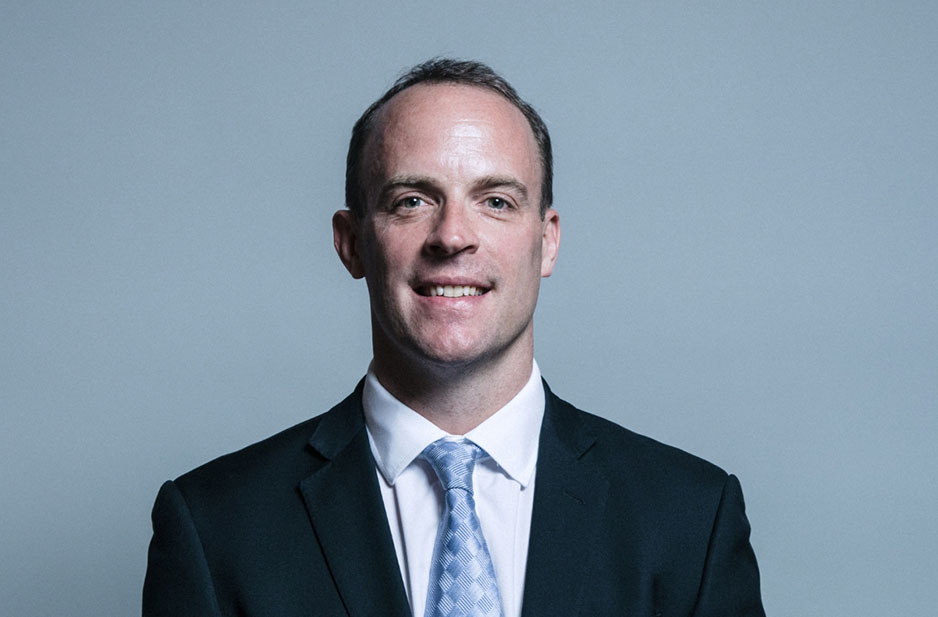
Foreign Secretary Raab criticised over comparing Black Lives Matter to Game of Thrones

As Dominic Raab scored his massive political ‘own goal’ over his comments about "taking the knee" it followed news which came out about a frightened Black nurse who was pulled over by police who drove in front of her in a "hard stop" operation.

She says she was targeted because of her race.

The Foreign Secretary said that the gesture of ‘taking a knee’ by the Black Lives Matter (BLM) campaigners "seems to be taken from TV drama Game of Thrones”. He also said it "feels to me like a symbol of subjugation, subordination, rather than one of liberation", but the act didn't feel like a symbol of "emancipation" but added "I understand people feel differently about it so it's a matter of personal choice."

Asked if he would take the knee himself Raab said that he would only take the knee for two people, "the Queen and the Mrs when I asked her to marry me".

Labour leader Sir Keir Starmer said Raab was "probably already living to regret his words.

"It wasn't a very wise thing to say". Shadow Justice Secretary David Lammy described his comments as "insulting" and "deeply embarrassing".

His stance on Black Lives Matter came as news came out about how police officers stopped Neomi Bennett in 2019 because, they said, her front windows were tinted too dark.

She was convicted of obstructing a police officer, but prosecutors later decided not to challenge her appeal.

Ms Bennett, who invented the Neo-slip device to help patients with deep vein thrombosis and was awarded the British Empire Medal for services to nursing, is now taking legal action.

The Metropolitan Police said it was "assessing a complaint in relation to this incident".

The 47-year-old said: "When the police approached me, I think my experience as a Black person is very different to that of a white person and the fear it invokes is tremendous.

"I can't even describe the fear that I experienced on that night."

She said that the officers carried out a hard stop, meaning they pulled a car up in front of her to box her in - in April 2019 - and she refused to get out of the vehicle.

She added that the manner in which she was pulled over "scared the life out of her” and, had they taken a different approach, she might have got out of her car, but instead opted to stay inside.

At first the nurse, from London, thought it was "some kind of hijack" because she could only see an officer in plain clothing. She added: "I believe I was racially profiled and certainly don't think this would have happened if I were white."

Neomi added that this was an example of what a "disproportionate number of black British citizens" have to go through.

Earlier this month, Labour leader Starmer was photographed taking the knee with his Deputy Angela Rayner.

Dominic Raab later sought to clarify his remarks tweeting: "To be clear: I have full respect for the Black Lives Matter movement, and the issues driving them.”

In marking the third anniversary, survivors of the Grenfell Tower fire inferno tragedy, which killed a recorded 72 people, have said that “nothing has changed” three years after the disaster.

Those who escaped from the tower block in west London said that they felt “left behind” and “disgusted” by a lack of progress in making other buildings safe.

Some 246 buildings still have Aluminium Composite Material (ACM) cladding.

Churches across the city of London rang their bells 72 times to mark the number of those who died.

The Grenfell blaze – the biggest domestic inferno since World War II – started as a small fire in a kitchen in one of the flats, before it spread to engulf the whole tower block at an alarming speed.

A Parliamentary commission warned that cladding similar to that which was at the cemtre of the spread of the flames could cost up to £15bn to remove nationwide.

On the third anniversary of the fire and with commemoration services online, survivors and relatives also expressed disbelief that a public inquiry had yet to conclude.

Hearings into the Grenfell disaster were paused in March due to the coronavirus pandemic and are due to restart on July 6.

Campaign group Grenfell United – which was set up in the wake of the tragedy – organised a series of events, including online commemorations and a silent march was held to honour the victims. Also, a video message from international superstar singer Adele, who visited the site almost immediately after the fire, was played to a virtual service.

She said: “Even though we’re having to do this in the virtual world, online, 2020 Zoom life as it is, it is still so important for us to mourn together, and for us to remember that night and to reflect on it and to also reflect on where we are now.

“And, to also celebrate the lives that were lived before they were sadly taken away on that night”.

At 22:30 BST, people across the UK were asked to shine a bright green light from their screens to show solidarity with the bereaved and the survivors.

A virtual service was held and was hosted by the Bishop of Kensington.


Recruitment targeted at people from Black, Asian and Multi Ethnic (BAME) background could “change the face of the West Midlands Police force, bosses have said.

West Midlands Police & Crime Commissioner, David Jamieson said that 1,000 BAME officers will be recruited over the next three years.

He said that the force, currently 11% BAME, should reflect an area where about 30% of people are BAME.

Recent anti-racism demonstrations have highlighted issues between police in the UK and the BAME community.

Following Black Lives Matter protesters recently gathering outside the West Midlands Police headquarters, in Birmingham, the force is being investigated over the high number of complaints made relating to the over-excessive force it uses against Black men.

Asked, why, after nearly six years in office, he chose now to announce his commitment Jamieson said that cuts to police had prohibited large-scale recruitment.

Now, with funding for 20,000 police officers from the Home Office, he said: “We have got a much better opportunity to make a real change”.

Chair of West Midlands Police’s Black and Asian Federation, Karen Geddes, said that it was a positive statement.

“It’s a good number to put out there, I’d like to see how”, she said. “How is he going to do that, what is the strategy behind it, what are we going to do if we don’t achieve it?”

Being the second biggest force in England, West Midlands Police has 6,495 officers.

The 1,000 new BAME officers will be among 2,750 recruits which, after replacing those leaving the force, will mean 1,200 new police officers.

Sandwell Council is inviting applications from local businesses for a new COVID-19 support grant.
 
The council in the West Midlands has £3.362m from the government’s Discretionary Business Grant Fund to allocate to local businesses.
 
This funding is specifically to support small and micro businesses with high fixed property costs which are not eligible for the other Small Business and Retail, Hospitality & Leisure support grant schemes.
 
Because it is a discretionary scheme, the criteria used to determine which businesses will get a grant is set by the Department for Business Energy and Industrial Strategy and a panel of council officers and local business experts.
 
Businesses should apply via the council’s online form:

my.sandwell.gov.uk/service/Local_Authority_Discretionary_Business_Support_Grant
 
If they meet the eligibility criteria, their application will be assessed by the panel.
 
Users will need a MySandwell account and be logged in to complete the form.
 
The fund is cash-limited, so grants will be given out on a ‘first come first served’ basis, we therefore urge businesses to get their applications in as soon as possible.
 
Sandwell Council has designed a local scheme with specific criteria which will help identify and prioritise which companies will be likely to receive the available funding.
 
Councillor Wasim Ali, Sandwell Council Deputy Leader, said: “We want to use this fund to help as many Sandwell businesses as we can and I would urge anyone who thinks they may be eligible for this grant to look on the website as soon as possible.
 
“We are mindful that the funding is limited, which could mean demand is higher than availability – so do get your applications in early.”
 
Small businesses are defined as:

Having a turnover of no more than £10.2m
Having a balance sheet total of no more than £5.1m
Employing no more than 50 people

Micro businesses are defined as:

Having a turnover of no more than £632,000
Having a balance sheet total of no more than £316,000
Employing no more than 10 people

Further information regarding this grant funding is available on the Think Sandwell website www.thinksandwell.com/contact/ or via e-mail at  This email address is being protected from spambots. You need JavaScript enabled to view it.

The Church of England has said that a ruling by one of its diocesan courts that an Irish epitaph must have an English translation “does not reflect” its national policy.

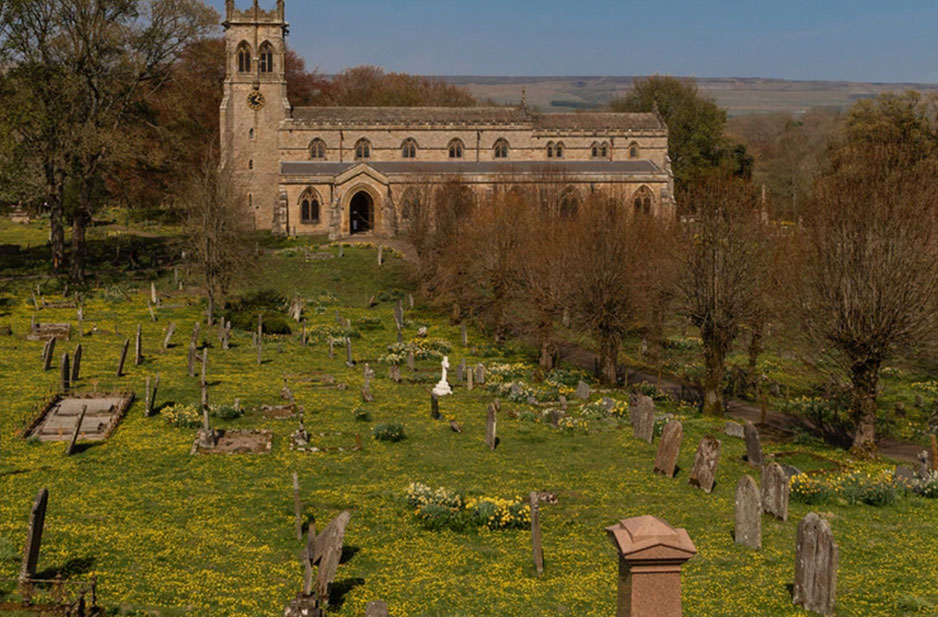
Caroline Newey’s mother is buried in grounds owed by St Giles’ Church, Exhall, near Coventry.

She wanted the headstone inscription to read; (“In our hearts forever”).

But a judge ruled that it may be seen “as a political statement”.

Margret Keane died suddenly two years ago, survived by her husband Bernie.

Both had been born in the Republic of Ireland, but made their lives in the UK.

The family said that it had been battling for two years to have the gravestone of their choice at the Meadows in Ash Green, in Coventry.

In his judgment for the consistory court of the Dioceses of Coventry, Judge Stephen Eyre QC, found that there was “a sad risk that the phase would be regarded as some form of slogan” and would be “unintelligible to all but a small minority of readers”.

In this instance, the church said that would be the Arches Court of Canterbury.

The statement said that the Irish language has played a central role in the advancement of Christianity in England.

It said: “The Irish language is an important part of the heritage of the Church of England.

“It was, after all, Irish speaking monks in Lindisfarne and beyond who played a central role in establishing the Church in what is now England”.

Mrs Keane’s family said that both she and her husband were proud of their Irish heritage and had been active in the Gaelic Athletic Association (GAA) – Ireland’s largest sporting organisation.

Alongside the Irish inscription on the gravestone, they also wanted to include a Celtic Cross and the GAA emblem.

Initially, the parochial church council of St Giles supported the proposed memorial by a vote of six to five with seven abstentions, but noted that there were no comparable stones in the graveyard.

The Diocesan Advisory Committee did not recommend approval.

Caroline Newey accepted a compromise that the Celtic Cross could be inscribed on the stone, rather than being carved out of it.

However, there was no agreement on the Irish inscription.