

Staying active can feel like a juggling act.
Between work, family, and everyday responsibilities, finding time to exercise often slips down the list of priorities. Yet keeping fit isn’t just about hitting the gym, it’s about creating small, manageable ways to move more, feel better, and build a lifestyle where activity fits naturally into your day. A new study by Betmaster reveals which areas of England are making it easiest, and hardest , for residents to stay active.
By looking at gym memberships, sports event participation, and how confident people feel about getting the recommended 150 minutes of exercise per week, the research paints a clear picture of the nation’s fitness habits. Topping the list is Hammersmith and Fulham, with an overall score of 82.25. More than half of residents (50.06%) are members of a fitness club, while over three-quarters (77.33%) meet recommended weekly activity levels.
The area also performs strongly in perceived access to exercise opportunities, with 78.25% of residents saying they feel able to be active. Close behind is Wandsworth, where 84.12% of residents feel they have the opportunity to be active, one of the highest rates in the country, alongside 77.16% hitting weekly exercise targets. Lambeth ranks third, boosted by one of the highest sports event attendance rates (19.21%) and strong overall engagement across all metrics.
Other high-performing areas include Richmond upon Thames, where nearly 79% of residents achieve 150+ minutes of weekly exercise, and East Hertfordshire, which stands out for its strong sports attendance (20.19%) and well-rounded performance across all indicators. The top 10 is rounded out by a mix of London boroughs and southern districts, including Islington, Elmbridge, Exeter, Bromley, and Kensington and Chelsea, pointing to a clear trend: areas with better access to facilities and stronger sports culture tend to see higher activity levels. At the other end of the ranking, Sandwell places last with a score of just 18.98.
Fewer than half of residents (48.71%) meet recommended exercise levels, while fitness club membership remains low at 25.01%. The borough also records one of the lowest perceptions of access to activity opportunities (69.22%).
Other low-ranking areas include Barking and Dagenham, Thurrock, and Luton, where activity levels and engagement across multiple metrics fall behind the national average. In Newham, for example, sports event attendance is just 6.28%, one of the lowest figures in the study, despite relatively moderate gym membership levels.
Robert Mardisalu, a spokesperson for Betmaster, commented: “Most people don’t struggle to stay active because they don’t care about fitness; it’s because everyday life gets in the way.
“Long work hours, commuting, and general fatigue all add up, and suddenly exercise feels like another task rather than something that helps. What we’re seeing is that in places where activity is part of the daily routine, whether that’s walking more, having access to gyms, or being around others who are active, people are far more likely to stay consistent without even thinking about it.” Consistency really comes down to mindset and practicality.
“You don’t need perfect routines or hours in the gym, you need something that fits into real life. For many people, the challenge is balancing work, social commitments, and energy levels, and that’s where habits often fall apart. The areas performing best are the ones where staying active feels convenient and achievable, not overwhelming.
“When exercise feels accessible rather than like a big commitment, it becomes something people stick with long term.”
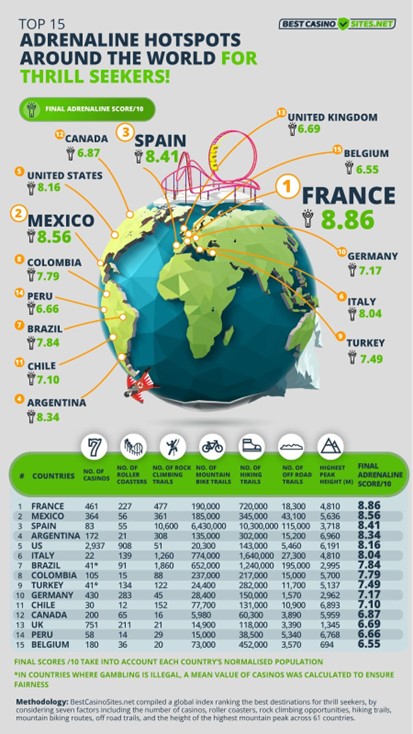
Top 20 most active cities:
Methodology: The study analysed Local Authority Districts across the UK using four key metrics: fitness club membership rates, sports event attendance, the proportion of residents who feel they have the opportunity to be active, and the share achieving at least 150 minutes of weekly exercise. Each metric was normalised and weighted to reflect both real activity levels and broader engagement, before being combined into an overall score out of 100.