

Ready To Explore Once More? The Phoenix Newspaper Newsletter
Your weekly roundup of Positive, Informative and Objective News from The Phoenix Newspaper

 The Phoenix Newspaper UK | Latest news in UK | Positive news | Inspiring The Next Generation
Inspiring The Next Generation
The Phoenix Newspaper UK | Latest news in UK | Positive news | Inspiring The Next Generation
Inspiring The Next Generation

As part of its preparations for the launch of the Clean Air Zone on 1 June 2021 Birmingham City Council has to date issued just over £1 million in Clean Air Zone grants to Birmingham-licensed hackney carriage and private hire drivers.
The grant scheme, which aims to support Birmingham-licensed hackney carriage and private hire drivers to upgrade or replace vehicles that do not meet the emission standards for the Clean Air Zone, is part of a larger £35 million package of financial incentives to support Birmingham’s transition to cleaner air.
Almost £15 million of this funding is dedicated to supporting Birmingham’s taxi community. To date Clean Air Zone hackney carriage and private hire scheme has supported 816 vehicle owners with grants to the value of £1,139,740.
Stephen Arnold, Head of Clean Air Zone at Birmingham City Council said: “We recognise the challenges Birmingham’s taxi drivers and some other groups could have in getting ready for the introduction of the Clean Air Zone on 1 June. The package of support available, which includes temporary exemptions and financial incentives, will help to make this change easier.
“We are pleased with the progress made so far. But with the launch of the Clean Air Zone just a few weeks away we are urging drivers and fleet operators to visit the Brum Breathes website to check whether or not they will need to pay the Clean Air Zone daily charge. And if they do need to pay the charge they can also find about the various packages of support that they may be eligible to apply for.”
Owners of Birmingham-licensed Hackney Carriage vehicles may be eligible for a financial incentive if they are the registered owner or keeper of a hackney carriage taxi that will be charged and are licensed by Birmingham City Council as a Hackney Carriage driver.
Support measures include:
· £5,000 (spread over four years) towards the running costs of an Ultra Low Emission Vehicle (ULEV) taxi
· £5,000 (one off payment) towards a Clean Vehicle Retrofit Accreditation Scheme (CVRAS) solution for an existing vehicle
· £5,000 contribution towards a Euro 4 petrol or Euro 6 diesel (or better) compliant vehicle, unless eligible for the government’s plug-in grant.
Private Hire drivers may also be eligible for financial support if they are the registered owner or keeper of a private hire vehicle that will be subject the Clean Air Zone charges. They also need to be licensed by Birmingham City and be the registered owner/keeper of that vehicle since before 10 September 2018.
Support measures include:
· Up to £1,000 towards an upgrade to a compliant Euro 4 petrol or Euro 6 diesel vehicle or better. The vehicle must be no more than three years old as of January 2020
· Up to £2,000 towards the purchase or lease of a hybrid vehicle or plug-in hybrid electric vehicle that is not eligible for the Government’s plug-in car grant and meets the Birmingham Taxi Licensing age requirements
· Subject to purchase up to two annual payments of £1,250 towards running costs of a fully electric vehicle or long range plug-in hybrid vehicle
Drivers are encouraged to first check if they will be subject to Clean Air Zone charges before applying for support. This can be done with help from the Government’s Vehicle Checker tool.
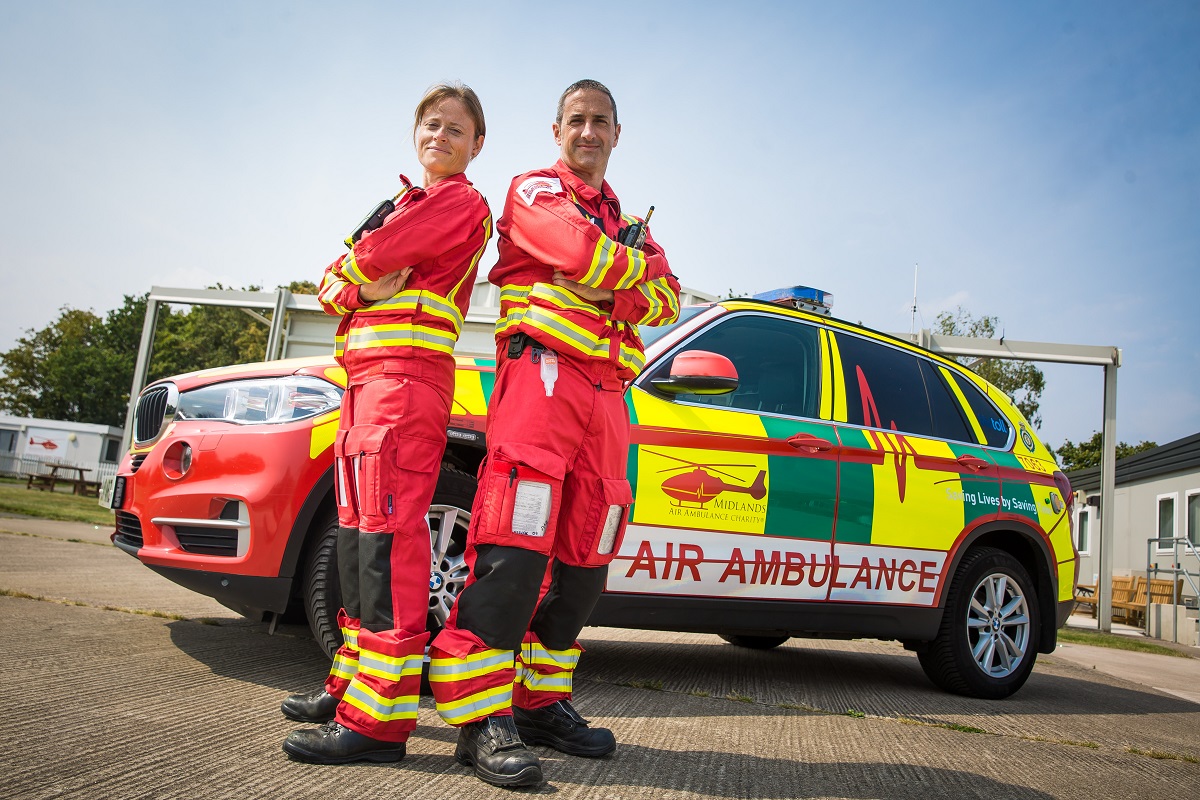
Midlands Air Ambulance Charity has been awarded the Investors in People silver standard, demonstrating its commitment to investing in local people and excellent management practice.
Since 1991 Investors in People has been a nationally recognised accreditation, demonstrating employer excellence and outstanding places to work. In line with the charity’s dedication to continuous improvement, the organisation has yet again been accredited, this year achieving the silver standard.
Employees of the charity were once again overwhelmingly positive about their experiences with Midlands Air Ambulance Charity, and the assessor’s report noted a clear passion, enthusiasm and pride for working for the lifesaving service, which tends to more than 4,500 critically ill and injured people annually whilst also undertaking significant community outreach programmes to support with health and disease education.
Hanna Sebright, chief executive for Midlands Air Ambulance Charity, said: “People are at the heart of everything we do. As well as providing the very best advanced pre-hospital care to patients, the welfare and support of the aircrew and charity team are our top priority.
“Everyone has their part to play in helping to save lives across the region, and we are exceptionally proud this has been recognised once again by Investors in People.”

There is overwhelming public support for more devolution to the West Midlands according to Centre for Cities’ polling by Savanta ComRes ahead of next month’s election.
Just four years after the establishment of the West Midlands Mayor, 80% back giving more power to the office holder. Almost half (46%) support giving the Mayor more responsibility for providing affordable housing, while significant numbers back the Mayor having a bigger role in supporting business (42%) and providing access to skills and training (40%).
Just 5% of the public oppose further devolution to the West Midlands Mayor.
The polling was commissioned to understand the impact of devolution and the new office of Mayor since the elections in 2017. Seven in ten (70%) people polled in the West Midlands were aware that the city region has a mayor.
30% could correctly identify Andy Street has the incumbent Mayor – an eight percentage point increase in the past year. At 30% Andy his local public recognition in the West Midlands is higher than the Mayor of the Liverpool City Region (22%) and lower than the mayors of London (60%) and Greater Manchester (63%) in their respective cities.
People in the West Midlands were also asked to consider how the West Midlands Mayor, their local council and the Government have handled of pandemic. People in the West Midlands are largely approving of the performance of all three.
The UK Government has a net approval rating of +28, councils in the West Midlands have a net rating of +27 and the Mayor of the West Midlands has a net rating of +21 (the proportion approving of their handling of the outbreak, minus the proportion disapproving).
The public’s top priorities for the West Midlands Mayor’s next term are health care provision (45%), schools (43%) and emergency services (30%).
People’s priorities have shifted significantly during the pandemic. Schools (+15), support for businesses (+9) and colleges (+6) have all risen in importance. Meanwhile, transport (-10) and housing (-14) have both fallen in importance.
Centre for Cities’ Chief Executive Andrew Carter said: “People in the West Midlands overwhelmingly support shifting power out of Whitehall and down to the city region. Devolving more responsibility for providing affordable housing, supporting businesses and running adult education schemes are all popular with the public in the West Midlands.
At the 2019 election, the Government backed the principle of more devolution in England yet, more than a year later, we are still waiting to see what its plans are.
“As the West Midlands looks to recover from the pandemic, it is vital that the Government listens to demands for more devolution and gives the next mayor the powers and resources to build back better. People want Whitehall to do less, it’s time for it to listen.”

The tables for Dementia UK’s annual cake and tea event have been completely reset; backyard brews, driveway cake sales, and takeaway cuppa and slice deliveries are some of the brûléent ideas families, businesses and communities up and down the country have to raise funds and awareness of Dementia UK’s dementia specialist nurses, whilst keeping safe during the pandemic.
Dementia UK is the only charity dedicated to supporting the whole family through dementia specialist Admiral Nurses. The event takes place May 1-8.
When things get challenging or difficult for people with dementia and their families, Admiral Nurses work alongside them; giving compassionate one-to-one support, expert guidance and practical solutions which can be hard to find elsewhere. They are continually trained, developed and supported by Dementia UK.
The charity’s annual fundraising event has raised over £1 million since its launch, with the support of fundraisers, Dementia UK staff and celebrities. One of the highlights from last year’s event included celebrity supporters dressing up as much-loved characters to recreate tea party scenes from the world of film; Phyllis Logan was Mary Poppins, music producer Naughty Boy was Jay Gatsby, Emma Barton was Holly Golightly, and Jess and Natalya Wright were Alice in Wonderland and the Queen of Hearts.
Dr Hilda Hayo, Chief Admiral Nurse and CEO of Dementia UK, says: “Families with dementia have been adversely affected by lockdown for just over a year now. Care home visiting restrictions, the closure of support and respite services, and the resulting social isolation and loneliness, has disproportionately affected people living with dementia and their family carers.
“Whilst Time for a Cuppa will be slightly different this year, we know that dementia support is needed more than ever. We are so grateful to all of our fundraisers who will be whipping up treats, enthusiasm, funds, and who are giving their time for others – in a socially distanced way, of course – in what will be a very special and important Time for a Cuppa.”
Karen Houghton, whose mum Christine lives with dementia, is only too aware of the toll that the pandemic has had on people with the condition. With the support of her Admiral Nurse, Marie, the family has felt less alone: “Marie is so personable and has developed a great relationship with my dad, who had been struggling to cope with all the support services closing down.
“We needed to move mum into residential care, but this was hard to do in the middle of the pandemic as we couldn’t really get a feel for the homes. Marie picked up the phone and knew exactly what questions to ask the care homes so we could be confident that we were placing mum in the best place possible. Without her, we just would not have felt supported or valued as a family.”
Dementia UK currently has 307 Admiral Nurses who have supported families throughout the pandemic across a range of care settings. The charity also has its Admiral Nurse Dementia Helpline, which is busier than ever before with responding to calls from families who have no one else to turn to.
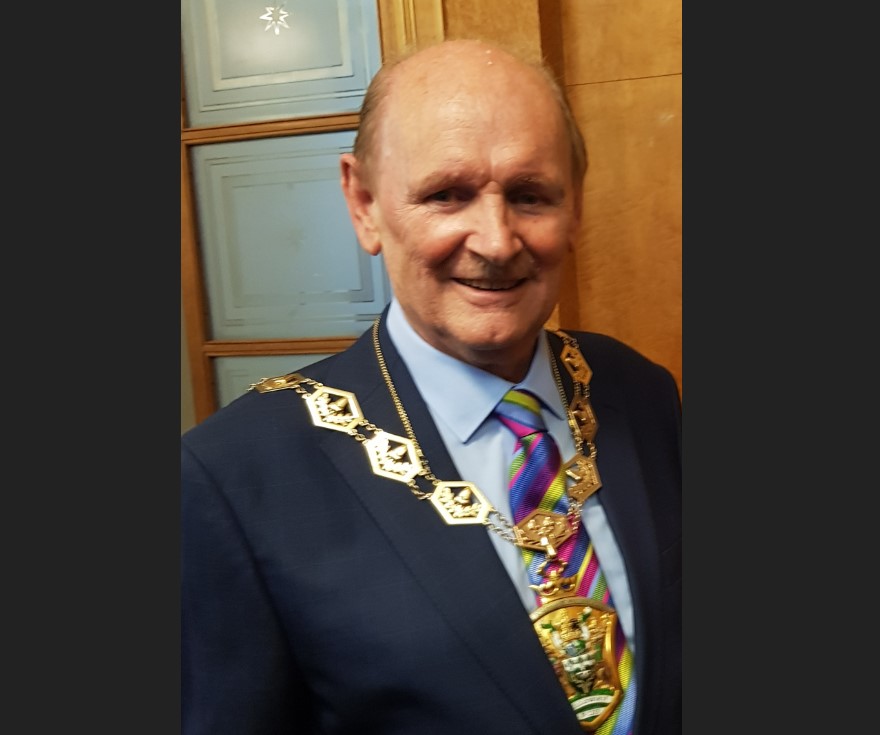
Residents in the London Borough of Waltham Forest are still mourning the passing of its Mayor, Councillor Chris Robbins CBE.
A staunch servant to his community since 2002, as a ward councillor, cabinet member, Leader of the Council and then Mayor, he went about his daily business with immense dignity, grace, and compassion in every way.
Born in Bethnal Green in 1945, he lived in east London for his entire life, serving as ward councillor for Grove Green in Leyton since 2002. A Waltham Forest Labour Councillor for over 18 years, he was a Councillor there since 2002 before becoming Leader, for eight years - from 2009 – 2017.
Supportive of all efforts of humanitarian works – both at home and overseas – as equally and effortlessly, especially in his community, with his unerring work with the interfaith community; he was on the Queen's Birthday Honours – when he received his CBE for public service – in 2017.
Having served as a councillor for 15 years, he became leader of the Labour group in 2009 and led the party to win a majority, which it has not lost since, in the 2010 local election – after eight years of no overall control. He stood down in 2017, when Cllr Clare Coghill took the helm.
She said: “Chris loved the borough and its people. His motto as leader was ‘residents first’. Above everything, he was utterly devoted to his family and my heart goes out to them, and all of his relatives.
“We all lost a great man, a great leader and a great friend.”
A “giant” who led Waltham Forest Council for seven years, he is survived by his wife Shelley, and daughters Emma and Victoria.
He was 76.

Royal Sutton Coldfield Community Town Hall Trust, the charity which runs Sutton Coldfield’s Town Hall, is marking a year of collections of food for local food banks. The Food Bank Donation Station, open twice a week in response to additional need during the COVID-19 crisis, is run by volunteer Terry Dockery, with support from the Town Hall’s team.
It has collected over £50,000 worth of donations since opening its doors last March.
The collections began when other centres had to close due to volunteer shortages during the first lockdown in Spring 2020.
When shows at the theatre stopped on March 15, the building went into partial hibernation, opening just for food and blood donations, and later in the year as a temporary dance school and examination centre. Since February 2021 it has operated as Sutton Coldfield’s central vaccination centre for the town’s NHS Group Practices, but has continued with collections of food twice a week.
The Town Hall’s Food Bank volunteers work with The Trussell Trust Foodbank Network, which runs Six Ways Baptist Church and George Road Church Food Banks in Erdington. It also supplies Sutton Baptist Church, Sutton Coldfield United Reformed Church and St James’ Church Mere Green. Food donated at the Town Hall is distributed to each of these centres to help those in need.
Food and household items are still urgently needed by all of these centres, as more families than ever are hit by the economic impact of the virus. On a Monday and Friday, 10am – 2pm, locals can bring donations to the collection point at the far end of the town hall on foot. Alternatively, neighbours and businesses have clubbed together with donations, allowing larger loads to be brought by car to a loading bay at the side of the venue.
The Town Hall also launched ‘Town Hall Tara’s Dog and Cat Food Bank’ in a response for more pet food support, using the venue’s own Staffordshire Bull Terrier mascot to lead the campaign. This has proved to be both successful and in constant demand.
Terry Dockery, the lead volunteer on the project said “Any non-perishable foodstuffs are appreciated, but our current priorities are toilet rolls, deodorants and soap, pasta, rice, feminine hygiene, sauces, drinks and tinned foods.”

It took just 15 seconds to steal a Merseyside family’s nifty Ford Focus ST from their home driveway at 10pm on a Saturday night. Undeterred by the CCTV camera, brazen thieves smeared one of the lenses to try to obscure the view, while using sophisticated equipment to hijack the vehicle’s keyless technology. Thanks to unique stolen vehicle recovery (SVR) technology from Tracker, the prized Ford with sports technologies was quickly recovered undamaged by the police and returned to its owner.
Commonly known as a “relay attack”, the car’s system was remotely fooled into unlocking the doors and starting the engine, enabling the gang to simply jump into the car and reverse off the driveway. Although the family was at home at the time of the theft, it wasn’t until the following morning they realised the car was gone. Fortunately, the vehicle was fitted with a Tracker device, hence once notified, Tracker and the police were able to take immediate action. Despite quickly locating the vehicle, the three thieves were nowhere to be seen.
A couple of weeks later, the same car was stolen again by a different group of thieves, this time when it was being used by a family member out making errands. However, once Tracker was alerted for the second time, the police were able to locate the vehicle and again were able to return it undamaged.
Martin Loftus, the owner of the Ford Focus ST, commented: “We were really unlucky to have the vehicle stolen twice in very different and unrelated circumstances and within a relatively short time frame. The first time round we didn't hear a thing.
“It wasn't until the morning that we realised the vehicle was gone, and even then, we simply thought the car had been moved by one of the family; after much confusion, and a friendly family row, we realised it had been stolen. After the car was stolen the first time, we invested in a Faraday pouch to keep the key fob in at home, to prevent its signals from being intercepted again. However, opportunistic thieves were quick to exploit the key’s technology when we were out and about, and hence the car was stolen again.
“We are very grateful for having a Tracker fitted, which meant our car was found and returned. Tracker has more than proven its worth, so we're getting Tracker devices fitted to our other family cars for extra peace of mind."
Clive Wain, Head of Police Liaison for Tracker, commented: “Not that long ago, thieves would typically break into homes to steal keys to retrieve cars. But as these thefts clearly show, technology - despite being extremely sophisticated - enables thieves to take cars within seconds using kit they can buy easily from the internet. Watching the CCTV footage from the first theft, before the camera lens was smeared, you can clearly see one thief waving a laptop bag by the front door, while two others leap into the vehicle once the key fob in the home had been triggered.”
Relay attack theft has risen to an all-time high. Recent analysis of how criminals stole cars in 2020 found 93% of all recovered vehicles had been stolen without the thief having possession of the keys. This has nudged up from 92% in 2019 but represents a 27% increase over the last 5 years.
Clive Wain continued: “The good news is there are simple precautions people can take. Whilst the relay devices can receive signals through walls, doors and windows, metal is its enemy, so putting keys in a metal tin or the microwave is a cost-effective way to outsmart the criminals. Alternatively, like Martin did, invest in a metallised signal blocking pouch, such as a Faraday wallet. These are designed to shield electronic keys from relay attacks, but as the second theft clearly shows, it’s important these shielding devices are used.”
“We also encourage drivers to use traditional visual deterrents such as crook locks and wheel clamps to frighten off criminals and protect their car. However, in the event of a theft, stolen vehicle tracking technology will significantly help police quickly close the net on thieves and return the vehicle to its rightful owner.”
Tracker is the only SVR provider offering vehicle tracking systems that are supported nationwide by UK police forces. Tracker SVR solutions work like an electronic homing device. A covert transmitter is hidden in one of several dozen places around the vehicle. There is no visible aerial, so the thief won’t know it’s there. The combination of VHF with GPS/GSM technology, unique to Tracker, makes its units resistant to GPS/GSM jamming, confirming Tracker as a superior security defence against determined thieves.
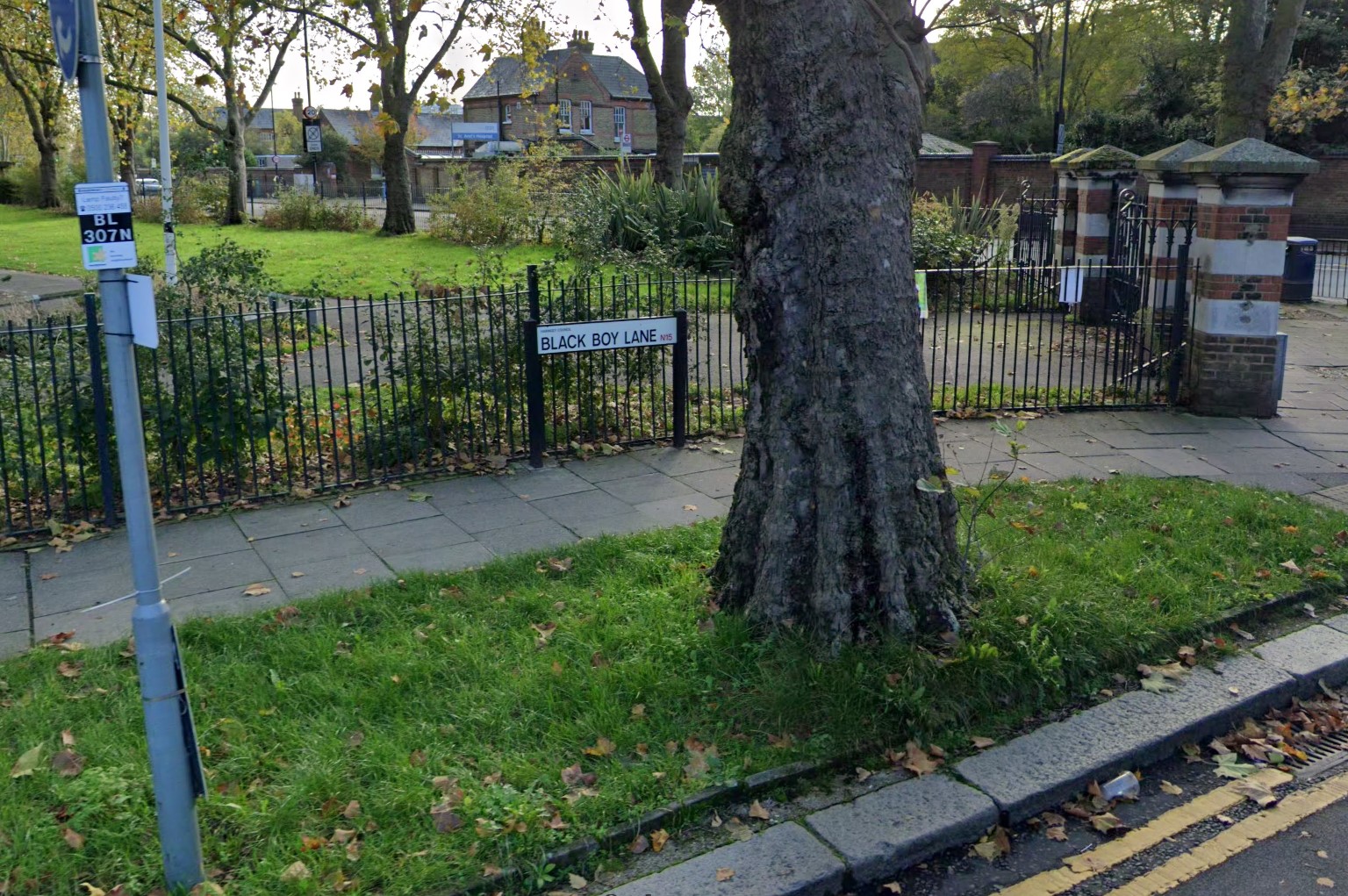
The Council’s Corporate Committee have deferred their decision on the proposal to rename Black Boy Lane and announced that more engagement needs to take place with residents following a meeting that took place on March 17.
The renaming consultation is part of the council’s Review on Monuments, Building, Place and Street Names, aimed at ensuring that our public spaces across Haringey are reflective and respectful of our wonderfully rich and diverse borough. 64% of those who participated in the consultation exercise (mostly Haringey residents from across the borough) supported the proposed change, although 72% of respondents living on the street itself objected to the specific proposals.
The Corporate Committee, which has a legal obligation to take into account any objections, particularly including the residents and organisations who live on the street, agreed that, in the light of the anticipated easing of the COVID restrictions, the Council should undertake further engagement with the local residents, before it makes a final decision on the renaming of Black Boy Lane. Councillor Diakides, Chair of the Corporate Committee, said: I” extremely grateful for your response during this difficult time and I want to assure everybody that the council takes seriously all the views expressed.
“I know that many Haringey residents and councillors, are keen to see progress made as soon as possible and, also, to properly respond to any concerns expressed.
The renaming consultation has prompted a number of important discussions about race, equality, diversity and representation across the borough. These issues, and conversations, matter.
“This would be the first initiative of its kind and scale in the country, with other councils working on similar proposals and watching us to learn from our experience; it is therefore imperative that we get it right and maximise public support and consensus, in order to minimise the risks of misunderstandings, unnecessarily alienating people, or doing more harm than good.
“The Committee members are aware that, despite the heroic efforts of our staff and the fact that the council has gone well beyond the minimum consultation and support requirements of the legislation, it proved impossible to carry out direct face-to-face communication with the affected residents, due to the current lockdown restrictions. This is why we took the view that we should allow some more time for further engagement, using the opportunity created by the forthcoming easing of the COVID restrictions.”

There is additional time for people to have their say about community day activities for some of the Wolverhampton’s most vulnerable residents.
The City of Wolverhampton Council commissions services to provide meaningful activities and social opportunities for adults aged 55 and over who are socially isolated or are physically frail, have dementia or poor mental health, or have a physical or sensory impairment.
The Covid-19 pandemic has had a major impact on the delivery of these services with provision suspended for much of the last 12 months. The requirement for many services users to shield has also meant that the number of people attending services that have been running has been low. In addition, take up of traditional day services for older adults have been in decline for several years, both locally and nationally.
A survey asking for people’s experiences of, and thoughts about, these services is currently open and the closing date for comments has been extended to Friday 23 April. To take part, please visit: https://consultation.wolverhampton.gov.uk/adults/community-activities-for-adults.
Emma Bennett, the City of Wolverhampton Council’s Director of Adult Services, said: “We need to ensure community services are delivering the sort of activities that people want and need, and so we want to hear from people who have used or are using these services here in Wolverhampton.
"This is a chance for you to tell us your experiences of receiving support from these services and to help shape provision going forward. Please take a few moments to complete the questionnaire or you can ask a family member or relative to complete it on your behalf."

Is there anything more joyous than watching a group of yappy dogs playing together and enjoying endless treats? Nothing quite compares to it, according to UK cleaning expert Dr. Beckmann, the manufacturer of the hugely popular Pet Stain & Odour Remover.
Dr. Beckmann loves dogs and after the company saw reports from experts claiming the end of lockdown could prove particularly tough for Britain’s pooches, they decided to act – partnering with Manchester & Cheshire Dogs’ Home and arranging a special Lockdown Quaran-tea party (or Pawty in dog’s speak) to give a group of abandoned dogs some much-needed lockdown cheer. Puppy ownership surged during lockdown as two thirds of people described their new four-legged friend as a lifeline, but now pet rescue centres are worried about a potential deluge of dogs forced into their care because owners have less time at home as lockdown ends and Britain goes back to the office.
“Many people have either adopted dogs or have been spending all their time with their dogs for months because of lockdown,” says Anna Stansfield, Home Manager of Cheshire Dogs’ Home. “Dogs will of course have loved the company, but people do now need to start preparing their dogs for life post-lockdown, especially if they’re going to be returning to work.
“Dogs who are used to spending extended periods of time with their human families can suffer from separation anxiety when owners are suddenly away from home. This is distressing for the dogs but can also be very upsetting for their human families – but the great news is, good preparation now can really help.
“As of now, dog owners who will at some point be going back to work should try to spend some time away from their dogs each day, even if it’s just an hour in a different room or in the garden where your dog can’t see you. Make sure the dog has toilet time and a walk first. ‘Alone time’ should have something positive around it for your dog, such as a filled chew toy or a long-lasting chewy treat.
“The practice absences can be extended and built up to simulate your work routine. If you’ll be working in the evenings, make sure these practice absences are in the evening too. Dogs have been such a comfort to people during lockdown, but now we all need to make sure that a return to work isn’t a really stressful time for our four-legged friends.”
To bring some much-needed relief to the dogs in lockdown in kennels at Manchester & Cheshire Dogs’ Home, Dr. Beckmann threw an afternoon tea party complete with paw-secco, doggie treats, party hats and plenty of bones. The dogs had an afternoon of unbridled fun as Staffordshire Bull Terriers played with Border Collies and indulged in a tug of war with the tablecloth!
And Dr. Beckmann has now partnered with the Manchester & Cheshire Dogs’ Home to raise awareness of the potential post-lockdown dogs’ plight.
Dr. Beckmann spokesperson Susan Fermor said: “It’s been a hard time for all of us over the past few months and we wanted to help support Manchester & Cheshire Dogs’ Home who have felt the impact of not being able to have the doors open as usual.
“It’s been fantastic to see wagging tails of the dogs enjoying themselves as many have been on lockdown longer than they should’ve been.” Dr. Beckmann Pet Stain & Odour Remover is available at a wide range of retailers and online.

Sutton Coldfield Town Hall, an Edwardian arts venue in Birmingham, has received a grant of £34,400 from the Government’s £1.57 billion Culture Recovery Fund to help the organisation recover and reopen. More than £300 million has been awarded to thousands of cultural organisations across the country including the charitable trust-run Town Hall in the latest round of support from the Culture Recovery Fund, the Culture Secretary announced.
The venue, which is currently being used as a vaccination centre for the NHS, will now be able to recommence planning of its 2021/22 shows and room hire. The staging of ‘Cinderella’ had been in jeopardy with not enough reserves to support the production of the show, which is key to the venue’s financial sustainability.
As a result of the grant, the Trust can return more staff to work, enabling the venue to market its autumn programme, which starts in September with the sell-out Gary Powndland comedy show. Over £800 million in grants and loans has already been awarded to support almost 3,800 cinemas, performance venues, museums, heritage sites and other cultural organisations dealing with the immediate challenges of the coronavirus pandemic.
The second round of awards made today will help organisations to look ahead to the spring and summer and plan for reopening and recovery. After months of closures and cancellations to contain the virus and save lives, this funding will be a much-needed helping hand for organisations transitioning back to normal in the months ahead.
Culture Secretary, Oliver Dowden, said: “Our record breaking Culture Recovery Fund has already helped thousands of culture and heritage organisations across the country survive the biggest crisis they've ever faced. Now we’re staying by their side as they prepare to welcome the public back through their doors - helping our cultural gems plan for reopening and thrive in the better times ahead."
The Town Hall’s Managing Director, Julie Rennison, said: “This funding is crucial to our recovery, as it takes months behind the scenes to plan and market our programme – particularly the pantomime. With this support, and with confidence in a return to full houses once vaccinations are complete, we have a much better chance of a successful relaunch in the autumn and a welcome return of our traditional Christmas shows.”
Sir Nicholas Serota, Chair, Arts Council England, said: “Investing in a thriving cultural sector at the heart of communities is a vital part of helping the whole country to recover from the pandemic. These grants will help to re-open theatres, concert halls, and museums and will give artists and companies the opportunity to begin making new work. We are grateful to the Government for this support and for recognising the paramount importance of culture to our sense of belonging and identity as individuals and as a society.”
The funding awarded today is from a £400 million pot which was held back last year to ensure the Culture Recovery Fund could continue to help organisations in need as the public health picture changed. The funding has been awarded by Arts Council England, as well as Historic England and National Lottery Heritage Fund and the British Film Institute.

A Solihull-based business has raised money for food banks after committing to a virtual charity 5K and donating £100 worth of food to charity every month. UVA UK is set to launch its new app-based ride-hailing service in Birmingham soon and has pledged to donate 3% of its overall profits to charities in the UK.
Making good on its promise ahead of its launch, six UVA employees laced up their running shoes for The Trussell Trust’s Race Against Hunger 5k to raise money to help the charity on its mission to end poverty and destitution. The event saw 851 runners take part, raising more than £116,000.
The charity recently revealed that in the first six months of the pandemic, food banks in its network gave out 1.2 million emergency food parcels to those who needed them, which equates to one food parcel every 13 seconds. Alongside the 5k, UVA has committed to donating £100 a month to The Trussell Trust to support its network of food banks.
The ambitious ride-hailing company, which has long-term plans of becoming a UK wide operation, has also launched its Local Heroes initiative to reward and celebrate incredible acts of bravery and generosity to individuals in the regions it operates in.
Its first Local Heroes prize has been awarded to Turki Al-Shammari who jumped into icy waters to save the life of a dog walker who appeared to be drowning. UVA sent him a personalised letter along with a £100 voucher to celebrate and mark his courageous act.
Ayesha Rees, CEO of UVA UK, said: “Giving back to our local communities is at the heart of our business model. These recent charity donations mark the start of a long term commitment to support those who need it most.
“It’s going to be an exciting month for us. The team have been training hard for The Trussell Trust 5K and it’s been brilliant to name Turki who recently saved a dog walker from a river as our first UVA Local Hero.”
Turki Al-Shammari, said: “I am humbled by the nomination for the UVA Local Hero Awards. Many things have crossed my mind since the incident, the praises and kind words I hear from people has really touched me.
“Being physically able to help someone in need is a blessing, the letter I received from the UVA showed me the value of recognition as a form of help. I’m glad we all still see some positivity in such tough times.”
UVA makes urban travel better, changing the way ride-hailing works for good, providing a safe and trustworthy service for both passengers and drivers. Founded by Ibrahim S. Al-Daajani in 2019 and headed up by CEO Ayesha Rees, UVA’s head office is in Solihull, West Midlands.

A Met Police officer has been convicted of being a member of a banned neo-Nazi terrorist organisation.
Benjamin Hannam, of Enfield, north London, was found guilty of membership of the banned right-wing extremist group National Action (NA). He was also convicted of lying on his Met Police application and having terror documents detailing knife combat and making explosive devices. Hannam is the first British officer to be convicted of a terrorism offence. He was released on conditional bail ahead of sentencing on April 23.
At the Old Bailey, Judge Anthony Leonard QC lifted a ban on reporting the case after the 22-year-old admitted possessing an indecent image of a child, which was to have been the subject of a separate trial. The Police Constable had been working as a probationary officer for the Met for nearly two years before he was found on a leaked database of users of extreme right-wing forum Iron March.
He had signed up to the forum when he joined the London branch of neo-Nazi group NA in March 2016. Following his arrest in March last year, officers discovered a NA business card and badges, as well as writings about his involvement with the group.
Jurors were told that on the day the group was banned in December 2016, Hannam had transferred the knife-fighting manual from his computer to folder named ‘NA’ on a memory stick along with other extremist texts. Detectives also found he was in possession of multiple prohibited images including "pseudo images" of young boys and girls.
Jurors convicted him of remaining in NA for several months after it was banned in December 2016, as well as two counts of fraud for lying about his far-right past in a Met application form. Prosecutor Dan Pawson-Pounds said the fraud was "intimately connected" to Hannam's membership of the outlawed group.
Hannam had denied all the offences, telling the court he had never been a member of NA despite regularly attending group meetings. He claimed that he was interested by the look and aesthetic of fascism, but that he was not a racist and had actually challenged group members when they expressed such views.
The officer said he had been desperate to impress an older NA organiser and his association with the group ended before he began working for the Met. The court heard that Hannam was part of a successor version of the extremist group called NS131 - which was itself outlawed in September 2017 - and that he appeared in its online videos spray-painting neo-Nazi logos.
He had joined the Met in 2018 and during his training was actually shown videos relating to NA. He passed out early in 2019 but was identified on the neo-Nazi web forum by detectives.
Scotland Yard said it had reviewed Hannam's time in the Met and found no evidence his actions had been influenced by any extremist ideology. He is currently suspended from duty. After the jury returned their verdict, the judge said Hannam had been "convicted of serious offences" and was being bailed as a "courtesy".
Jenny Hopkins, from the Crown Prosecution Service, said Hannam's "lies have caught up with him and he's been exposed as an individual with deeply racists beliefs".
"Benjamin Hannam would not have got a job as a probationary police constable if he'd told the truth about his membership of a banned, far-right group," she added. Cdr Richard Smith, of the Met's Counter Terrorism Command, said "the public expect police officers to carry out their duties with the very highest levels of honesty and integrity. Sadly, PC Hannam showed none of these qualities."
Following the exposure of the ‘appalling and unliveable' council housing conditions some people have endured during lockdown in London, attention was drawn to the inhabitable living conditions experienced by residents living in council-run properties up and down the country – especially during the turbulent COVID-19 pandemic.
A recent ITV news investigation highlighted the plight of people living in council-run properties in Croydon, in south London and it cited residents living in ‘unliveable’ council housing conditions. Many have been enduring such atrocious conditions during lockdown measures.
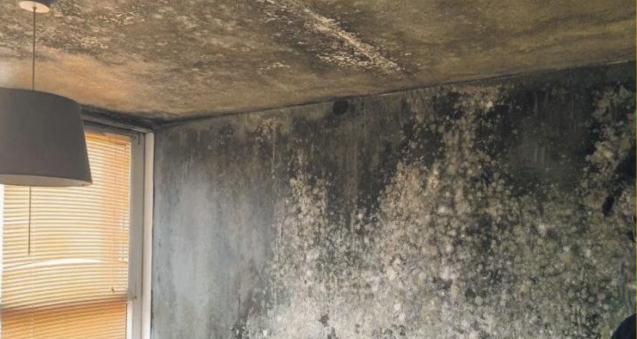
Since 2019, residents of a tower block in South Norwood have been complaining to their landlord, Croydon Council, about leaks in their flats that have now contaminated their homes, thereby turning them into dangerous places to actually live. The programme showed Fransoy Hewitt, who lives on the ground floor with her two sons, aged five and seven, started noticing damp and mould 18 months ago. Her flat was damaged by mould, damp and leaks and her two sons were forced to live in a small bedroom which was the only non-damaged section of the flat.
These environmental incidences were further compounded by Hewitt’s son who suffered a respiratory condition (unable to breathe at nights). TV footage showed the magnitude of this residential squalor, as the floors of the flat were wet, with a black mouldy-like kitchen, unfit for use.
To prevent electrocution, the fridge was unplugged for months. There was no light in the bathroom; the sofa was destroyed along with many shoes, furniture and toys.
In Birmingham, the City Council, along with the NHS and Solihull Metropolitan Borough Council have worked together to develop a refreshed Sustainability and Transformation Plan (STP) Strategy. The strategy sets out initial thoughts on how we will improve the health and wellbeing of people living in Birmingham and Solihull.
They want the people of Birmingham and Solihull to lead fulfilling, healthy, independent lives, receive consistently high quality health and care services, have early access to extra help when they need it and have easy access to support when they can no longer live independently.
Under their new Charter of Rights and Quality Standards for exempt supported housing, those in supported housing, where accommodation is provided alongside care, support or supervision to help people live as independently as possible. Those who are often housed in this type of property are the homeless and other vulnerable groups, such as those with support needs or disabilities.
With people still living in ‘cladded’ tower blocks – post Grenfell Tower – and council houses and flats, which are inhabited by men, women and young children, showing deep-flooded rooms with equally-damp, mouldy walls – and that’s for those who are ‘lucky,’ the Council’s priority on sustainable housing and living conditions remain ‘a must do’.
Councillor Sharon Thompson, Cabinet Member for Homes and Neighbourhoods Birmingham City Council, is leading the drive to make sure people in Birmingham uphold their rights to live in habitable dwellings. Once a homeless person, she will be responsible to ensure city residents live in conditions that they deserve in Birmingham today – regardless of who, or where.
With evidence of mothers living with young children, whilst wading through ‘pools’ of water in kitchens and living rooms, the problem is not exclusive to Croydon. Councils up and down the country, at the very least, have to make sure the people who voted them in have a right to live in a habitable, clean and comfortable abode – regardless of circumstances.
In addition, proper housing conditions including affordability, contributes positively to the mental health and overall wellbeing of citizens including families from all backgrounds. There is a direct link between poor housing and inequality at levels of society. There are glaring examples of this across different groups of citizens and types of housing tenure in many parts of England especially. When we consider the impact of coronavirus on the lifestyles of many, living under poor housing conditions, can only reinforce future risks to the lives of millions of people who are often disadvantaged and excluded from mainstream provision.
In going forward, we must end this embarrassing national episode of social injustice,
and, above all, we must think of our children in all this!
The Phoenix Newspaper has also investigated a claim of terrible conditions in Council Housing in Birmingham, where there were children with special needs living in similar condition.
Photographic and video evidence was submitted in 2018 to Cllr Sharon Thompson, but unlike her counterpart in Croydon, she did not act to remove the family from the situation immediately.
The Council Inspector that was sent out said that he felt that the state of the property was not urgent enough to remove the family from the home, despite a 3 year old suffering with seizures and epilepsy. He made it clear that that there were thousands of homes in a similar situation.
There was sewage water that repeatedly seeped into one room before flowing out into other parts of the home. The water and electricity along with black mould was an ongoing problem and yet, with all this, the inspector said he did not see it as a priority.
The mother told us she has also had regular visits to the children’s hospital due to the epileptic fits and skin infections that the 3 year old suffered during this time. Sadly to this day there are still 3 children living in one room in that same flat, 3 years on.
Birmingham City Council issued a statement in response to Phoenix enquiries - “Birmingham City Council’s safeguarding policy is that the child’s safety and wellbeing must be the paramount consideration at all times.
“In February 2020 the Birmingham Safeguarding Children Partnership published our refreshed threshold guidance called “Right Help, Right Time” – Delivering effective support for children and families in Birmingham.
“Our ambition is that all children and families in every part of the city achieve their full potential and are supported by a confident workforce with a common core of knowledge and understanding of children’s needs, the importance of building positive relationships and a consistent approach to practice.
“More details on our policy are available on our website at https://bit.ly/3sGHRJF”
Since lockdowns began to come into force in March 2020, both Birchfield and Welsh House Farm Big Local partnerships have remained steadfast in their delivery of Creative Civic Change, bringing intergenerational communities in Birmingham together with a wide range of artistic partners including Birmingham Repertory Theatre.
The REP has proudly been working with Welsh House Farm Community School on a project led by local artist, Sophie Handy who has developed a selection of engaging activities throughout recent lockdowns and periods of isolation to bring generations together in difficult times.
The origins of the project began back in 2019 and plans were in place to launch a series of new workshops and projects throughout communities in early 2020. Unfortunately, COVID restrictions and lockdowns brought these plans to an abrupt halt. However, the Hard Times Require Furious Dancing (HTRFD) Creative Civic Change partnership have found innovative ways to continue actively bringing people in Birmingham’s communities together.
As the first lockdown of 2020 took place, the project’s first initiative was to bring together artists from across the community to create a selection of art packs for adults and young people alike to complete at home and share. The art packs, including materials and equipment, were made available to those visiting the local community hubs in both Birchfield and Welsh House Farm during the pandemic to take away and complete at home.
Following the first lockdown, the project has then been working closely with Welsh House Farm Community School. Moving between online lessons and in-person projects when possible, pupils have been working hard to make their community smile. Projects have included sculptures and pieces of artwork to spread a sense of joy and hope in their local area.
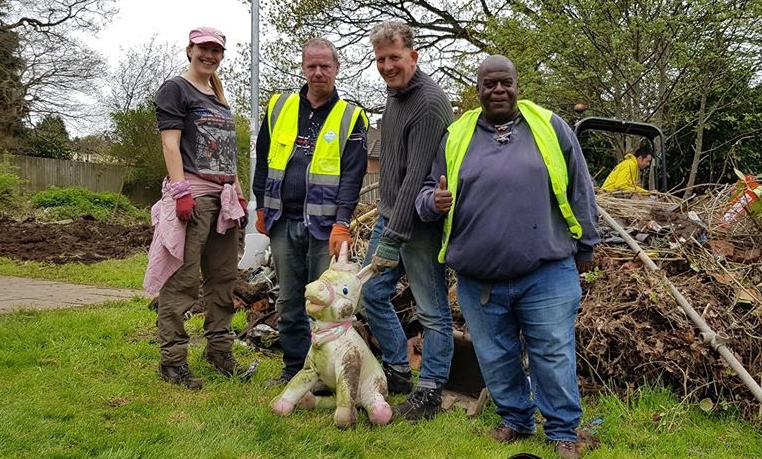
Working in the Rutley Grove Community Garden, the children have also been learning about caring for the environments around them and being resourceful in making artworks from found materials. One of the artworks, “SMILE”, uses recycled materials to create a moment of joy for those attending or passing by the school.
Project lead for The REP, Sophie Handy said; “Over the last year I have felt very blessed to be involved with Creative Civic Change project. Initially having regular zoom meetings with the other artists was very grounding; a supportive place to discuss ideas and feelings during first lockdown. With the collaborative development of the art packs, I was able to maintain a sense of creative purpose. Never before have I realised quite how important that is for one’s well-being. Now, working with the children from Welsh House Farm Community School has been a chance for these young people to connect with the communities and environments around them despite the challenging circumstances of the last year.”
Ben Walters, Deputy Head Teacher at Welsh House Farm Community School added “We have all thoroughly enjoyed working with Sophie and The REP over the past few months. Our pupils have been given the chance to create and explore whilst connecting with our local community.”
HTRFD Creative Civic Change, The Big Local and The REP will continue this work in Birmingham’s communities throughout 2021 and beyond, continuing with a mission to bring people together through artistic led work.