Colors: Blue Color

With raising sufficient money for a deposit often the biggest stumbling block to homeownership, new data analysis from Key shows that older home owners gifted an average of £42,500 to younger relatives to help them get on or move up the property ladder in 2020.

Gifted Almost Two-Thirds of the Average First Time Buyer Deposit: This is almost two-thirds of the average first time buyer deposit (£57,278**) and will have gone even further than before due to the stamp duty holiday announced in July 2020. Older homeowners in London (£102,826), South East (£61,500) and Wales (£44,200) were the most generous while those in the North West (£23,467) and Yorkshire (£25,217) were less so [see table below for full analysis].

That said, more modest house prices in these regions meant that first time buyers still benefitted from 76% of the average deposit needed in Yorkshire (£33,313) and 67% of the average deposit required in the North West (£34,347).

Interestingly in four areas - Wales, the East Midlands, Northern Ireland and the North East - the average gift from property wealth was higher than the average needed by a first-time buyer.  This seems to suggest that in these regions some people who relied on family funding were able to put down a larger deposit, purchased a more expensive property or undertake renovations.

Helping family is a major motivation

Helping younger family members is a major motivation for equity release customers with £755 million of the £3.4 billion in property wealth released last year used for gifting.

The Stamp Duty holiday on all purchases up to £500,000, currently scheduled to end on March 31st, was a major driver with 43% of these gifts used for housing deposits and 26% for an early inheritance – some of which was possibly used for other types of property costs.

Will Hale, CEO at Key, said: “Finding almost £60,000 to use as a deposit for your first home is tough – especially in the current economic environment - and therefore it’s not surprising that many younger people have looked to take advantage of the stamp duty holiday.   In 2020, older homeowners released almost £755 million of equity in order to help younger members of their family meet a range of costs including supporting them with an average of £42,500 to use for a house deposit.

“For many people, these gifts will have been the enabler to them buying their first home and is a perfect example of how intergenerational wealth transfer can deliver positive societal benefits.  The stamp duty holiday has certainly been a catalyst for more activity in this area but helping family is always a major motivation for older homeowners exploring their equity release options.

”That said, it is vitally important that homeowners get specialist advice if they do decide to use some of the value tied up in their home to help their families.  Balancing generosity with their own financial security is vital and a good adviser will help them explore all their options.”

The picture across the country

Gifts for house deposits were highest in London at £102,826 and lowest in the North West at £23,467 as the table below shows.  However in Wales the average gift at £44,208 was the biggest in comparison with the average first-time buyer deposit with Northern Ireland at £34,167 the second highest proportionally. Gifts in the North East and the East Midlands also exceeded the average first-time buyer deposit.


Region

AVERAGE GIFT FOR HOUSE DEPOSIT

AVERAGE FIRST TIME BUYER DEPOSIT

PERCENTAGE OF AVERAGE DEPOSIT COVERED BY GIFT

London

£102,826

£130,357

79%

South East

£61,532

£64,910

95%

Wales

£44,208

£32,663

135%

East Midlands

£42,162

£39,052

108%

East Anglia

£36,914

£51,126

78%

South West

£36,351

£51,397

71%

West Midlands

£35,439

£42,062

84%

Scotland

£35,151

£35,745

98%

Northern Ireland

£34,167

£29,523

116%

North East

£33,350

£29,563

113%

Yorks & Humberside

£25,217

£ 33,313

76%

North West

£23,467

£34,347

67%

A Wolverhampton community group is helping local people discover the fun of cycling after setting up its own cycling hub using a Transport for West Midlands (TfWM) funding grant.

The Park Village Education Centre in Low Hill used its Better Streets Community Fund grant to create secure cycle storage and workshop facility, cycle parking and a safe training area.  And it is working with the Whirling Wheels Cycle Training to offer lessons and bike maintenance services to help local people get out and about on two wheels.

Park Village Education Centres' Dr Yusuf Shafi said: “We used the funding to purchase two 20ft containers for cycle storage and repair and set up a secure cycle shelter for Centre users and locals.

“In partnership with Whirling Wheels we were then able to engage 86 young people and 37 adults in a variety of cycling training, cycle repair and safety training sessions. It has been an absolute pleasure and delight to see so many people getting on their bikes and realising the fun of cycling.”

The hub covers an area with a rich and diverse community and high levels of social deprivation and has not only promoted healthy activity but also provided emotional and social support during lockdown.

The £2 million Better Streets Community Fund was set up for groups and organisations to apply for funding for small scale active travel infrastructure such as bike racks, cycle clubs or safe road crossings.

The group was among 34 projects throughout the region to benefit from grants of between £10,000 and £250,000 for projects to improve cycling and walking in their areas.

These include:

·         An inclusive cycling project run by Midland Mencap at Woodgate Valley Country Park in Birmingham to provide adapted bike and wider cycle paths for their use

·         New toucan crossings at Stevens Park in Dudley to allow children from Old Park School and Thorns Primary School to safely cross the Thorns Road and better enjoy the park

·         Secure cycle parking facility at the YMCA in West Bromwich town centre

·         A Wheels for All inclusive cycling centre, including adapted bicycles, at Aldersley Stadium in Wolverhampton

·         Creation of a community cycle hub at Walsall Rugby Club, which included balance bikes for young children

Mayor of the West Midlands Andy Street, who launched the Better Streets Community Fund in 2019, said: “These community led projects can make a real difference to people, particularly children, by giving them a lifelong love of cycling.

“Encouraging more people to cycle and walk, especially for those shorter journeys, is a key part of our plans to reduce traffic congestion and improve our environment and health.

“That is why we have put unprecedented investment into active travel, including our region wide Starley Network of safe cycle routes and our new West Midlands Cycle Hire scheme rolling out across the region from next month.”

TfWM, which is part of the West Midlands Combined Authority (WMCA), is currently investing £40 million, including £23 million from the Government’s Transforming Cities Fund and £14 million from the Active Travel Fund, into cycling and walking infrastructure.

Encouraging more people to cycle and walk for shorter journeys can play a part achieving the #WM2041 target of becoming net zero carbon region over the next 20 years.

Cllr Ian Ward, WMCA portfolio holder for transport and leader of Birmingham City Council, said: “These community led projects, such as pedestrian crossings, better cycle paths and bike training can make a real difference to a neighbourhood by giving people the confidence to walk and cycle and make streets safer for children.

“As well as backing these smaller projects we are also investing in larger cycle routes and a region wide cycle hire scheme because getting more people to cycle, either for their commute or leisure is healthy and good for our environment.”

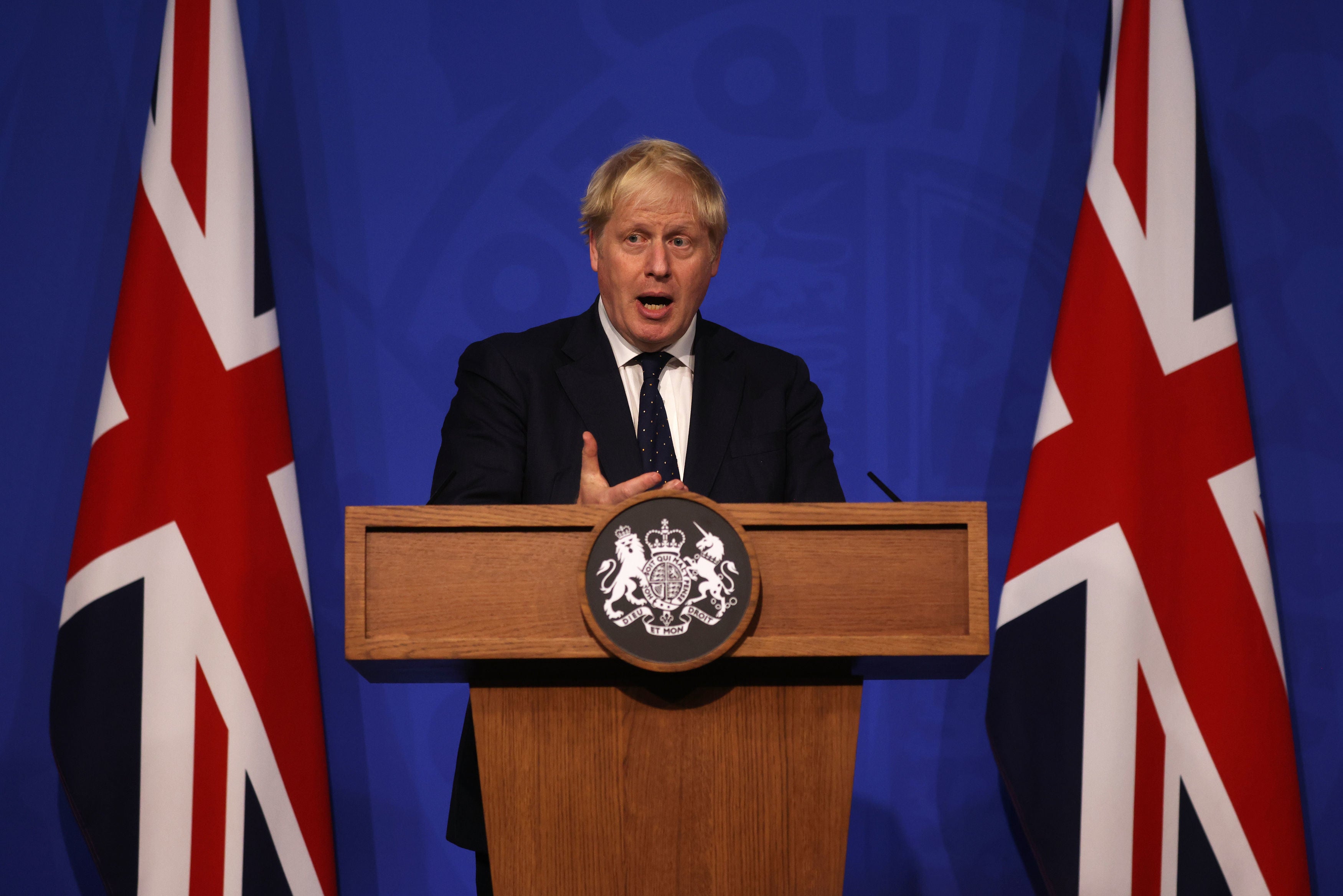
Following Prime Minister Boris Johnson, Scotland’s First Minister Nicola Sturgeon made her announced of the reopening of the country's economy - including shops, bars, restaurants, gyms and hairdressers - is expected to start from April 26. She said it was hoped that the country's ‘Stay at Home’ restrictions could be lifted on April 5.

With four people from two households being allowed to meet outdoors from March 15, all primary pupils and S4 to S6 secondary students could return to school from that date. But pupils in the first three years of secondary school are unlikely to return until after the Easter holidays.

Ms Sturgeon said the Scottish government's strategic framework was deliberately cautious at this stage. "But in the coming weeks, if the data allows and positive trends continue, we will seek to accelerate the easing of restrictions," she said. However, opposition parties said the statement "fell short" of expectations and lacked clarity on its "ultimate goal", while business leaders called for more detail.

Prime Minister Johnson announced that shops, hairdressers, gyms and outdoor hospitality in England could reopen on April 12. Under a four-step plan to ease lockdown south of the border, all legal limits on social contact could be lifted by 21 June if strict conditions are met.

The First Minister said the aim in Scotland was to move fully back to a levels system of restrictions from the last week in April. She said: "At that stage, we hope that all parts of the country currently in level four will be able to move out of level four and back initially to level three - possibly with some revision to the content of the levels."

Ms Sturgeon said that from April 26, the government would expect to see a phased but significant re-opening of the economy, including non-essential retail, hospitality and services like gyms and hairdressers. The aim is for a progressive easing of the level four restrictions at three-week intervals.

She said schools were the immediate priority with the country's youngest children and some senior pupils having returned to the classroom on Monday. It is hoped that the next phase will see the remaining primary school pupils return from March 15, with more senior pupils back in the classroom "for at least part of their learning". Deputy First Minister John Swinney said that this would not just be senior pupils studying for qualifications, and that he wanted to see all S4 to S6 pupils "back into the school system" on this date if the data allows.

The rules on outdoor mixing would also be relaxed on that date, with up to four people from two households allowed to meet, and non-contact sports for under-18s resuming. The final phase of the return to school would take place from April 5, a date when school pupils will be at the start or middle of their Easter holiday break. It is also hoped to lift the stay at home restrictions from that date. At least six people from two households should be able to meet together outdoors, and communal worship will be allowed to resume.

The timing of major religious festivals - such as Easter - will be taken into account when deciding the exact date. The levels system of restrictions would then be reintroduced from April 26, along with a more substantial reopening of society and the economy.

Ms Sturgeon said: "It is important to stress, of course, that all of this depends on us continuing to suppress the virus now - and continuing to accept some trade-offs for a period, for example on international travel. However, if we do so, I am optimistic that we can make good progress in returning more normality to our lives and the economy."

Police have handed a £10,000 fine to the organiser of a church meet-up in a pub car park. Officers from Nottinghamshire Police said the Church on the Streets service, involving about 30 people in Bardney Drive, Bulwell, Nottingham, broke lockdown rules.

They said when officers arrived, at around 12:15 GMT on Saturday, there were tents, food and a sound system. But the church's pastor, Chez Weir, has said she will contest the fine.

Insp James Walker, from the force, said they had been advising the group for a number of weeks about how and where they could worship during lockdown. He said: "Over the last week in particular, we have absolutely clarified these events are not allowed."

"Whilst the rules state you can attend places of worship, this car park is evidently not a place of worship. Despite the warnings given over the last week in particular, this event continued to go ahead and that is why we have implemented our last resort of enforcement."

The pastor said those attending Church on the Streets gatherings stayed in their cars and the food, tents and sound system were all part of the service. She said she had worked with the police throughout and had recently been advised against using a different car park for worship but did not realise the restriction also applied to the pub car park.

"We've looked at the guidelines and they are very vague," she said. "I'm really disappointed. I'm going to challenge it because I don't believe I've done anything wrong." People are allowed to gather at places of worship under current lockdown rules.

Government guidance states a place of worship can be somewhere used for religious gatherings, even sites usually used for other things. But it adds they must be permitted to be open during lockdown and "additional guidance may be applicable".

It also recommends that, where possible, places of worship continue to stream worship or other events to avoid large gatherings.

Key members of West Midlands faith and community groups are coming together to help improve the lives of all residents.

Organised by the West Midlands Combined Authority (WMCA) the new Faith Strategic Partnership Group is bringing together 19 representatives from five religions. They were chosen from 84 applicants who applied to join the group back in October.

West Midlands Mayor Andy Street said: “The work of local faith groups is highly valued, especially the strong contribution they have made during the pandemic. They have helped spread the word to their communities about everything from safety messages to support available to businesses. A very strong field of applicants was received for a small number of places so I am sure this new group will make a significant contribution to the recovery of the West Midlands.”

Members of the group will identify priority areas and strategies to tackle these from a faith perspective. These areas are expected to include homelessness, education, employment, poverty, community relations and leadership. The group’s members will be expected to network within and beyond their communities and collaborate with other faith groups. Their priority will be to support the WMCA’s Covid-19 response, especially around the issue of health inequalities highlighted by the recent Regional Health Impact of Covid report.

The first meeting was held on December 15 and was attended by the Mayor and Councillor Brigid Jones, WMCA portfolio lead for inclusive communities and deputy leader of Birmingham City Council who said: “The new Faith Strategic Partnership Group represents a balance of religious affinities, gender, age and geography to create the right mix of members which is truly representative of the faiths in our region. I look forward to hearing from them on some of the key issues facing our communities in the West Midlands.”

Just over three years ago a faith steering group was created to work with the Mayor’s office and the WMCA and over the past nine months the group has supported its faith briefings which bring together faith groups by holding weekly online meetings. The virtual round tables provide faith leaders and representatives with updates on Covid-19 from local authorities and public health experts, and on funding and support available and the opportunity to hold to account each week’s panel about issues that directly affect their communities. The new group will start off with 26 members, seven of which are from a previous steering group, who will develop and support the new group and stand-down in 12 months.

Chair of the Faith Strategic Partnership Group and chair of the Council of Sikh Gurdwaras, Birmingham and centre director at the Nishkam Centre, Amrick Singh Ubhi said: “The new members were chosen on the basis that they have the strategic capacity and foresight to ensure faith makes a strong contribution to the work of the region. We were particularly keen to include younger faith representatives so we can contribute to the development of the faith leaders and advocates of the future.

“We are passionate about calling upon all the amazing individuals who expressed an interest to join and involve them in future discussion. We are also indebted to the outgoing Faith Steering Group who have to pave the way for this next phase.”

Following the outbreak of the coronavirus pandemic, with support from the West Midlands Combined Authority, vital voluntary services were set up by the wide range of faiths in the West Midlands to help those affected by the current crisis - regardless of belief.


The successful applicants are:

1. Amrit Kaur Juss
2. Bhuvnesh Shah
3. Cheryl Hawkins
4. Ghulam Vohra
5. Hannah Stanton
6. Hikmah Muhammad
7. Jaspreet Singh
8. Jatinder Singh
9. Jessica Day Pollard
10. Julian Sampson
11. Kuljeet Takhar
12. Mahmooda Qureshi
13. Matt Lambert
14. Maxine Douglas
15. Nasir Akhtar
16. Nisha Patel
17. Ruth Jacobs
18. Sheikh Mohammed Nuru
19. Tarang Shelat

Members of a business networking group have helped to organise a Charity event in aid of the Stan Bowley Trust, which raises money for cancer radiotherapy treatment and was instrumental in bringing the revolutionary CyberKnife machine to the UK.

The charity is named after Alan “Stan” Bowley, a Staffordshire Police officer who died in 2011 from cancer but who had benefitted from CyberKnife therapy in Washington DC, USA, after a successful fundraising appeal. Now, to mark the tenth anniversary of his death, the charity is launching Best Foot Forward and inviting people to collectively as a group run, walk, cycle – or climb the stairs – 7088 miles (the distance of the return journey from Congleton, Cheshire, where Stan lived, and Washington DC, where he was treated) over 18 days.

Event Organiser Stuart Bravington, said already 45 people had signed up for the challenge, which will take place from March 31 to April 17. Between them, they have pledged to cover nearly a half of the total distance. He’s calling on local people to sign up and help the Trust in meeting its target.

“I’m hoping to walk or cycle every day for the 18 days of the challenge and would love others to join in,” he said. “With charities unable to do their usual fundraising because of the pandemic, we were keen to do something and came up with this idea. We’re hoping to have as many people take part and raise as much money as we can for the Trust.”

Stan’s brother Ian Bowley, who is a founding member and Trustee of the charity, said: “This is a great initiative organised by Stuart, Gary Williams and Darrell Smith. It will be a fitting tribute to my brother Stan, who worked tirelessly to raise funds for CyberKnife prior to his untimely passing.

“As an event-based charity, our fundraising has dropped by approximately 90% during the lockdown, so to have this opportunity in getting as many people involved as possible and also to raise the awareness of what CyberKnife can offer is fantastic, and the best bit about it, the event will be suitable for anyone, as you can either be an athlete or just clock the miles up by walking the dog or mowing the lawn.”

The daughters of assassinated US Black civil rights leader Malcolm X have requested that the murder investigation be reopened in light of new evidence. They cite a deathbed letter from a man who was a policeman at the time of the 1965 killing, alleging New York police and the FBI conspired in the murder.

Raymond Wood wrote his responsibility was to ensure Malcolm X's security team were arrested days before he was shot dead in Manhattan, his family says. Three men were convicted of the murder. The men - all members of the Nation of Islam political and religious movement - were each sentenced to life in prison. One of them has since died, while the other two have been paroled.

By the time he was gunned down, Malcolm X - who was at one time seen as a public face of the Nation of Islam but then left the movement - had moderated his militant message of Black separatism. However, he remained a passionate advocate of Black unity, self-respect and self-reliance.

In 2020, the Manhattan district attorney launched a review of the convictions after meeting representatives of the Innocence Project, a non-profit legal group campaigning for justice for individuals it says have been wrongly convicted. The letter says the New York Police Department (NYPD) and the FBI (Federal Bureau of Investigation) covered up details of the assassination on 21 February 1965 in Harlem's Audubon Ballroom, Upper Manhattan, according to Wood's family and their lawyer.

Wood alleges that he was tasked with making sure that Malcolm X would have no door security in the building where he was due to speak in public. At a press briefing on Saturday, Wood's family members provided no details about how and when Raymond Wood died. But they said he did not want to make the letter public until after his death, fearing repercussions from the authorities.

"Any evidence that provides greater insight into the truth behind that terrible tragedy should be thoroughly investigated," said Ilyasah Shabazz, one of Malcolm X's daughters. In a statement, the NYPD said: "Several months ago, the Manhattan district attorney initiated a review of the investigation and prosecution that resulted in two convictions for the murder of Malcolm X.

"The NYPD has provided all available records that’s relevant to that case to the district attorney. The department remains committed to assist with that review in any way." The FBI has so far made no public comment on the issue.

Following his announcement, under plans set out by the Prime Minister, shops, hairdressers, gyms and outdoor hospitality will reopen on April 12 in England if strict conditions are met, with up to six people from separate households able to meet in beer gardens from that date.

The new four-step plan to ease lockdown could see all legal limits on social contact lifted by June 21. It requires four tests on vaccines, infection rates and new coronavirus variants to be met at each stage.

Prime Minister Boris Johnson told MPs the plan aimed to be cautious but irreversible and at every stage decisions would be led by data not dates. But he warned there was no credible route to a zero-Covid Britain nor indeed a zero-Covid world.

It comes as the first data on the UK's coronavirus vaccine rollout suggests it is having a spectacular impact on stopping serious illness.

As part of the first step of the plan for easing lockdown in England:

From March 8: All schools will open with outdoor after-school sports and activities allowed. Recreation in an outdoor public spaces - such as a park - will be allowed between two people, meaning they would be allowed to sit down for a coffee, drink or picnic

From March 29: Outdoor gatherings of either six people or two households will be allowed. It is understood this will include gatherings in private gardens. Outdoor sports facilities such as tennis or basketball courts will reopen and organised adult and children's sport, such as grassroots football, will also return

Secondary school pupils can access tests and will be required to wear face coverings in classrooms and shared spaces like corridors. The second step from April 12 would see major parts of the economy permitted to reopen:

·         Non-essential retail opens, hairdressers and some public buildings like libraries

·         Outdoor settings like alcohol takeaways, beer gardens, zoos and theme parks

·         Indoor leisure like swimming pools and gyms

·         Self-contained holiday accommodation, such as self-catering lets and camp sites

But wider social contact rules will continue to apply in all settings - meaning no indoor mixing between different households will be allowed.

Mr Johnson confirmed the end of hospitality curfews - and requirements to eat a substantial meal alongside alcohol. He said a review of international leisure travel restrictions would be announced by April 12 at the earliest.

Funerals continue with up to 30 people, and weddings with up to 15 guests.

The third step will come from May 17 - if the data allows - and will see the "rule of six" abolished for outdoor gatherings, replaced with a limit of 30 people:

·         Two households can mix indoors - with the rule of six applied in hospitality settings like pubs

·         Cinemas, museums, hotels, performances and sporting events reopen - though social distancing remains

·         Up to 10,000 spectators can attend the very largest outdoor seated venues like football stadiums

Up to 30 people will be able to attend weddings, receptions, funerals and wakes. Mr Johnson said this step would also "consider the potential role of Covid status certification" - which could refer to so-called "vaccine passports" - in helping indoor venues to reopen safely.

Before the fourth step, ministers will carry out a review into social distancing and other "long-term measures" designed to reduce transmission, including the "one metre plus" rule and the wearing of face coverings. They will also consider whether to lift the "work from home" guidance, which the government says people should continue to follow until the review has been completed.

The fourth step from June 21 will potentially see all legal limits on social contact removed, with the final closed sectors of the economy reopened - such as nightclubs. The government hopes that - from this date - restrictions on weddings and funerals will also be abolished.

A London-based radio project focussing on the descendants of the Windrush generation living in Tottenham has won Best Arts Project, in the 2021 Hearts for the Arts Awards. N17 radio programme was created by Chloe and Kane, two sixth form students at Harris Academy Tottenham, in partnership with Haringey Council, Kick it Out, Threads Radio, RoughHouse Theatre and playwright, Dougie Blaxland.

With the support of the Windrush Day Grant – the partners worked collaboratively to produce and broadcast a radio programme – N17 – to coincide with Black History Month. N17 celebrates the extraordinary contribution made to British society by descendants of the Windrush generation who settled and brought up their families in Tottenham.

Chloe and Kane conducted online interviews with a wide range of members of the Windrush community who were raised in Tottenham. Their stories were then edited together and broadcast via Threads Radio Station and social media to coincide with Black History Month in October 2020. Some of those interviewed included David Lammy MP, BAFTA-winning actress Letitia Wright and former England cricketer Mark Alleyne MBE.

The Hearts for the Arts Awards are an annual initiative by the National Campaign for the Arts, celebrating local authority and cultural trust arts champions and creative community projects. The judging panel included broadcaster Mariella Frostrup, comedian Frances Martinez and Paul Hartnoll of dance music duo Orbital. 

Councillor Mark Blake, Cabinet Member for Communities, said: “This award is a testament to the amazing creativity and industry of our young people in Haringey. Congratulations to Chloe and Kane for their hard work on this project, which shines a light on the immense contribution of descendants of the Windrush generation to Tottenham life and culture.”

A national statistician has revealed this year’s UK census could be the last one ever to be carried out. The census, which has been conducted for almost 200 years, provides valuable population information to help councils and the government plan services. But Professor Sir Ian Diamond said he was hopeful that data from other sources could replace it.

He said: "The census is frankly as good as it is possible to get. Let's just see if we can get to a similar place, more quickly, using different strategies." Sir Ian said he was examining cheaper alternatives to the 10-yearly compulsory questionnaire delivered to every UK household.

Although the roots of census-taking in Britain can be traced back to the Domesday Book in 1086, it was not until 1801 that an official census was conducted, when the population of England, Scotland and Wales was recorded to be nine million. However, statisticians regard the 1841 census as the first modern census. It has stood the test of time - with more questions about the characteristics of each household member added over the years - but costs have ballooned.

The Office for National Statistics, which has responsibility for the census in England and Wales, said an estimated £906m would be spent next time - nearly double the figure for 2011. The censuses for Scotland and Northern Ireland, which are conducted at the same time, are administered separately.

Sir Ian acknowledged that costs had been rising, though he pointed out that a drive to get most people to complete next year's census online would allow resources to be targeted at those who were less likely to respond. The former University of Aberdeen vice-chancellor said his officials would undertake research, alongside the census, to find out if accurate information could be obtained via other means, such as the Ordnance Survey, GP lists, council tax records and driving licence details.

He said that such administrative data - combined with regular, large-scale population surveys - could provide better and more granular information in a cheaper and more timely way, though he said no decisions had been taken. “We would only move away from the census if we can replicate that richness of data," he said.

He added that the government would have the final say after the census results and research had been evaluated, in 2023. In a 2018 white paper, the government said its ambition was that other sources of data would be used after 2021, though it did not explicitly say that the census itself should be scrapped.

The Davis family from Bromsgrove who couldn’t be together this Valentine’s, won the chance to be part of a national photography competition that brought them together digitally, courtesy of OPPO.

Susan, Rebecca and Rhys Davis were remotely captured on their OPPO smartphones prizes, by acclaimed photographer, Pixie Levinson, as they cooked up a storm for Valentine’s Evening. Rebecca entered the OPPO competition, with a request to have a Valentine’s picture with her brother (Rhys), who missed her birthday because of lockdown, along with their Mother (Susan), who they hadn’t seen for over a year as she was high risk / shielding.

Research from smartphone brand OPPO revealed that Brits wanted time with friends and family (78%) this Valentine’s, compared to just 10% who said their partners as lockdown continued to keep our wider social circles socially distanced. Many Brits haven’t seen friends or family since Christmas, staying in touch via social media, video or phone calls and as a result, nearly half (49%) now feel more positive about technology now than before the pandemic.

In a series of quirky remote photoshoots with separated Brits from across the UK, Pixie digitally bought all kinds of couples together from friends, family members to long-distance lovers. Friendship was captured between best mates Katie, from Epsom and Shannon, from Banstead, as well as Matt and Alice (both from Plymouth) who have spent lockdown playing Call of Duty. 

Lockdown love was in the air between Grace from Kidderminster and Matthew from Liverpool, Alia from Rotherham and her boyfriend Hashim from Cheshire, as well as Joanna and Adrian (both based in London), who met in Warsaw seven years ago.  

Birmingham City Council has been awarded circa £4.5m as part of the second tranche of funding from the Department for Transport’s Active Travel Fund; part of a £13m allocation to the West Midlands Combined Authority. An engagement programme with residents and businesses on how they would like to see the funding used in their communities is already underway.

Councillor Waseem Zaffar MBE, Cabinet Member for Transport and Environment at Birmingham City Council, said: “This second tranche of funding gives Birmingham a real opportunity to continue transforming our transport network, reduce air pollution, and provide our citizens with more opportunities for active travel. In the second half of 2020 we delivered a wide range of emergency transport measures to support walking, cycling, public transport and social distancing across the city.

“Working closely with our communities and key stakeholders, we will start to transition from a focus on the Emergency Transport Plan to the longer-term picture and progression of the Birmingham Transport Plan. We want to focus on supporting a green recovery and will seek community input at every stage, with future schemes being delivered throughout 2021.”

The Active Travel Fund supports the improvement of active travel (cycling and walking) provision and safety in towns and cities. Birmingham City Council recently completed an official review of the Emergency Active Travel measures that were delivered in 2020, with a report to be published shortly. The findings will help guide how some of the existing schemes will be developed, expanded on and/or, where appropriate, made more permanent.

The funding will also support some new active travel schemes, focussed on supporting a green, low carbon recovery (rather than being part of the emergency response). This will include pop-up cycle lanes, walking improvements in local centres, and further development of Places for People and the City Centre Segments scheme. The initial proposals will be developed through community engagement and delivered in the coming year.

Local residents have been invited to have their say with formal consultation on the proposals taking place later this year after lockdown restrictions have eased to ensure inclusive, meaningful engagement with communities and key stakeholders can be carried out. The plans support the Council’s vision for a cleaner, greener city – as set-out in its Route to Zero Action Plan, which was approved last month.

Virtual tours are to be offered at the state-of-the-art Springfields Independent Living facility in Ashby de la Zouch throughout the coming months, as the project delivered by national contractor Willmott Dixon nears completion. Due to complete in summer 2021, the £12.5m project is being created on behalf of emh care & support and will feature 65 one and two-bedroom apartments alongside communal areas such as a beauty salon, hairdressers and bistro.

Designed by BRP architects, the homes have been created to provide residents with an inclusive living environment. The apartments will be offered both on preference and individual care and support needs, with 50 available for rent and 15 for sale on a shared ownership basis. Due to the current national lockdown restrictions the scheme’s show homes are currently closed and face-to-face viewings are not able to go ahead as normal. To ensure tours can still take place Willmott Dixon is using its industry-leading 360 Matterport camera to enable emh care & support to welcome potential tenants and homeowners virtually to the new development. 

Michelle Cotterill, director (delivery) at Willmott Dixon, said: “Throughout the project, we have

been working closely with emh care & support to ensure we are creating a scheme that will make the local community proud. We are delighted that, as we near project completion, we have been able to continue supporting the customer with our innovative Matterport scanning cameras. Technology has played a major role throughout the whole development process, from the use of BIM in the design of the scheme, to the implementation of offsite manufacturing in the build process.” 

Situated at the heart of the National Forest, the development has taken inspiration from surrounding nature and history, producing apartments dedicated to improving the health and wellbeing of its residents. All the apartments are completely self-contained and designed to allow wheelchairs and mobility aids to be used. The homes have been finished to the highest specification, ensuring residents can live in comfort in a spacious modern home.

The development also features a video door entry system, with each apartment also having access to its own secure entrance and fibre optic broadband. Once operational, the independent living facility will also have a dedicated team of staff available 24 hours a day, to support residents with flexible packages of care to suit individual needs. 

Jo Grainger, executive director at emh care & support said: “The way that we would usually connect with people to tell them about our new homes has had to change completely due to the local and national restrictions of the pandemic.  The use of technology available to us, and the flexibility and support from Wilmott Dixon throughout the project has meant that we have still been able to generate a lot of interest and applications for this amazing new facility.  We are now looking forward to an amazing opening and to welcoming people to their new homes.”

Michelle added: “Like the rest of the nation, the construction industry has been forced to find new ways of working throughout the pandemic. Therefore, I am particularly proud of our team’s ability to keep 100% of our sites operational throughout the numerous lockdowns – this has enabled us to continue our work providing much-needed high-quality housing for the community in Ashby, while also ensuring that residents can move into the development as soon as possible.”  

West Midlands Combined Authority (WMCA) leaders have given the go ahead for the new £24 million Dudley Interchange. The approval of the full business case means work can now get underway on a new high-quality bus and tram interchange which will form a crucial part of the wider regeneration of Dudley town centre.

Built on the site of the existing bus station, it will link to the new Metro tram extension currently under construction by the Midland Metro Alliance between Wednesbury and Brierley Hill. Both projects are due to be completed in 2023. As the new images released today show passengers can expect comfortable waiting areas, the latest real time travel information, cycle parking facilities and a selection of retail units.

The seamless connectivity between bus, tram and, longer term, a planned Sprint bus service, will offer people improved links to jobs and leisure opportunities throughout the West Midlands – as well as offer visitors to Dudley town centre a comfortable and convenient alternative to the car. Investment in public transport is also key in supporting the region’s #WM2041 ambition to become   a carbon neutral region within the next 20 years.

Transport for West Midlands (TfWM), which is part of the WMCA, is leading on the Interchange project in partnership with Dudley Council. The majority of the funding is coming from the region’s Transforming Cities Fund allocation, topped up with contributions from the council and WMCA.

Mayor of the West Midlands Andy Street said: “Like other town centres Dudley has been hit hard in recent years, which is why the WMCA is putting its cash to good use to help revitalise the borough.

“Through helping to knock down the tombstone of Cavendish House to make way for the Portersfield development, to extending the Midland Metro through the town to Brierley Hill, we are committed to doing what we can to support the council in bringing their ambitious £1bn masterplan to life.”

Councillor Patrick Harley, leader of Dudley Council, said:  “We are delivering a £1billion regeneration masterplan for Dudley borough and despite the restrictions caused by the pandemic Dudley town centre is currently a hive of exciting construction work.

“I welcome the confirmation of funding for the town’s Interchange, we have continued to drive forward plans to improve access to travel for the town and this impressive facility will help people to connect their bus, Metro and rail journeys. Our plans for Dudley town centre will revolutionise the education offer in our borough and create exciting new jobs and opportunities for local people, and transport will be a key component in making our vision a reality.”

Cllr Ian Ward, WMCA portfolio holder for transport and leader of Birmingham City Council added: “Across the West Midlands we are investing in our bus, rail, tram and cycling networks to grow our economy, offer a clean and convenient alternative to private cars and traffic congestion and improve the lives of millions of people.

“Dudley Interchange will act as a catalyst to the redevelopment of the town centre and support investment and jobs.”

The existing bus station was built in 1986 and is the oldest in the West Midlands. With 420,000 bus departures per year pre-pandemic it is also one of the busiest.

Key regeneration projects in Dudley town centre include:

·         The £450m Wednesbury to Brierley Hill Metro extension

·         The Portersfield development which is a proposed £82m mixed-use regeneration scheme which comprises of 12 acres of retail, entertainment, and student and residential accommodation on the former Cavendish House site – the demolition of which was funded by the WMCA

·         The new £31m Dudley Leisure Centre

·         The £28m Very Light Rail National Innovation Centre, supported by the WMCA

·         The £26.8m Black Country and Marches Institute of Technology

·         Improvements to both Dudley Zoo and the Black Country Living Museum

New research by social scientists at Birmingham City University will explore the impact of coronavirus on Muslims in Birmingham and community-led responses to the pandemic.

Academics Dr Damian Breen and Professor Imran Awan will research the effects of COVID-19 on Birmingham’s minority ethnic Muslim communities, particularly those of Bangladeshi, Pakistani, Indian and black British backgrounds, whilst also researching the role of mosques and other community organisations in facilitating religious rituals and practices, such as deaths and burials.

The majority of the study’s funding (£130k) comes from UK Research and Innovation via the Economic and Social Research Council, which will see Breen and Awan develop toolkits for use across minority ethnic communities in Britain to provide strategies for responding to community needs in times of crisis.

“We’ll be examining how community organisations have provided support and offered interventions around impacts specific to Muslim communities within the context of COVID -19,” explained Breen, a senior lecturer at Birmingham City University’s School of Social Sciences.

“We’ll also be speaking to Muslim communities to explore perceptions around state responses, including access to healthcare during the pandemic and national strategies around vaccination.”

Professor Dame Ottoline Leyser, Chief Executive of UK Research and Innovation, added: “We cannot ignore the social, cultural and economic factors that have shaped the experiences of BAME communities throughout the pandemic.

“Emerging evidence suggests that people from BAME backgrounds have experienced the hardest economic shocks. It’s crucial that we understand the depth and breadth of the impacts of these factors so that we can take action to alleviate the consequences for these communities.”

A special online question and answer session about the Covid-19 vaccine was held with health experts and faith leaders. Taking part were Dr Masood Ahmed, Chief Medical Officer with the Black Country & West Birmingham Clinical Commissioning Group, Madhu Patel from the Shree Ram Mandir in Walsall, Imaam Moulana Ibrahim, the Bishop of Lichfield the Rt Rev Dr Michael Ipgrave and Sikh speaker Gurdip Singh.

Councillor Jasbir Jaspal, the City of Wolverhampton Council Cabinet Member for Public Health and Wellbeing, said: "This online session enabled the community to hear from NHS experts and local faith leaders about why they think people should make sure they get their jab when they are offered it.

"Sadly, there is a lot of misinformation and 'fake news' around the vaccine, so this was an opportunity for people across Wolverhampton and the wider region to ask any questions they have in relation to the vaccination programme.”

Mohammed Yasin, BAME Covid-19 Community Development Worker at Black Country Healthcare NHS Foundation Trust, helped to organise the event. He said: “We know that the current uptake of the Covid-19 vaccine amongst the BAME community is a lot lower than amongst others, so it’s really important that as a health and social care system we do everything we can to encourage this community to take up the vaccine when offered.

“This event was the perfect opportunity for people to understand more about the vaccine and its development and ask questions which will hopefully help to alleviate any concerns they might have.”

Latest figures show there were 305.9 cases of Covid-19 per 100,000 people in Wolverhampton over the seven days to 6 February. That means 805 people in the city tested positive for the virus in that seven day period – though the true number of new cases will likely be considerably higher.