

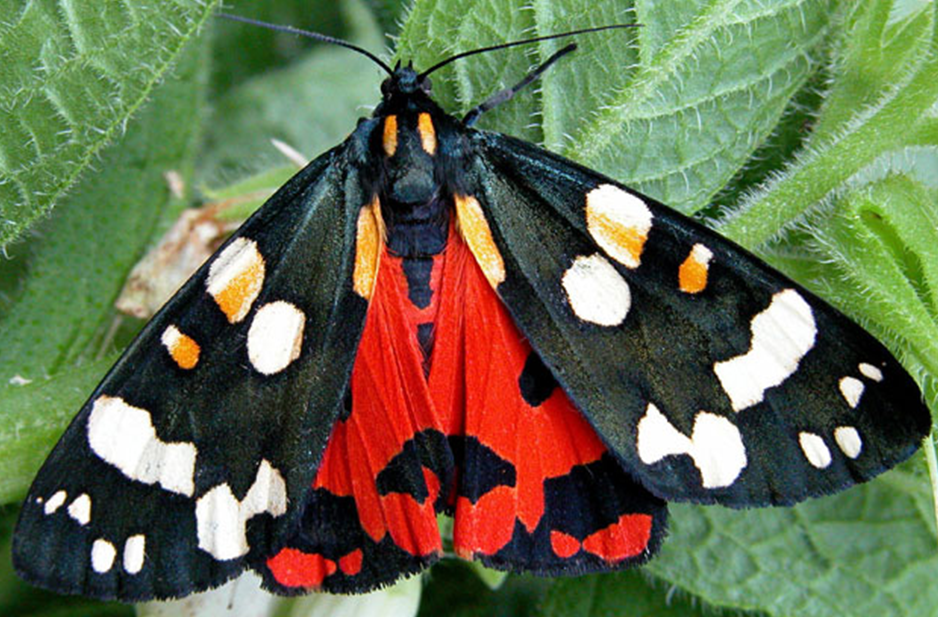
The Scarlet Tiger moth is moving out of the urban jungle and turning up in people’s gardens. This spectacular moth, once rare in the region, is on the move and this summer is proving a bumper year. National charity Butterfly Conservation’s West Midlands branch have received a record number of reports.
Mike Williams, volunteer Publicity & Marketing Officer for West Midlands Butterfly Conservation explains: “Numbers of the brightly coloured Scarlet Tiger moth this year are unprecedented and it is being reported from across the region. Moths often have the reputation of being dull, brown and boring but the Scarlet Tiger is as attractive as any butterfly.
“It was once found only in the south of Worcestershire but has spread northwards likely due to climate change and the spread of a plant called Green Alkanet which originally was a garden plant but has now escaped onto waste land and road verges.
The caterpillars of the Scarlet Tiger which previously fed mainly on Comfrey, a plant of riverbanks and other damp places, has been able to take advantage of this new food source. It is now abundant in many areas and very noticeable as, unlike many moths, it flies in bright sunshine. Its bright colours serve as a warning to birds that the moth is distasteful although it is completely harmless. It will be on the wing until the end of July.”
The Scarlet Tiger is one of over 600 species of moth found in the area and featured in the recently published Moths of the West Midlands. While some moths have declined in abundance over the past 50 years, others have increased in numbers and range as a result of improvements in air quality and changes in climate.
Since the turn of the century, moth enthusiasts in the West Midlands have recorded over 50 new species of moth which have never been recorded before in this area. Increases in moth populations is generally to be welcomed as they are indicators of the health of the wider countryside and are important pollinators. It is hoped that the publication of this new book, which includes a section on gardening for moths, will make people more aware of moths and do what they can to encourage them into the garden.