
Colors: Purple Color

As the UK care home sectors continue to struggle with a combination of an ageing population, coupled with a lack of funding to get new projects off the ground, Elder is celebrating unprecedented growth by using unique technology to make care in the home a suitable alternative.

While financial pressures are forcing traditional care homes to increase size, Elder is focused on delivering person-centred care.

The platform uses its continuously evolving matching algorithm to act as an introductory agency, matching professional and vetted live-in carers with families across the UK. This same technology allows them to provide a carer within as little as 24 hours, unprecedented in the sector. These carers are now operating in over 300 towns and cities nationwide, from south-west England to the Isle of Skye.

As the population continues to age, demand for care will increase and the types of care needed will change. The Office for National Statistics predicts a 36% growth in persons aged 85+ between 2015 and 2025, from 1.5 million to 2 million. This is expected to lead to a substantial increase in demand for care home services. However, Elder’s platform is changing that.

After only three years, Elder is already the country’s leading specialist for live-in care, and only two months into 2019 it’s already created over five care homes. After showing growth of over 800% between 2017 to 2018, the company was awarded the accolade of ‘the third fastest growing company in the UK’ (according to revenue) by TECH5 at the beginning of 2018.

CEO Pete Dowds, said: "The growth we've seen to date has given us the momentum to propel the company forward through 2019. We'll add an additional 30 care homes worth of high quality, dedicated care capacity to a system that is actually in decline. Families and local authorities are finally seeing better quality elderly care becoming accessible and affordable."

And there are benefits for the NHS too; since live-in care leads to better recovery and fewer geriatric hospital readmissions. Additionally, due to the short turnaround time of arranging care, the platform can relieve around 60% of delayed transfer of care instances.”

 

The UK’s biggest video games event will welcome Curve’s bumper selection of indie hits including Velocity 2X and Human: Fall Flat multiplayer


Gamer Network, the global leader in games media and events has announced that the award-winning British video games publisher Curve Digital will be bringing their unique selection of standout indie titles to EGX 2018. Attendees will be among the first in the UK to sample Velocity 2X on Nintendo Switch, and the chaotic new 8-player multiplayer mode in the best-selling Human: Fall Flat, as well as other hits from the Curve catalogue.

Velocity 2X is the sequel to the hugely popular genre-busting arcade shooter game Velocity. Coming soon to Nintendo Switch, the game brilliantly mixes frenetic platforming with blistering arcade shooting to create a truly unique arcade experience.

Human: Fall Flat, the physics-based puzzle-platformer with over 4.5 million copies sold, will showcase it’s all-new online multiplayer mode to the public for the first time at EGX, allowing visitors to master the art of wobbly parkour with up to seven friends!

Joining them on the Curve Booth will be For The King, a challenging blend of Strategy, JRPG Combat, and roguelike elements and skiing-themed construction game Carried Away! The booth will also feature Manual Samuel - the original dexterity adventure game; strategic World War 2 bombing sim Bomber Crew; air combat roguelike Rogue Aces and open-world, narrative-driven RPG Smoke and Sacrifice playable on Nintendo Switch.

EGX, powered by Virgin Media, is the UK’s biggest games event and takes place at the NEC in Birmingham between 20th-23rd September.


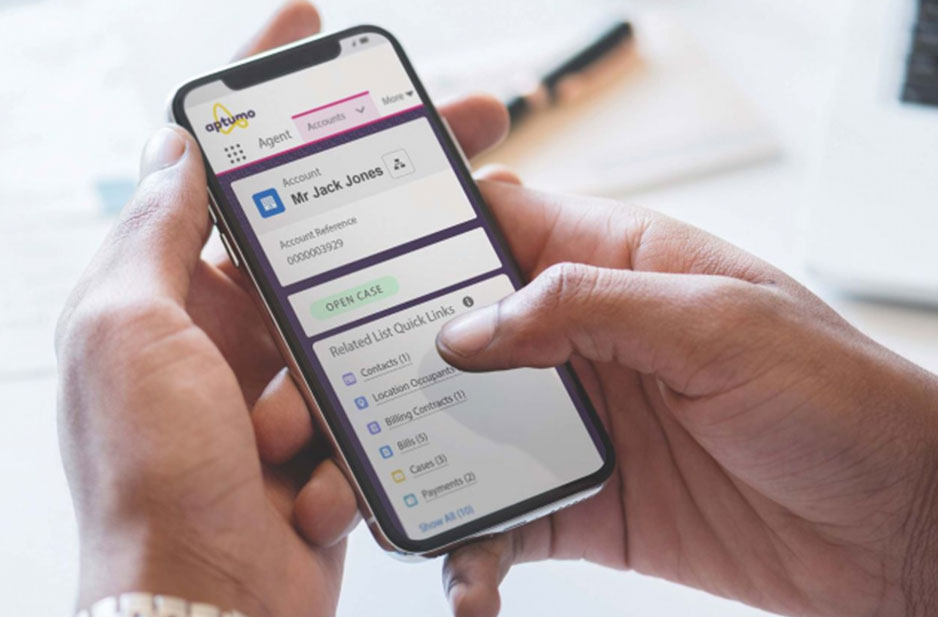
Following the launch of Aptumo, an innovative new SaaS billing software solution, outsourced utilities customer engagement specialist, Echo Managed Services, has secured its first international contract with Coliban Water in Victoria, Australia.

Forming part of a wider transformation project across the water company’s customer and stakeholder managements systems, the contract will see Coliban Water replacing its existing billing platform with Aptumo – an innovative, cloud-based, utility customer billing solution.

Built on the Salesforce platform and designed to evolve with ease, the new system will help Coliban Water to maintain positive relationships with its customers through improving and personalising the billing experience. 

Coliban Water is one of the larger regional urban water corporations in Victoria, Australia, covering approximately 20% of the region. 

Amanda Finnis, CIO of Coliban Water, commented: “We needed an information management system that is easy to use, provides accurate data, has rich reporting capabilities and allows our customers to engage with us how and when they want. We also wanted to generate efficiencies throughout the business to allow us headspace for innovation. Aptumo was the ideal solution. We were impressed by Echo’s specialist utility knowledge, as well as the scope to adapt the platform to our needs both now and in the future.”

Nigel Baker, managing director of Echo Managed Services, said: “Billing is an extremely important part of the customer journey, so it’s great to see that forward-thinking suppliers like Coliban Water are future-proofing their systems with dynamic software like Aptumo. Having been at the heart of the highly-regulated UK utilities sector for over 20 years, we have a deep understanding of what clients and their customers need – and we’re looking forward to the project ahead.”

New research shows that we are now more likely to communicate with our loved ones using smartphones than we are to talk to them in-person - that includes our romantic partners.

The research showed that we communicate with parents, partners, friends, relatives and colleagues using a smartphone e.g. through text or voice call, more than in person. So while 67% of us tend to text our friends and 53% tend to call, only 49% tend to speak in-person.

On average, we’re making 42 digital communications every day, whether that be by voice call, video call, texting or picture messaging.

It appears that digitally-savvy 18-24 year olds are the most smartphone-focused, making a staggering 81 smartphone communications every day - that’s one every 11 waking minutes.

There is a steady decline in this number by age group. Those aged 25-34 engage in 74 smartphone communications per day, reducing to 55 for those aged 35-44, 26 for those aged 45-54 and 21 for those aged 55-64. Those aged over 65 engage in just 14 smartphone communications per day.

Although millennials are increasingly preferring to use text messaging and voice calls, the research, conducted by Better Buy Insurance, shows that young people especially are bridging the gap between meeting people in-person and communicating via their smartphones, by using features like video calling and picture messaging. These communication methods were used more by 18-24s than by any other age group.

Gary Beeston, Sales and Marketing Director from Better Buy Insurance, who conducted the research, said: “It’s a great thing that people are able to use the wonders of technology to stay connected to each other. The features of today's smartphones make it really easy to maintain relationships and video calling features enable us to have that personalised conversation that’s not always possible with such busy lives, especially if our families are geographically spread. Smartphone messaging allows us to stay in contact throughout the day too.”


DVD players, camcorders and house phones will all be obsolete technology in the next 20 years, according to a new poll by Ebuyer.

The survey, conducted by the UK’s largest independent tech retailer, looked into the technological advances that the public think will have the biggest impact on our lives over the next 20 years, and which household tech is likely to disappear from our homes.

House phones were found to be the piece of household tech that was most likely to become obsolete over the next 20 years, chosen by over half (55%) of respondents. With the rise in popularity of streaming services such as Netflix and Amazon Prime, it is unsurprising that 47% of Brits think DVD players will cease to exist over the next two decades.

The technology that Brits think is most likely to become redundant or obsolete over the next 20 years is:

House phones (55%)

DVD players (47%)

Camcorders (43%)

Blackberrys (39%)

Portable music players (29%)

Samsung is currently winning the sales war in the smartphone market, holding 20.9% of the market share for 2018’s Q2, versus 12.1% for Apple, which may explain why one in seven (13%) of adults think iPhones are going to be redundant, compared to one in ten (11%) who chose Samsung phones. Blackberry, which first launched in 1999, was the smartphone that was voted the most likely to become obsolete, chosen by over one in three (39%).

When asked which technological innovations will have the biggest impact on our lives over the next two decades, Artificial Intelligence, intelligence demonstrated by machines, in contrast to the natural intelligence displayed by humans, was the top choice, chosen by an overwhelming 55%. Self driving cars (36%) and Virtual Reality (the computer-generated simulation of a three-dimensional image that can be interacted within a seemingly real or physical way by a person using special electronic equipment), made up the top three.

Surprisingly, a quarter (26%) of adults thought both wearable tech and voice assistants, such as Siri and Alexa, will no longer exist by 2038. One in five (20%) predicted that VR will not be a thing of the future, and 14% couldn’t imagine self-driving cars ever becoming mainstream on our roads.

Lee Weymouth, commercial director at Ebuyer said: “Technology is one of the fastest moving and innovative industries globally, with companies investing millions in creating the latest technological advances and products. It was really interesting to see how the public predict the industry is going to look over the next twenty years, and which household tech they think will soon be out of fashion.

Local businesses in areas covered by the Government’s rollout of superfast broadband have seen a combined £9 billion increase in turnover since the boost to their broadband speed, new figures have revealed.

The “The Evaluation of the Economic Impact and Public Value of the Superfast Broadband Programme” is an independent assessment of the impact the rollout has had in its first years (2012-2016). Key findings from the report include:

  • £9 billion surge in turnover for businesses benefitting from the faster connections now available
  • £690 million net increase in Gross Value Added to the UK economy
  • A reduction of almost 9000 individuals claiming jobseekers allowance, as well as a reduction in long term claimants by 2,500 in programme areas, accompanied by the creation of 49,000 local jobs.
  • Programme has delivered £12.28 benefit for businesses for every £1 invested by the Government and local authorities
  • Strong indication that high take up rates of Government’s superfast programme have encouraged telecommunications industry to expand their own commercial broadband projects.

Minister for Digital, Margot James said:

“Our rollout of superfast broadband across the UK has been the most challenging infrastructure project in a generation but is one of our greatest successes. We are reaching thousands more homes and businesses every week, that can now reap the clear and tangible benefits that superfast broadband provides. We are helping to ensure the downfall of the digital divide.”

New figures out today also show that around 5 million homes and businesses who would have been stuck in the digital slow lane now have access to superfast broadband. The Government’s rollout of superfast broadband to those areas deemed “commercially un-viable” has helped take nationwide coverage to 95.39%.

Take-up of the new technology in areas benefiting from the Government programme is now running at 45% - more than double the expected rate. As a result of the contracts put in place by Government, those companies rolling out  superfast broadband will now return more than £500 million in subsidies to the public purse to be used to reach those locations not yet covered by existing plans.

It is estimated that more than 1 million extra UK homes and businesses will gain access to superfast speeds, taking superfast coverage to 98% of the nation over the next few years.

Government is introducing a Universal Service Obligation that will mean everyone in the UK has access to fast and affordable broadband by 2020, and has recently set out plans to deliver nationwide gigabit capable (1000Mbps) connectivity by 2033 as part of its modern industrial strategy.

Openreach CEO Clive Selley, said: “It is great to see businesses across the UK reaping the benefits of faster broadband speeds and I’m proud of the leading role that Openreach has played in helping to deliver the Government’s rollout of superfast broadband  - one of Britain’s great engineering achievements. We’ve also recently introduced a raft of lower wholesale prices to help drive higher take-up of faster fibre services which will help to further fuel the boost to the UK economy.”

The Government’s rollout of superfast technology is an important part of the ongoing digital transformation work designed to make it quicker and easier for citizens to interact with Government online.