
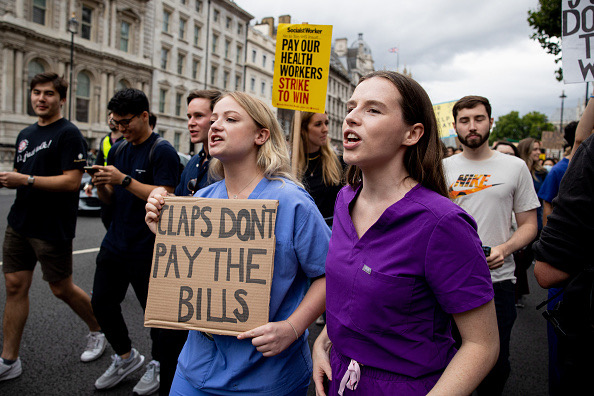
Strikes have disrupted everything from train services to postal deliveries and teaching in schools.
More workers are expected to walk out, as demands grow for improved working conditions and pay increases to keep up with rising prices.According to the Office for National Statistics, in September alone, 205,000 working days were lost to strikes.
Rail workers, border force, ambulance staff,Royal Mail workers, teachers, university staff, baggage handlers, driving examiners, bus drivers, junior doctors (in England), and up to 100,000 civil servants have voted to strike across different government departments.
Nursesare set strike – for the first time in its 106 year history- in England, Wales and Northern Ireland after a meeting between the union and the health secretary ended in deadlock after ministers refusing to discuss pay with the RCN (Royal College of Nursing).
After a meeting with Health Secretary, Steve Barclay, the RCN’s general secretary, Pat Cullen, said there was no more on offer from the government and stressed the distress from the profession at being forced to strike.
“The government was true to its word – they would not talk to me about pay,” Cullen said. “I needed to come out of this meeting with something serious to show nurses why they should not strike this week. Regrettably, they are not getting an extra penny.
“Ministers had too little to say, and I had to speak at length about the unprecedented strength of feeling in the profession. I expressed my deep disappointment at the belligerence – they have closed their books and walked away.”
NHS bosses got people to celebrate the service of nurses every year with a clap on its birthday. It started in 2020 with an applause on the 5 July, the NHS's 72nd birthday following the success of the weekly Clap for Carers, which encouraged people to clap for the NHS and key workers to thank them for their work during the coronavirus pandemic.
However,followingthe UK’s Brexit in 2020,and the subsequent departure of some 40,365 NHS nurses – equivalent to one in nine–unions say they need to feel valued, respected, and prioritized and want to feel safe and valued in order to best care for their patients and want improved working conditions.
Migrant healthcare workers, who were the mainstay of the industry,were said to have been forced to return to their countries of origin, after the expiry of visas – leaving their British counterparts doing the work they were doing all the time, during their stay here.
Newly qualified nurses have been offered a pay rise of 8.7%, with experienced nurses set to get uplifts of between £2,450 and £2,751. But, in defiance, theyhave voted to strike over pay, as other health workers are balloted.
Strikes across England, Wales and Northern Ireland are planned for Thursday 15 and Tuesday 20 December. The Scottish government agreed a 7.5% pay deal with the Unite and Unison unions on Monday, which called off their strikes.
Sources say the industrial action was expected to last for 12 hours on both days – most likely between 8am and 8pm.RCN Scotland is balloting its members on the offer and is due to announce the results next week.