Colors: Blue Color


Known as one of America’s greatest civil rights activists, the legendary Malcolm X is remembered, in the Midlands, for bringing his fight against racism to Smethwick.


The civil rights campaigner visited on 12 February 1965 because at the time Smethwick was considered a hotbed of racial tension.


And, more than half a century on the man who became so incensed with racism in his own country is still celebrated for his visit to the Black Country town after hearing of plans to stop Black and Asian residents buying houses.


The late Tory MP, Peter Griffiths, won his seat there a year before the much heralded visit with the campaign slogan: ‘If you want a n***** for a neighbour, vote Labour’.


Locals successfully petitioned the council to buy up empty homes in a street and ban non-white families from moving in.


Smethwick proved an eye-opener for Malcolm X.


As Malcolm X walked down Marshall Street, on February 12 in 1965, he was jeered by white residents who told him they didn’t want ‘any more Blacks living there.


He was ejected from the smoking room in a local pub down because he was Black.


Nine days after his trip to Smethwick, Malcolm X was assassinated in a New York ballroom - aged just 39.

It has been announced that the Birmingham Hippodrome is among the latest recipients of emergency government arts funding and will be receiving almost £3m from the £1.57bn Culture Recovery Fund. Town Hall Symphony Hall in the city has been awarded £2.53 million. The City of Birmingham Symphony Orchestra (CBSO) is to return to Symphony Hall Birmingham, as its doors open for the first time in over seven months to enable live concerts for socially-distanced audiences. 


The announcement follows the decision by Arts Council England to also award Town Hall Symphony Hall £2.53 million from the Fund which is designed to help the sector until March 2021 – while the CBSO received £843,000 earlier this month. 


Birmingham Repertory Theatre has also been awarded a grant, of £1.38 million, with its Artistic Director, Sean Foley and Executive Director, Rachael Thomas saying; “COVID-19 continues to have a devastating effect on our communities, city, and industry. We are hugely grateful to The Department for Culture, Media and Sport for the grant announced today for Birmingham Repertory Theatre as part of the Culture Recovery Fund. 


“Without this essential grant there is no doubt that the future of our historic theatre would have been greatly compromised. Thanks to the support from DCMS and Arts Council England we can now channel our efforts into securing the future of The REP, protecting jobs, and employing freelancers”. 


Birmingham-born actor Adrian Lester, a Trustee of the Board of The REP, said the £1.38m would allow it to "inspire and entertain again" when it is able to reopen.


Culture Secretary Oliver Dowden said the "vital funding" would secure the recipients' futures and "protect jobs right away".


"These places and organisations are irreplaceable parts of our heritage and what make us the cultural superpower we are," he said.


The government said the grants were being awarded "to places that define culture in all corners of the country".


Shakespeare's Globe, the Sage Gateshead, the replica Elizabethan theatre in London, Birmingham Royal Ballet,the CBSO and the Lichfield Garrick theatreare amongst those who will receive almost £3m from the £1.57bn Culture Recovery Fund.


Museums to benefit from this tranche of funding include the Ironbridge Gorge Museums in Shropshire and the Black Country Living Museum in Dudley.


More than £500m has now been allocated from the Culture Recovery Fund to almost 2,500 cultural organisations and venues.

The city of Coventry, in the Warwickshire, will play host to the Turner Prize in 2021, as one of a number of events revealed for its year as the UK's City of Culture with The Specials singer Terry Hall also set to curate a three-day festival, it has been announced.


The Covid-19 pandemic means the start of the year-long programme has been postponed, with the opening now set to take place on May 15.


Its creative director Chenine Bhathena told a digital launch event that plans were "rooted in the people of the city".


"We know our programme will create a year of extraordinary experiences."


The exhibition of the Turner Prize's shortlisted artists will run from 29 September 2021 to 12 January 2022, with the announcement of the winner on 1 December.

Turner Prize chair Alex Farquharson said he was "delighted" it would be held in the city, the first time in its history it will be hosted in the Midlands. Also among the events is the CVX Festival, made by young people with city rapper Jay 1 who will co-produce live music with his brand ONE Wave.


Martin Sutherland, chief executive of the City of Culture Trust, said: “We had been working over the summer to reimagine what a city of culture can be following the pandemic.” He also said that he was "delighted" with what had been done.


Organisers said all the events were being planned in a "flexible and responsive way", to allow them to go ahead in line with any guidelines in place at the time.


Ms Bhathena said they were looking to welcome visitors in a "safe, socially distanced way" and show people "what they can do, rather than what they can't do".


A full programme of events will be announced in January.


Conservative MPs have criticised a campaign for free school meals to be extended over the holidays.


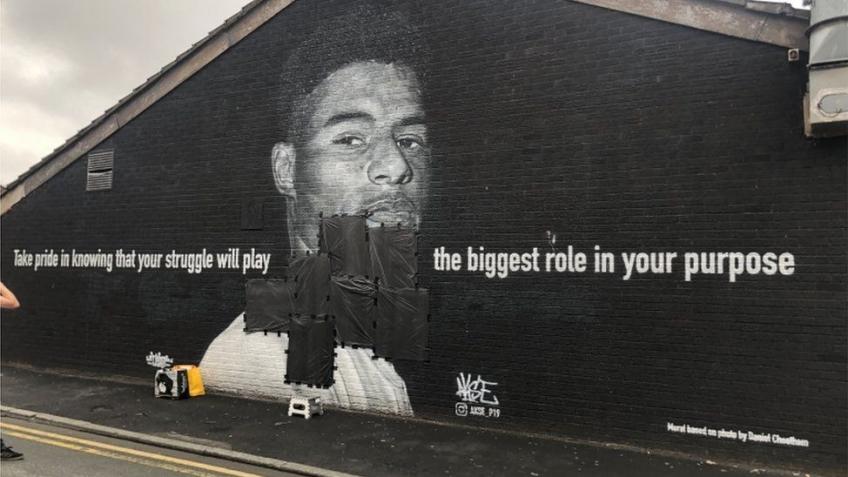
Last week England footballer Marcus Rashford launched a petition urging government to make the change. But in a Commons debate Brendan Clarke-Smith said we need less "celebrity virtue signalling on Twitter". And Kieran Mullan said celebrities with hundreds of thousands of followers should encourage people to volunteer not just sign petitions.


Manchester United striker Rashford has argued that the number of children with little access to food had grown due to families losing income amid Covid-19 restriction measures.


In a tweet, he said he was keeping his eye on the Commons which voted on a Labour plan to offer food support to poorer families over the school holidays until Easter 2021. He said he would be looking out for those prepared to "turn a blind eye" to vulnerable children's needs.

MPs voted against Labour's motion 322 votes to 261.


Prime Minister Boris Johnson said he would not change his policy on free school meals, arguing that poor families were supported by the benefits system. He told MPs: "We support kids of low incomes in school and we will continue to do so.


But he added that the government would "continue to use the benefit system and all the systems of income support to support young people and children throughout the holidays as well." The prime minister's official spokesman later clarified that the government would not be changing its policy on support for poor families.


A campaign by Rashford pushed the government into a dramatic U-turn when it agreed to extend free school meals over the summer holidays.


This year marks the 40th anniversary of the Mini Metro and an online exhibition has been created by the British Motor Museum to celebrate a car that divided opinion.


Originally under the Austin marque, the first model was designed in just over six weeks. The cheapest model was £3,095, undercutting its main rival, the Ford Fiesta, by £65. Seventeen years later, now badged as the Rover 100, Metro number 2,078,219 became the final car to emerge from the production line.


40 years on from its launch and online fans are growing - fuelled by family nostalgia.


Cat Griffin, curator at the British Motor Museum, said: "We've got a loads of cars in our collection here and we like to celebrate the ordinary as being extraordinary, just as much as the super cars."


"Sometimes you'll have a great moment in the museum where someone who actually worked on the car can find their name here on it. And it's those little connections of people learning to drive in the Metro, people's first car being the Metro - and that's what they connect with." The last Metro ever built at the Longbridge factory in Birmingham was R100 END, and the signatures on its paintwork are from the people who helped to produce it.


There appears to be an emotional Mini Metro renaissance with about 300 cars at the British Motor Museum in Warwickshire - but only one is adorned with 1,000 signatures.

This October Wolverhampton Art Gallery are showcasing a selection of pieces from its collection in a new exhibition entitled ‘Stellar: Stars of our Contemporary Collection.’

More than 20 artists, who have either been nominated for the Turner Prize - one of the most prestigious prizes in the art world - or selected for the British Art Show over its 40-year history, will be featured.

Stellar: Stars of our Contemporary Collection,which opens on Saturday, October 24 and continues until Sunday, January 17, presents an array of painting, drawing, sculpture, print, film and photography by some of the leading lights of British contemporary art in recent decades.

The exhibition explores some of the themes that have fuelled the work of these trailblazing artists – topics such as gender politics, conflict and cultural identity.

Wolverhampton Art Gallery, Lichfield Street, has a reputation for responding to pressing social issues and acquiring works that are both politically aware and artistically rich. Curators such as David Rogers in the 1970s, Brendan Flynn in the 80s and 90s, and the gallery’s current Manager for Arts and Culture, Marguerite Nugent, have all taken bold steps to build a vibrant, relevant and thought-provoking contemporary art collection.

City of Wolverhampton Council Cabinet Member for City Economy, Councillor Stephen Simkins, said: “The city has a spectacular collection and this exhibition showcases a variety of artists and styles.

“It is a fantastic opportunity for visitors to see more of the city’s art collection, including some pieces that have not been on display for some time, and it also paves the way for the British Art Show, which will be in Wolverhampton in 2021.

“While we want visitors to enjoy the exhibitions available at the gallery, I ask that visitors follow the Government guidance to ensure the safety of our staff and other venue users.”

‘Stellar: Stars of our Contemporary Collection,’ has been curated through the lens of the gallery’s collecting priorities since the 1970s, from Pop Art through Abstract painting and works relating to the Troubles in Northern Ireland and other areas of unrest, to work by Black British artists. It is a prelude to British Art Show 9 (BAS9), launching in Wolverhampton in March 2021.

The British Art Show takes place every five years and is the largest and most ambitious survey of recent developments in British art.

Wolverhampton Art Gallery is open Monday to Saturday (10.30am to 4.30pm) and Sunday (11am to 4pm).

To ensure that your visit is safe for both staff and visitors there are some changes that you will see, such as social distancing measures, checks on arrival, face coverings, hand sanitiser stations and allocated toilets. Where possible we ask that contactless payments are made.

A video is available at: www.wolverhamptonart.org.uk to outline what to expect when visiting.


On the occasion of the Halloween party, Bottega, winery and distillery from Treviso area (Italy), promotes Accademia Rainbow Prosecco, a collection of bottles, designed to celebrate parties and special events.


Accademia Prosecco Rainbow is an innovative project whose primary objective was to create a series of bottles, characterized by ad hoc colors to celebrate anniversaries and events.


An innovative proposal that has aroused the interest of consumers in Italy and in many other countries.


Halloween 2020, in full compliance with the precautions that the pandemic imposes, can therefore be enriched not only by traditional carved pumpkins but also by a series of orange and black bottles, which interpret the reference colors of the craziest event of the year.


The collection of bottles, in addition to orange and black, includes the following colors: red, yellow, green, blue, purple and white. It is a tribute to the Venice carnival and its unique atmosphere.

It is no coincidence that Venetian glass has been produced for over 1,500 years. And Venice, which immediately recalls the artistic tradition of blown glass, boasts at the same time a long history of innovation in glass processing. In this context, the lagoon city was the first major production center in Europe.


Accademia coloured bottles are inspired by this historical legacy and the resulting artisan culture.


Bottega

Bottega company, led by Barbara, Sandro and Stefano Bottega, is both a winery and a distillery. Founded in 1977 by Aldo Bottega with the name Distilleria Bottega, the company is based in Bibano di Godega (TV), 50 km north of Venice, where it produces grappas, wines and liqueurs that appeal to a high and medium-high level target.


Among the grappas, marketed under the Alexander and Bottega brands, stand out the fine selections of single-variety and the spirits aged in barrique.


The range of Bottega wines includes Prosecco, including the well-known Bottega Gold, and other sparkling wines with great personality. Amarone, Ripasso, Brunello di Montalcino and other great reds are produced in the two detached cellars, in Valpolicella and Montalcino.


The Bottega offer is completed by the Creams & Liquors line, which includes an extensive range of fruit liqueurs and creams, including Limoncino, Gianduia, Fiordilatte. The company, which distributes its products in 140 countries around the world, has achieved over the years over 300 international prizes and awards for quality.


The West Midlands has won a bid for almost £1million to help people who are struggling to keep their homes warm this winter.

The grant has been made to the charity Act on Energy, a member of the West Midlands Combined Authority’s (WMCA) fuel poverty task force set up by Energy Capital  which is responsible for identifying funding to tackle the problem in the region.

The Warmer Homes West Midlands programme will receive £909,358 to provide energy advice to people who are struggling to keep their homes warm. The West Midlands has some of the highest rates of fuel poverty in England, second only to the North West region.


The advice programme will help more than 7,000 vulnerable households, will create jobs and help support WMCA’s environment target of #WM2041 – to be carbon neutral by 2041.

The programme will also improve the health and wellbeing of people with pre-existing cold and damp related medical conditions through energy saving advice, energy saving measures and debt advice.

Rachel Jones, chief executive, Act on Energy said: “This an exciting programme that comes at a critical time, enabling households to have a warm and affordable home is vital especially during the current coronavirus pandemic. This programme will enable us to support vulnerable residents across the region and provide the support and guidance they need to live in warm and affordable homes.

“The programme will also enable us to recruit outreach workers directly across the local community so we can really understand and support the needs of a community and work together to address the impacts of those who are living in fuel poverty.”

This project forms part of a wider regional fuel poverty and retrofit programme being led by Energy Capital at the WMCA, aiming to provide jobs and support for local people as part of the region’s green recovery.

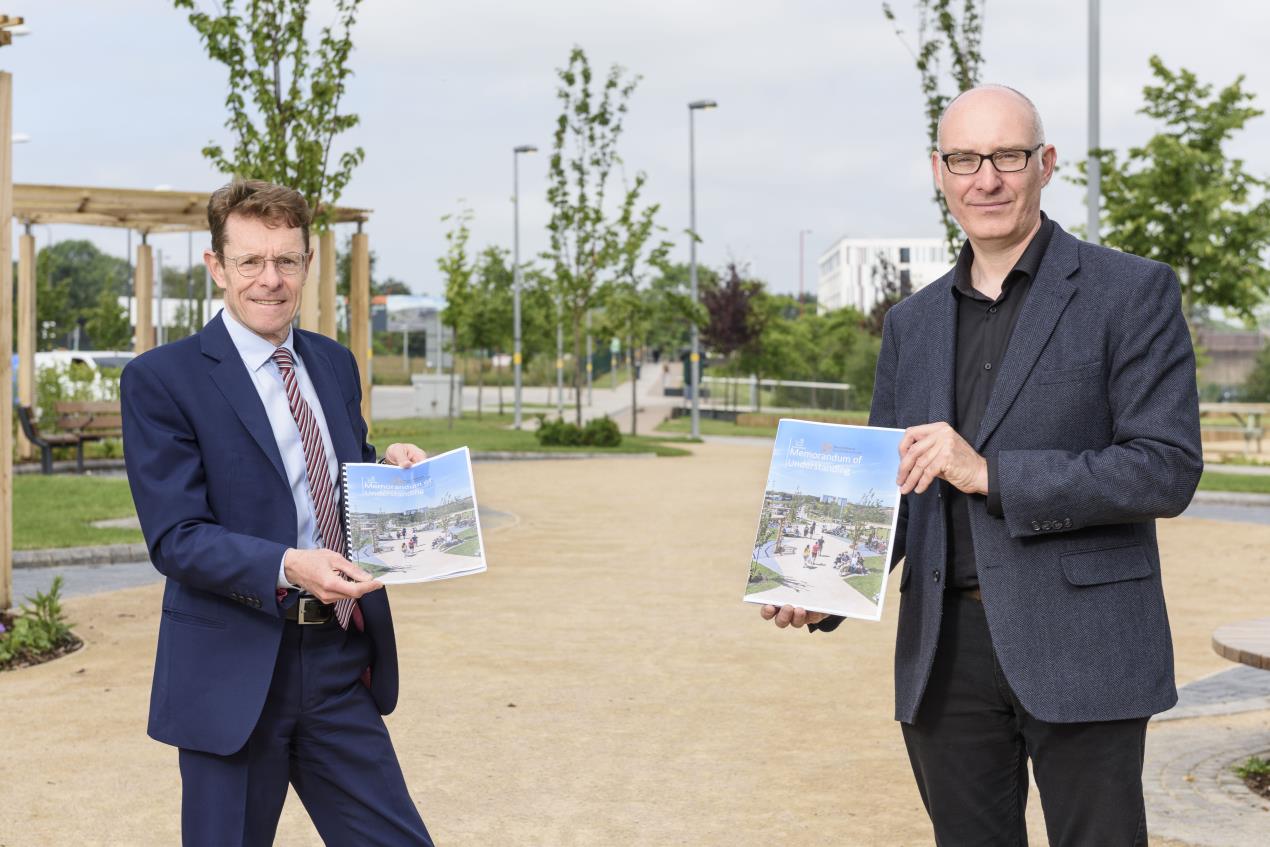
Andy Street, the Mayor of the West Midlands, said: “The WMCA remains utterly committed to tackling the region’s climate emergency by 2041, and addressing fuel poverty is a key part of those plans. This is why the Warmer Homes West Midlands programme is so important, and I am pleased we have received this new funding to enhance our work.


“As well as making homes more fuel efficient by helping people keep their homes warm, addressing fuel poverty will also help to improve people’s health by eradicating damp homes, and improve their economic situation by making energy bills more affordable.” 

The award given to Act on Energy is from a fund held by the Energy Savings Trust - which was set up to finance charities to deliver programmes to benefit the public. Called the Energy Redress Scheme, it is funded by money collected by Ofgem from energy companies, usually because they have broken the regulator’s rules.

The project aims to reduce fuel poverty, which is defined as when householders can’t afford to keep adequately warm at a reasonable cost, on their income. A total of 304,000 fuel poor households exist in the West Midlands and 12.6% of households suffer from fuel poverty due to higher than average fuel costs, combined with lower than average incomes

A team of qualified energy advisors will be recruited to provide advice by telephone, through case work, home visits and community events, where it is safe to do so. A team of community outreach workers will ensure that as wide a range of people as possible will be able to take advantage of the project.

Councillor Ian Courts, leader of Solihull Council and environment portfolio holder for the WMCA said: “We have set a target for the West Midlands to be carbon neutral by 2041, but we must make sure no one is left behind. This programme will contribute to that goal.

“The grant is to be welcomed and I’m pleased that Act on Energy will now be helping us tackle the scourge of fuel poverty by running The Warmer Homes West Midlands programme.”

The news of the grant comes in the same month as a taskforce featuring some of the UK’s top property experts has been launched to help the West Midlands accelerate the construction of low carbon, energy efficient homes.

The Zero Carbon Homes Taskforce has been set up by the West Midlands Combined Authority (WMCA) to support the region’s fight against climate change, making sure all new homes meet tough zero carbon standards from 2025 onwards.

The taskforce, which is being chaired by the UK Green Building Council, will provide local and expert insight into how the region plans for a net zero future as it works towards achieving its ambitious target of being carbon neutral by 2041.


Less than half of private renters in the West Midlands feel safe in their home during the current pandemic

A major report by Shelter has today exposed the ugly truth of the housing crisis, as regional analysis of England-wide polling data shows less than half (46%) of private renters in the West Midlands say their home has made them feel safe during the pandemic.  

Calling on the Chancellor to act now to save the nation’s homes, the charity’s Building Our Way Out report outlines how a disastrous lack of social homes across the country has plunged England into a housing emergency, which is only intensifying as Covid-19 puts unprecedented pressure on those in poor housing.  

With grim predictions on what lies ahead, Shelter is warning the government’s existing provision for delivering new social homes is woefully inadequate. There is currently only enough funding set aside to provide one social home for every 96 households on the waiting list. And with a swelling housing benefit bill forecast to hit £24 billion per year by 2024/25 - that does not account for the impact of the pandemic - it is urging the Chancellor to intervene. By introducing a rescue package of investment in social housebuilding, Shelter argues the government could provide thousands with a safe home.  

The charity’s research demonstrates just how badly decent, affordable social homes are needed. According to a poll of English adults carried out by YouGov for the report, many private renters in the West Midlands continue to spend the pandemic stuck in poor-quality, expensive and overcrowded accommodation:  

104,000 (14%) of adult private renters in the region are constantly struggling with their rent or are already falling behind.  

196,000 (26%) live in poor conditions, with electrical hazards, pests or damp-related issues in their home.  

169,000 (35%) say they pay too much for the quality of home they have.  

112,000 (15%) say a lack of indoor living space made lockdown harder.  

Polly Neate, chief executive of Shelter, said: “Our homes are our first line of defence in this pandemic. But thousands in the West Midlands have spent months trapped in private rentals they do not trust to keep them safe. And right now, there is no light at the end of the tunnel.  

“After decades of decline, a dire lack of social homes means too many people, pay too much for cramped and poor-quality housing. Or worse yet they find themselves with nowhere to live. With the stakes so high, the case for building decent social homes is clear.”
 
Shelter’s report calls for a targeted rescue package of £12.2 billion over the next two years to fund a total of 50,000 new social homes, out of a total of 145,000 new affordable homes. These 50,000 new social homes equate to almost four times the number of social homes currently delivered each year. Funding this programme could kickstart the post Covid recovery and reverse years of decline in social housebuilding.  

Polly Neate continued: “Before a thundercloud of homelessness breaks over us, the Chancellor needs to be as swift and bold on housing as we’ve seen him be on jobs. By turbocharging investment in social housing today, we can build ourselves out of this pandemic and lay the foundations of a better future.”  

Case study: Michelle, 58, is a store manager living in Hereford with her son. She was diagnosed with a serious and life-limiting condition in February of this year and has been shielding throughout the pandemic. In July after just four months in her home, she was served with a Section 21 ‘no-fault’ eviction notice by her landlord because he wanted to sell the property.  

Michelle said: “I feel so tired of the renting game. When you’re in your late 50’s like me, even on a good wage there’s no way you can get a mortgage. So, you’re left with private renting.   

“I was diagnosed with severe Vasculitis in February this year, and then in July, after only four months in my home, my landlord gave me an eviction notice because he wanted to sell. I was in shock. I had to look for a new home while I was highly vulnerable and shielding.       

“If I could live in a social home, it would give me such peace of mind that I won’t have to move every six months. It would mean I could unpack, put things up on the wall, have a cat. Just little things in life that would make such a big difference. All I can do now is put my pictures on the hooks the landlord has left. It sounds really basic, but it is part of wanting to make a home.” 


Motherland Cooking Xperience, the ultimate African food immersion cooking resource, has announced its launch as “the online cultural connection” for food and fun. Motherland Cooking Xperience is a new and unique interactive African cooking experience offering cooking demonstrations, private date night cooking evenings, and hands-on cultural competency training. These interactive, in-person or virtual cooking demonstrations highlight Africa’s culinary diversity through a three-course meal cooking class, paired with drinks and live music.


Owner and Chef Mirabel Umenei, a mother of three, is also the founder of Motherland Cultural Connections. “I wear multiple hats,” she explained. “I created Motherland Cooking Experience because I love people, African culture, music, and food. Now I’ve made it possible to share my passions and joy with the world. Motherland Cooking Xperience was founded to provide a platform for immigrants with ties to Africa and showcase their talents through food, music, art, and storytelling. This is a dedicated effort to bridge the cultural gap between African immigrants and their families with their communities of residence.”


The organization also wants to mentor and empower African immigrants financially through integration and participation in local culture with their neighbors. “At Motherland Cooking Xperience, we are passionate about showcasing the diverse and exciting activities of Africa through delicious food, cooking demonstrations, beverages, and music from Africa,” Umenei added. “I am excited to be a part of this group, and I look forward to learning, connecting, and networking. We also love hosting Bachelorette and a Girls’ Night Out Parties! Foodies and adventurers — ‘We got you!’”


The Motherland Cooking Xperience team has created a hands-on and relaxed experience sharing historic and meaningful African recipes. When clients want to host this experience at home with friends and families, the organization will arrange a unique and custom online cultural experience. Some of the most popular Motherland Cooking Xperience recipe highlights include a barbecue with their unique dry rubs, stewed greens, soups, and delicious Central and West African dishes. The experiences are created for hands-on fun and deliberately curated to share the best of African culinary culture. Cameroonian cuisine is one of the most varied in Africa due to its location on the crossroads between the north, west, and centre of the continent.


Their sister programs, Motherland House Concerts offer two additional education platforms.


‘Elimu Experience’ is an interactive, in-person or virtual experience teaching cultural competency for businesses, African social studies for schools, and African dance and drumming workshops. ‘Motherland House Concerts’ showcases African music acts and storytelling in an intimate setting, which can be tailored for an in-person or online audience.


Clients can sign up on the home page at MotherlandCookingXperience.com for a free cooking class.


The night of 22 to 23 August 1791, in Santo saw the beginning of the uprising that would play a crucial role in the abolition of the transatlantic slave trade.

It is against this background that the International Day for the Remembrance of the Slave Trade and its Abolition is commemorated on 23 August each year.


This International Day is intended to inscribe the tragedy of the slave trade in the memory of all peoples. In accordance with the goals of the intercultural project “The Slave Route”, it should offer an opportunity for collective consideration of the historic causes, the methods and the consequences of this tragedy, and for an analysis of the interactions to which it has given rise between Africa, Europe, the Americas and the Caribbean.


The Director-General of UNESCO invites the Ministers of Culture of all Member States to organise events every year on that date, involving the entire population of their country and in particular young people, educators, artists and intellectuals.


International Day for the Remembrance of the Slave Trade and its Abolition was first celebrated in a number of countries, in particular in Haiti (23 August 1998) and Goree in Senegal (23 August 1999). Cultural events and debates too were organized. The year 2001 saw the participation of the Mulhouse Textile Museum in France in the form of a workshop for fabrics called “Indiennes de Traite” (a type of calico) which served as currency for the exchange of slaves in the seventeenth and eighteenth centuries.


Audrey Azoulay, Director General, Message on the occasion of the International Day for Remembrance of the Slave Trade and its Abolition said: “This  August 23,  we  honoured  the  memory  of  the  men  and  women  who,  in  Saint-Domingue  in  1791,  revolted  and  paved  the  way  for  the  end  of  slavery  and  dehumanization. We honour their memory and that of all the other victims of slavery, for whom they stand.


“To  draw  lessons  from  this  history,  we  must  lay  this  system  bare,  deconstruct  the  rhetorical  and  pseudoscientific  mechanisms  used  to  justify  it;  we  must  refuse  to  accept any  concession  or  apologia  which  itself  constitutes  a  compromising  of  principles. 


“Such  lucidity  is  the  fundamental  requirement  for  the  reconciliation  of  memory and the fight against all present-day forms of enslavement, which continue to affect millions of people, particularly women and children.”


Marking this year’s World Homeless Day and emerging from online discussions between people working to respond to homelessness from various parts of the world, English Premier League club Aston Villa will be holding its Big Villa Sleepout – which, this year, will be held virtually. And they are encouraging fans to get involved and take up the challenge from home by sleeping out in their gardens or even camping out on the living room floor, in aid of supporting the homeless community of Birmingham.In return they will be providing an evening of content on their social channels as fans will be encouraged to share selfies on social media throughout the night, using the hashtag #BigVillaSleepout.Fans will also be able to donate through an online donation link and proceeds from the fundraising event will help fund their Villa Kitchen, which provides hot meals to the homeless community in Birmingham.


The Villa Kitchen provides local organisations including Outreach Angels, Helping Hands and the Birmingham Support Group with pre-packaged meals, which are prepared by a team of staff volunteers, and the organisations distribute these across the city.


They will be running their annual Big Villa Sleep Out virtually on Aston Villa social channels, with proceeds going towards funding the Kitchen.


“Everyone should have a safe, secure and stable home”, the club says. “However we have seen far too often how easy it is for someone to fall into the cycle of homelessness.


“The current coronavirus pandemic has wreaked havoc on all our lives, but the homeless community are continually facing challenges”.


World Homeless Day, which aims to draw attention to the struggles the homeless community face and inspires ways in which people can look to end homelessness.

The inaugural World Homeless Day was marked on 10 of October 2010 and since its founding, it has been observed on every continent except Antarctica, in several dozen countries.

Use of the idea of it is open for all to use... anywhere in the world.


The Big Villa Sleep Out will be returning on Saturday November 14.

An award-winning charity, whose continuing work with schools during the pandemic has been widely applauded, has been awarded £250,000 as part of the Government’s £1.57 billion Culture Recovery Fund (CRF) to help face the challenges of the coronavirus pandemic and to ensure they have a sustainable future, the Culture Secretary has announced today.


Services For Education, which in normal times teaches music to some 38,000 school children each week, is amongst the first to receive funds in the very first round of the Culture Recovery Fund grants programme being administered by Arts Council England. The Birmingham-based charity is one of the 28 cultural and creative organisations based in Birmingham and one of 1,385 across the country receiving urgently needed support. £257 million of investment has been announced today (12 October) with further rounds of funding in the cultural and heritage sector being announced over the coming weeks.


Sharon Bell, Chief Executive of Services For Education, said: “The award of the grant, in a highly competitive environment, is a huge endorsement of the work that our team delivered – and continue to deliver - during lockdown. We are delighted to have secured this additional funding from the Arts Council that will help us continue our invaluable work - using music to support vulnerable children and young people across Birmingham.”


Services For Education employs more than 200 people in the city and uses the power of learning and music to create and build confidence in local children, young people, adults and communities. During the pandemic it embarked on a major programme of on-line tuition and concerts – including the first ever Virtual Youth Proms Festival that included streaming live 30 new performances created during lockdown over four evenings and involving 500 young people. More recently, it has resumed music lessons in Birmingham schools whilst continuing its on-line support for both schools and individual school children.


Culture Secretary Oliver Dowden said: “This funding is a vital boost for the theatres, music venues, museums and cultural organisations that form the soul of our nation. It will protect these special places, save jobs and help the culture sector’s recovery. 


“These places and projects are cultural beacons the length and breadth of the country. This unprecedented investment in the arts is proof this government is here for culture, with further support to come in the days and weeks ahead so that the culture sector can bounce back strongly.”


Chair of Arts Council England, Sir Nicholas Serota, said: “Theatres, museums, galleries, dance companies and music venues bring joy to people and life to our cities, towns and villages. This life-changing funding will save thousands of cultural spaces loved by local communities and international audiences. Further funding is still to be announced and we are working hard to support our sector during these challenging times.”


Sharon added: “We are delighted that we have been successful in our application for a grant under the Arts Council Recovery Fund. We are enormously grateful to the Arts Council for supporting us for enabling us to continue to do what we love doing – which is bringing music and music teaching to the children of Birmingham. We are now able to look forward to continuing our work with our schools and other cultural education partners across the city over the weeks and months ahead and keeping music alive at a time which we all know is really difficult for the sector.”

Letter from Doug Wright, Chairman Ronald McDonald House Charities, Birmingham

Dear Phoenix Readers

I hope you are well. I’m personally reaching out for some help from you to support our very special Ronald McDonald House in Birmingham where we provide a vital home away from Home.

In 2019, we kept 982 families together at our Birmingham house, totally free of charge, whose children were being treated at the Birmingham Children’s Hospital. The emotional and financial burden of a sick child in hospital has increased exponentially since Covid-19.

We are proud that we kept our House open throughout the lockdown with the staff brilliantly coping with all the complex operational challenges. Sadly, we’ve had to cancel our annual gala dinner this year (which raised £253,000 profit in 2019 - in excess of 25% of the cost of keeping the House open all year round). As such, we urgently need to raise funds in an alternative way.

In its place, I’m delighted to announce we are holding a virtual RMHC Birmingham fund raising event on Thursday the 12th of November at 8pm.

This inaugural event is to bring RMHC to you with an update on the charity. We will hear from a very special family who stayed with us whilst their son was receiving treatment at the Birmingham Children’s Hospital. I can also exclusively reveal that during this event I will be interviewing a real Comedy legend and Charity icon in Sir Lenny Henry.

He will share a personal insight into how we can all give back and create societal impact within our own communities. We’ve priced tickets so that each one sold can cover the cost of a family staying with us for one night (which is £25).

Every penny raised will go to the House here in Birmingham.

So, how can you help? There are three ways;

1. Buy tickets for this virtual event at £25 (there’s an option to upgrade to a £50 ticket and receive a box of goodies to enjoy during the event).

2. Sponsor part of the virtual event. Cost £1000 or £2000.

3. Donate any amount you can. You can use this link to book https://rmhc.org.uk/event/theres-no-place-like-home/

I totally understand how tough life is right now for absolutely everybody but with your help we can make a significant difference to the lives of families staying with us here in Birmingham.

Thank you.

Doug

The building of a new £17.5million National Brownfield Institute (NBI) in Wolverhampton has moved a step closer after a planning application was submitted for it on the University of Wolverhampton’s Springfield Campus with the City of Wolverhampton Council supporting the University with its plans and final evaluations and, subject to planning approval being granted, it is hoped works will start on site later this year.It comes just two months after the announcement the scheme is to receive £14.9million of funding from the Government’s Get Building Fund for the West Midlands.

The city council worked closely with the Black Country LEP and West Midlands Combined Authority to secure the funding for what will be the flagship of the University of Wolverhampton’s ongoing £120million Springfield Campus development.

The NBI, designed by Associated Architects, will research and develop new construction methods and ways of regenerating contaminated land.A request for the remainder of the funding required forms part of the city’s bid to the Government’s Towns Fund.

The 12-acre Springfield Campus is already home to the Thomas Telford University Technical College, Elite Centre for Manufacturing Skills and the School of Architecture and Built Environment.These facilities combined with the NBI will lay the foundation for the delivery of a National Centre for Sustainable Construction and Circular Economy, which will focus on sustainability and the climate change emergency.

The NBI will be a world-class institute that provides the facility to develop advanced skills, technologies and methodologies through innovation and partnership with the construction industry; focuses on the practical application of future brownfield regeneration through the work of research teams; and leads policy development, research and innovation, and commercial services for brownfield regeneration.It will secure the City of Wolverhampton's position as a leader internationally in sustainable construction, circular economy and brownfield development and will deliver new skills, jobs and opportunities for local people in the city, which has been hard hit by the pandemic.

Councillor Stephen Simkins, City of Wolverhampton Council Cabinet Member for City Economy, said: “It is great to see things moving at pace to bring forward this game-changing scheme for the City of Wolverhampton.

“We have seen the University’s Springfield Campus blossom into the reality of a European-leading Built Environment education campus.The addition of the National Brownfield Institute will make Wolverhampton a world leader in construction, regeneration and built environment, offering teaching and skills development, cutting edge research and innovation, and enterprise and business engagement through multi-sector partnerships.

“Most importantly it will deliver new skills, jobs and opportunities for local people in the city.It is all part of the multi-billion-pound investment on site or planned in our city – a city of opportunity – as we look to bounce back from the impact of Covid-19.”

University of Wolverhampton Vice-Chancellor, Professor Geoff Layer, added: “It’s wonderful to see the planning application for the new National Brownfield Institute being submitted so quickly.  As one of the shovel-ready projects announced in the recent Government’s Get Building Fund, we are keen to get the project off the ground.

“The NBI will be integral to the way we look at land remediation and regeneration across the Black Country and the UK and will play a pivotal part in unlocking industrial land to help tackle the housing shortage in our towns and cities.

“This is a great example of taking knowledge and teaching beyond the classroom and into the community. Not only will the Institute be crucial in developing innovative and sustainable ways of remediation it will create a nationwide repository for brownfield sites and help businesses and entrepreneurs establish business related to the Brownfield development supply chain as well as helping to create a highly skilled and interdependent workforce operating across the land remediation sector within geoscience, engineering, planning, consultancy, contractor, architecture and the built environment sector.

“The Institute will be a fantastic addition to the £120 million Springfield Campus which is a key strategic project for the University offering an unrivalled built environment hub and centre of excellence which will be among the biggest and best in Europe. Alongside our partners, we are committed to realising the vision of the site and the part this will play in regenerating Wolverhampton as well as supporting the West Midlands Combined Authority to deliver its ambitious and compelling brownfield strategy. This is part of the City’s wider ambitions to establish a national centre for sustainable construction and the circular economy in Wolverhampton.”

Tom Westley DL, Chair of the Black Country LEP Board, said: “It is fantastic that the National Brownfield Institute project continues to move forward, thanks to the investment from Government but also testament to the hard work of all our project partners.

“The National Brownfield Institute will create jobs and support skills development across the area as well as provide an opportunity to showcase the innovative skills already here in the Black Country. The Black Country LEP is delighted to support projects such as these which are making a real positive impact on the local economy as our region looks to recover from the impact of the pandemic.”

West Midlands Mayor Andy Street, Chair of the WMCA, added: “The National Brownfield Institute is all about establishing the West Midlands as a global leader in the development and use of state-of-the-art construction techniques and in the clean-up and regeneration of derelict land.

“The NBI will be critical to the region’s economic recovery because, not only will it help us transform old industrial sites with new homes and modern business premises, it will also help give local people the modern construction skills they will need to gain employment and build these new schemes.

“This scheme is a key part of both our wider brownfield-first housing plan to continue our record house building whilst protecting the greenbelt, and our plan to get the West Midlands economy back on track by securing a green and inclusive recovery that offers local people the opportunity for a decent, affordable home, and a well-paid job in the industries of the future.”

Celebrate Black history through the wonderful world of rum, RUMFEST, the UK’s premium event of its kind, will be bringing an international celebration of rum and cane spirit.


The Rum Experience Company prides itself on bringing together the finest rum, great food and a range of educating seminars and entertainment to make learning about rum both fun and stimulating. And, this year, due to the global pandemic that has affected everyone, they have decided to host not one large event but a week of smaller events around London.


Starting from October 15 to 21st, there will be events throughout London involving some incredible venues, showcasing their talents & celebrating all that is Rum with packages including: 5 x 50ml Premium Rums, Cocktail Ingredients and CCUK Cup.


The festival was founded by Global Rum Ambassador Ian Burrell in 2007, who was keen to promote rum as a drink.


He worked in the drinks trade as a bartender since 1990. In 1998, he had started working with the Jamaican rum distiller, blender and bottler J. Wray and Nephew Ltd.


Burrell, the UK’s only trade and consumer drinks expert for the rum industry and world’s largest rum festival, said: “It’s not just a spirit, it’s a lifestyle”.


He also worked for other drinks brands on an ad hoc basis and with organisations such as the West Indies Rum & Spirits Producers Association, which represents several different Caribbean rums.


RUMFEST organisers will be sticking to etiquette guidelines from previous shows to ensure that all guests have an enjoyable event. And by buying a ticket for an event during RumFest Week 2020, you will agree to be abiding by common-sense guidelines which have been designed to ensure a convivial, safe environment for everyone at the various events.


“Music, rum and great company - what more do you need!” Burrell says. “Stay safe and drink rum responsibly!”


The UK RumFest has led to the influence of rum festivals and fairs all over the world including The Miami Rum Renaissance festival, the Berlin Rumfest, Paris Rhum fest and the first rum festival in Mauritius.