Colors: Blue Color

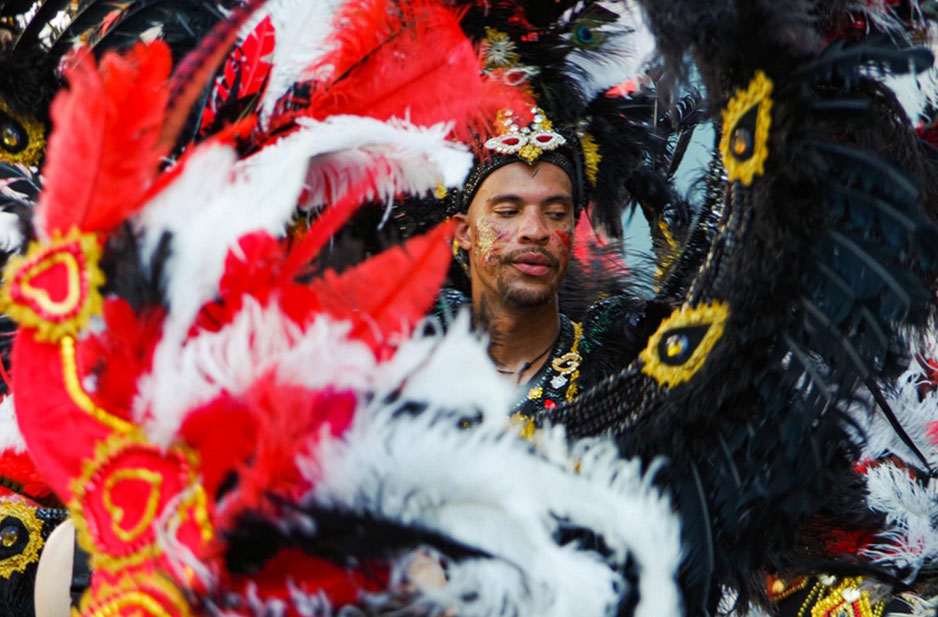
Notting Hill Carnival will be held online this year after its street party was cancelled due to the pandemic.

About one million revellers usually attend the event in west London, which has been held since 1966. But this year the carnival festivities will be streamed over four channels online, from 29 to 31 August.

Executive director Matthew Phillip said the event had a "responsibility to protect the black community".

He added: "Carnival is such an important part of people's lives and key celebration of the multiculturalism of the UK.

"We have a responsibility to our community and pioneers to honour that."

Due to the Covid-19 pandemic the event that is usually held in Westbourne Park in Notting Hill and parts of Kensington became the latest in a string of summer calendar events to have been postponed, including the Glastonbury Festival and the Tokyo Olympics. 

It meant that this year's music and performances had to be filmed so the event could be held virtually.

Spotify will dedicate a microsite highlighting the importance of carnival culture in the UK later in August, organisers said.

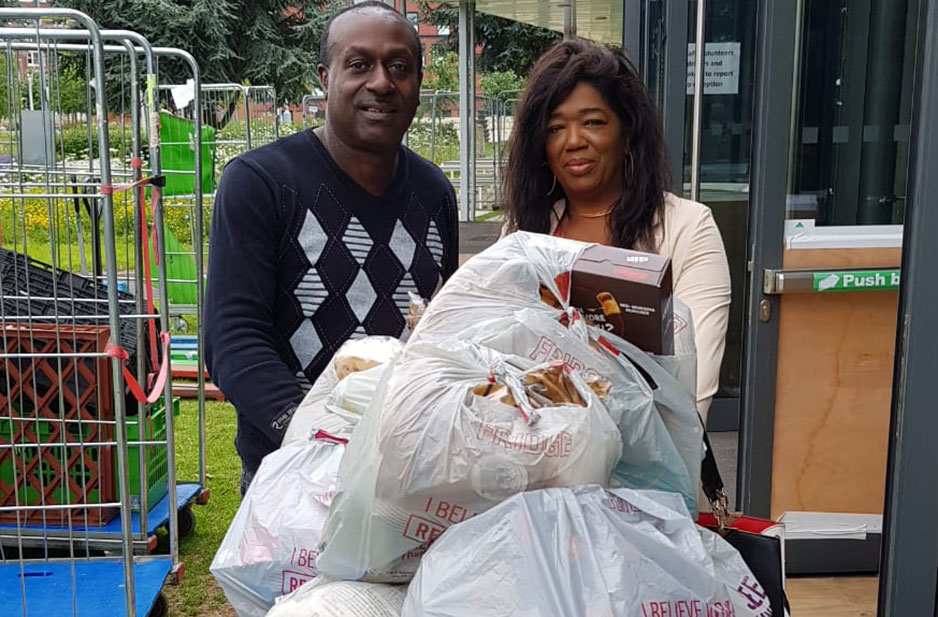
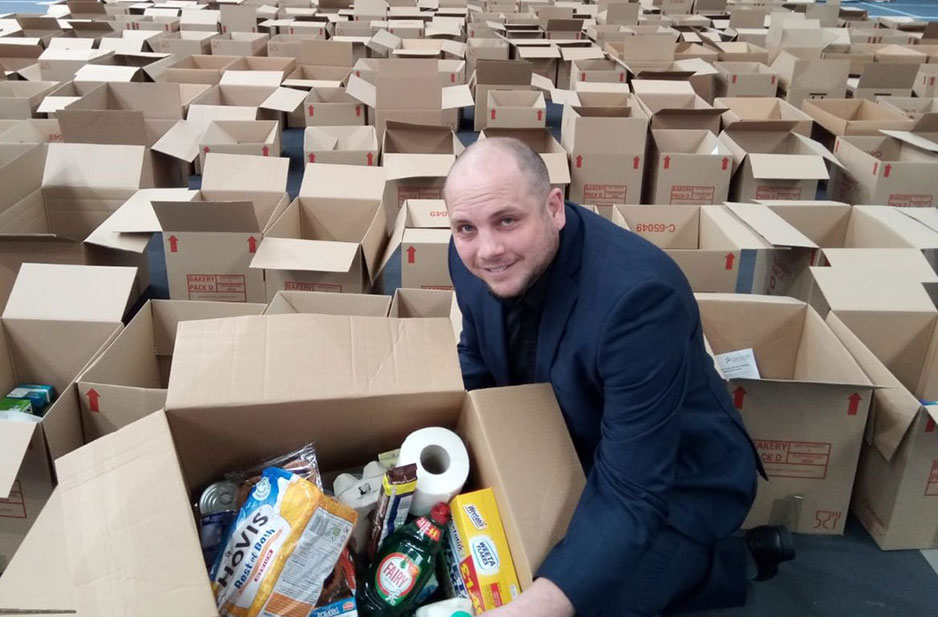
The 16th of July was just another day that Prison Links CEO Ricky Dehaney collected food bags for his clients but this time he was joined by The Phoenix Newspaper boss Dr Marcia McLaughlin.

Each week at least 30 families and individuals benefit from the distribution and this has happened right from the beginning of the lockdown period. The project is supported by Birmingham’s Active Wellbeing society and especially for some of the more vulnerable recipients, the bags are a lifeline in a period where conventional shopping can not only be challenging but risky.

"We have no idea how long we can keep the supplies going but our trustees Bishop Mike Wilson and Bishop James Herbert are grateful to the Active Wellbeing Society for providing the food for our clients" said Dehaney.

Prison Link are sponsored by Tropical Sun who also support the food distribution project .

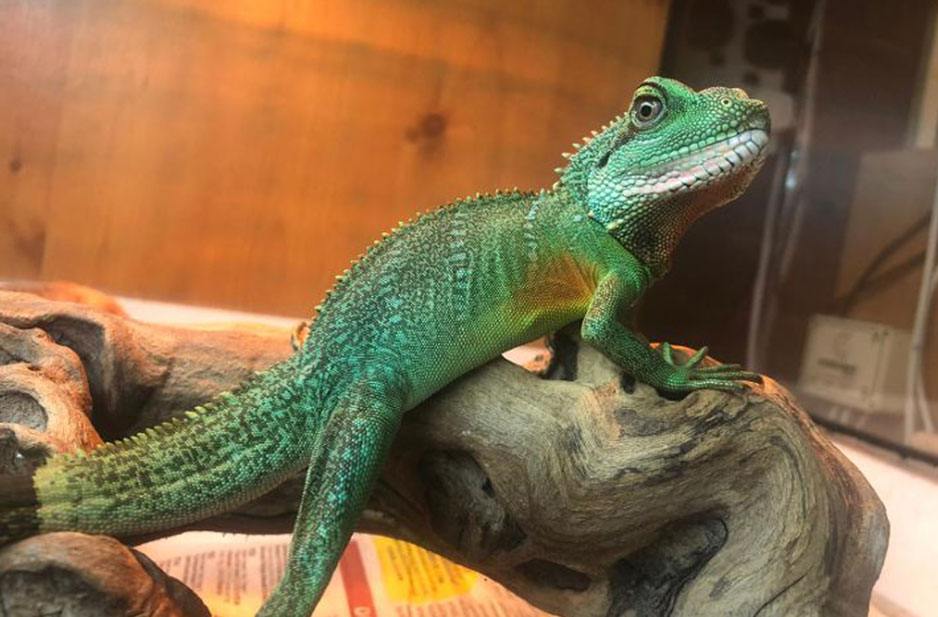
The RSPCA is taking care of a beautiful and unusual ‘dragon’ who was found alone in a West Midlands street. 

The 12in-long bright green Chinese water dragon was found wandering along a city street in Birmingham by a member of the public. 

The Chinese water dragon - also known as the Asian water dragon or green water dragon - is a lizard that’s native to China and mainland Southeast Asia.

RSPCA deputy chief inspector Vicki Taylor said: “A member of the public spotted him wandering along the road and was concerned that he’d been dumped. They were also worried that he seemed to be walking with a limp.  

“Thankfully they were able to take him to a nearby vet and I was able to collect him and take him for specialist care.”

Exotic pets aren’t easy to care for and, sadly, this does mean we often see them abandoned when their owners struggle to cope. That’s why we urge people to do their research before taking on an exotic pet. 

Reptiles are completely reliant on their owners to meet their welfare needs, which include the need to be provided with the correct levels of heat, light and humidity, plus an appropriate diet and environment for the particular species. 

“We’ll take good care of him and if no one comes forward to claim him then we’ll find him a suitable new home with people who understand exotic pets and their needs,” Vicki added. 

“We’d urge anyone who is struggling to take care of their pet to ask for help. Please don’t abandon your pet, there are always other options. You could contact the original seller or a local reptile rescue centre for help rehoming your reptile if you feel you are no longer able to care for them.” 

Anyone who would like further information on how to care for exotic pets should visit: www.rspca.org.uk/adviceandwelfare/pets/other.


Expansion works on a major Midlands business park are running ahead of schedule with the construction of fully-serviced factory platforms now underway.

Advanced works involving site clearance, land investigation and testing across a 60-acre site at i54 South Staffordshire were completed last week, just two months after the opening of a newly-built access road – and while following the Government’s Covid-19 safety guidelines.

The western extension at i54, which is located on the county border with the City of Wolverhampton, will deliver up to 100,000 square metres of ready-made development platforms for companies at what is a globally-recognised advanced manufacturing employment zone.

The main works are expected to be completed next year and it is anticipated new occupiers could start arriving from 2022, providing around 1,700 new jobs for local residents.

The current i54 site has a workforce of over 2,500 people, with half of the jobs held by people living within a ten-mile radius. City of Wolverhampton Council, Staffordshire County Council and South Staffordshire Council have agreed a funding and delivery strategy for the initial 60 acres of the extension.

In addition to the councils’ investment, there has been strong support and financial commitment from the Black Country Local Enterprise Partnership and Stoke-on-Trent and Staffordshire Local Enterprise Partnership.

City of Wolverhampton Council Cabinet Member for City Economy, Councillor Stephen Simkins, said: “i54 plays a major part in the lives of thousands of people in Wolverhampton and south Staffordshire and, at this worrying time with Covid-19, it is more important than ever that we can make rapid progress on projects such as this and welcome new investment.

“We see the western extension as critical to the long-term recovery of our local economy after the crisis. Our joint investment at i54 has secured hundreds of millions of pounds of investment and has brought thousands of jobs to the area, with half of employees living within a ten-mile radius. We are now building on the success of what is already one of the UK’s premier advanced manufacturing business parks.”

Staffordshire County Council’s economic growth leader, Councillor Mark Winnington, added: “We’re pleased to have maintained construction work on our major projects site where possible, so we can maintain long-term economic stability. The safety of public and our teams remains the top priority. It’s great to visit the i54 South Staffordshire western extension site to see the progress made.

“This is vital work that will support our economy in getting back on its feet post-Covid-19. This is a critical project for our partnership and we know there is still high demand for businesses to locate here. That is why we made the decision to expand the site. We anticipate the western extension could generate hundreds more jobs and lever in millions of pounds’ worth of private investment. Successful business parks like i54 South Staffordshire generate business rates which support the funding of public services.”

South Staffordshire Council Leader, Councillor Brian Edwards MBE, said: “All of the partners associated with i54 South Staffordshire are committed to supporting the local economy and bringing more jobs and investment to the area.

“Our award-winning work continues at pace despite the Covid-19 pandemic and the new western extension is really starting to take shape and show its full potential now the construction of the fully-serviced factory platforms is underway. It’s encouraging news about this outstanding business location and I’m very proud to support this project.”

The western extension scheme brings a plan to boost employment skills, training and recruitment to local people with a £150,000 contribution – helping them to access the newly generated jobs.

The partners have also agreed a further £500,000 to support and promote sustainable travel activities, and £50,000 has been granted to Pendeford Hall Nature Reserve to help continue and develop its education, health and wellbeing, and personal and social skills development outdoor activities for local communities.

More than £1 billion has so far been invested in the original i54 site, with 2,700 people employed by multi-national companies JLR, Moog, ISP, Eurofins, ERA and Atlas Copco. Morris Site Machinery, one of the leading site machinery businesses, is also well underway with its new facility.

Over 3,500 students have also benefitted from a targeted skills and education programme.

 

A charity is highlighting the importance of early neutering after a cat arrived in its care heavily pregnant at just nine months old. 

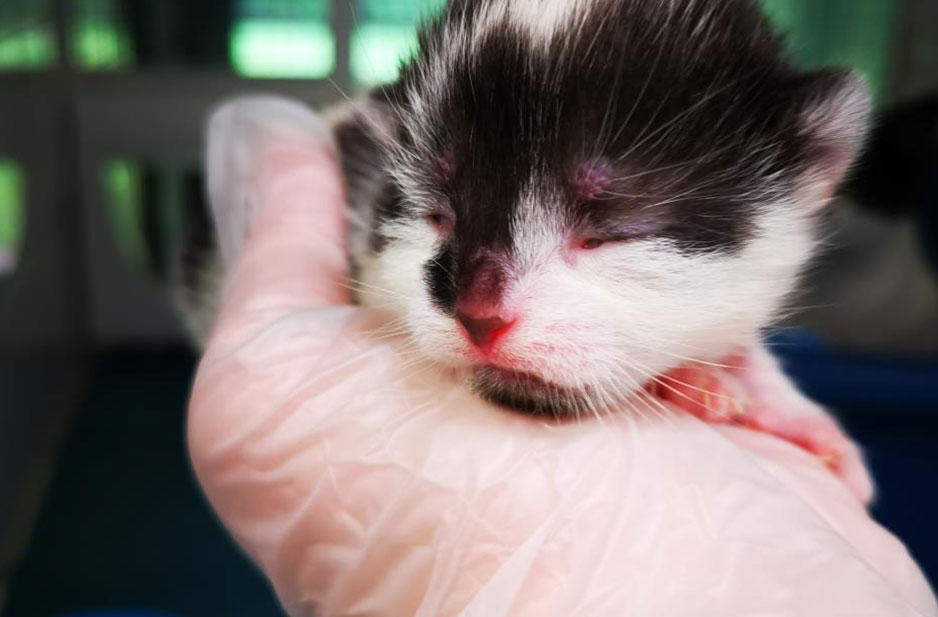
Black-and-white Maddie was barely more than a kitten herself when she was taken into care by Cats Protection’s Birmingham Adoption Centre after her owner had died. She arrived at the centre with 18-month-old Margot and three-year-old Mason.

None of the cats had been neutered and staff at the centre believe Margot and Mason are likely to be Maddie’s parents while Mason is likely to also be the father of Maddie’s two kittens who are now a week old.

The young family’s story illustrates commonly held misconceptions about pregnancy and mating between cats. In a recent survey of 1,000 cat owners, Cats Protection discovered 77 per cent of respondents were unaware a female cat can become pregnant as early as four months of age, while 86 per cent did not know an unneutered female can have as many as 18 kittens in a year.

As a result of fewer vets being able to carry out neutering during lockdown, Cats Protection has estimated as many as 84,000 extra kittens could be born this summer. The charity has produced an infographic with useful tips for owners on how to stop cats becoming pregnant and to prevent additional pressure on already over-stretched vets. Some of the tips include:

keep unneutered cats and kittens indoors to prevent unplanned litters
contact your vet to discuss whether you can book ahead for a neutering operation
ensure unneutered brothers and sisters are separated – cats will mate with their family members, so it is best to keep them apart

Cat Care Assistant Alice Batchelor-Reynolds says: “Even though Maddie is only nine months old herself she is being a great mum. We often find with our young mums that they need a bit of support and guidance when it comes to having kittens. As they are essentially only kittens themselves they don’t always have a fully developed nurturing instinct. In these cases we sometimes have to help them to clean and toilet their kittens but Maddie is doing everything perfectly so all we need to do is watch them grow and make sure everyone is happy and healthy.

“It’s very easy to forget that pregnancy in cats is risky and with limited vet appointments currently available, if your cat becomes pregnant she may not have easy access to the help she needs. Cats have no emotional need to become pregnant and neutering has a number of health benefits to both male and female cats. As a charity we are able to support owners on limited incomes with the costs of neutering pet cats once vet practices are fully operational again.”

Maddie’s kittens have been named Micah and Maddox and their progress can be followed at www.8dc6460bbbb088757ed67ed8fb316b1b-gdprlock/birminghamcatsprotection/. They will be available for homing once they are past nine-weeks-old.

Like all cats in the charity’s care they will be neutered, vaccinated and up-to-date with their flea and worm treatments.

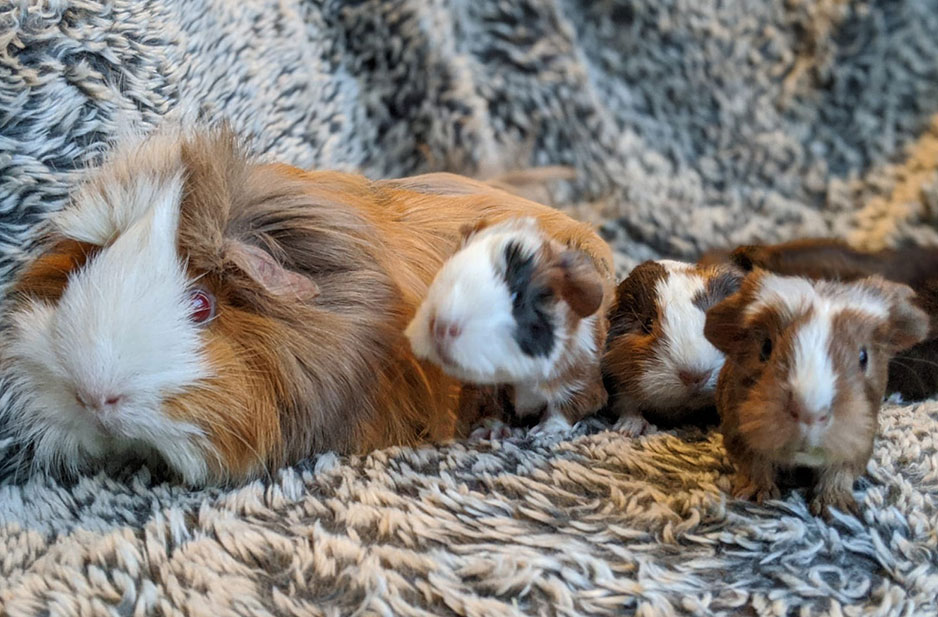
The RSPCA received 1,127 reports about guinea pigs in need throughout England and Wales last year (2019) and 338 so far this year (up to 10 July). In the West Midlands, the charity received 40 reports about guinea pigs in 2019, the third highest in England, and 18 so far this year.

One of the biggest issues the charity deals with regarding guinea pigs is multi-animal households where breeding has become out of control.

Now the RSPCA is concerned that as vets have understandably had to prioritise emergencies during the Coronavirus crisis that there could be lots more unneutered guinea pigs having unwanted litters.

Dr Jane Tyson, the RSPCA’s rodent expert, said: “Guinea pigs breed incredibly quickly so one unneutered pair can quickly lead to an owner having lots of guinea pigs on their hands! We would always advise owners to have their male guinea pigs neutered before introducing them to a female. We also find that guinea pigs can sometimes be mis-sexed by the seller or previous owner which leads to accidental breeding so it’s also important to make sure that your guinea pigs see a vet regularly who would be able to spot if they have been identified incorrectly.

“Many of the guinea pigs that come into our care have come from a multi-animal home where there have been large numbers of guinea pigs living in often cramped, dirty and unsuitable conditions. This also means that they may have experienced very little handling and are wary and fearful of human hands and need their confidence building up in RSPCA care.

“This is why, this Guinea Pig Appreciation Day, we wanted to encourage people to neuter their guinea pigs and help tackle the problem of overbreeding.”

Chief Veterinary Officer, Caroline Allen said: "On average a litter contains two to four guinea pigs, but can be as large as eight pups. A female can have up to five litters per year and can become pregnant within hours of giving birth.

“This, coupled with the fact that guinea pigs can breed at just a few weeks of age, means that if females are housed with unneutered males, numbers can very quickly get out of hand as even siblings will mate with each other. However, guinea pigs are social animals and it is important for their welfare that they are kept with other guinea pigs. 

“Whilst a good combination can be a male with one or more females, it is really important that the male is neutered before being paired with the females and even after neutering the males can remain fertile for 4-6 weeks so will need to be separated from the females. Female guinea pigs tend not to be routinely neutered as the procedure is more complex. Neutering of male guinea pigs is generally a straightforward procedure."


Following Windrush Scandal disaster Home Secretary Patel promising 'sweeping reforms' of Home Office culture

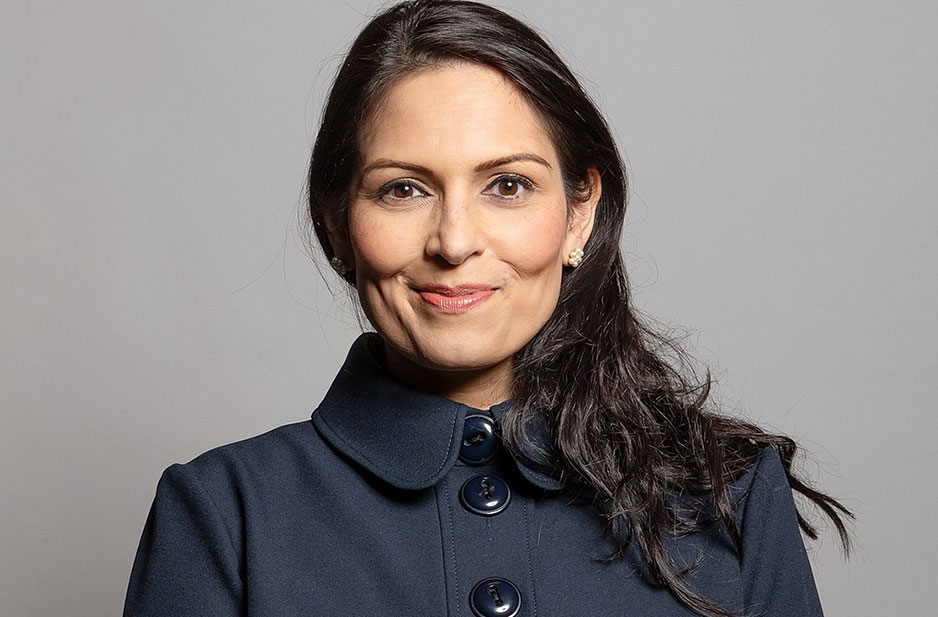
The British Home Secretary Priti Patel has promised to make "sweeping reforms" to Home Office culture after the Windrush Scandal which saw people wrongly deported. She said there would be a "full evaluation" of the hostile environment policy before also announced mandatory training for Home Office staff, reconciliation events with the victims of the scandal and diverse shortlists for senior jobs.

The Labour Party said that the government was "falling woefully short".

Ms Patel said her commitment to changing the Home Office was "fundamentally solid and firm" adding: "I have been on the receiving end of certain practices in the Home Office as well, which quite frankly speak to some of the points that came out of Wendy Williams' review."

The Windrush scandal saw people being detained or even removed from the UK despite having lived in the country for years. The scandal prompted criticism of the government's "hostile environment" measures introduced to tackle illegal immigration such as a 'deport first, appeal later' policy and tougher 'right to work' checks.

A report into the scandal by Wendy Williams, an inspector of constabulary, accused the Home Office of demonstrating "ignorance and thoughtlessness". She made 30 recommendations and in June Ms Patel said she accepted the report in full.

Making a statement in the House of Commons, the home secretary told MPs the scandal was "an ugly stain on the face of our country and our Home Office" adding that her response had been "swift, strong and uncompromising". She also added that she wanted to ensure "sweeping reforms" to Home Office culture and would be "reviewing every aspect of how the department operates, its leadership, the culture, policies, practices and the way it views and treats all parts of the communities it serves".

She told MPs that over £1.5m had been offered by the Windrush compensation scheme but added "this is just the beginning".

In her statement she announced:

A series of reconciliation events to rebuild the relationship between the Home Office and those who were affected by the scandal
Mandatory training for new and existing Home Office staff members "to ensure everyone working across the department understands and appreciates the history of migration and race across the country"
A review of "compliant environment" measures, formally known as the "hostile environment"
A "more diverse shortlists for senior jobs, specialist mentoring and sponsorship programmes to help develop a wider pool of talent and drive cultural change".

Ms Patel said: "There are simply not enough individuals from Black, Asian or minority ethnic staff working at the top in senior roles and there are far too many times where I am the only non-white face in the room.

"The injustices of Windrush did not happen because Home Office staff were bad people, but because staff themselves were caught up in a system where they did not feel they had the permission to bring personal judgement to bear."

She also announced that in September 2021, Ms Williams would revisit the Home Office to review its progress.

Labour's Shadow Home Secretary Nick Thomas-Symonds said the Windrush scandal "must lead to real and lasting change".

"Looking at the failure to act on so many previous reviews, the government is falling woefully short on that action and that's why we will be holding them to account for delivering the vital changes outlined in this report and to act with the urgency that is required."

Patrick Vernon, a Windrush campaigner, urged the government to speed up the payment of compensation to victims of the Windrush scandal.

He said Mrs Patel's statement "paid lip service to this review, but does not respond to the urgency of the matter - several Windrush victims have already died without receiving compensation for the injustice they faced."


Sandwell Council has confirmed it will continue to deliver emergency food parcels to older, vulnerable and disabled residents who need them until the end of July. People are now being urged to make arrangements for their food shopping from 1 August, when shielding will end for most people as government restrictions continue to ease.

Sandwell Council set up its Emergency Practical Support Team in March to co-ordinate care and assistance for people who are older, vulnerable, disabled or who have been shielding themselves at home. Supported by staff and volunteers as well as local businesses, charities, food banks and other organisations, the council has delivered more than 13,500 parcels since March to help people through the coronavirus (Covid-19) emergency.

Council staff moved temporarily from their normal jobs to run the food hub. They purchased food and essential items, packing and delivering parcels and calling vulnerable people to check on their welfare.

Sandwell was the first in the region to establish its food hub and is seen as best practice in terms of its quick mobilisation, community connections and expansion to support other vulnerable groups in Sandwell. The food hub has been providing weekly deliveries of essential items – including eggs, cheese, milk, bread, pasta, cereals and tinned goods as well as sanitary products and baby food where needed – to people with no way of getting shopping.

Only a small number of households have received more than five parcels since March, as many people have started to make their own arrangements, order shopping online or been able to return to the shops. Now, as government restrictions continue to ease and demand for the council’s food parcels has significantly reduced, the council is scaling back its operation.

The food hub service will end on 31 July, but emergency help and advice will still be available to those in greatest need.

The government has relaxed shielding measures as of 6 July and announced that shielding will end for most people, apart from those classed as extremely clinically vulnerable (who will continue to receive government support), from 1 August. The council is sending a leaflet to all households who have been receiving its free food parcels letting them know they will need to make their own arrangements from 1 August onwards. The leaflet includes details of how to access supermarket delivery slots and food boxes, opening times, priority hours and other arrangements.


The Labour MP for Brent Central, Dawn Butler MP has been announced as the latest patron of the charity, Mandela8.

The former Shadow Minister for Women & Equalities has become the first elected African-Caribbean government minister to endorse the Liverpool initiative which commemorate and pursue the legacy of Nelson Mandela's outstanding achievement for humanity.

The first elected African-Caribbean woman to become a Government Minister in the UK, Butler ran a hugely successful campaign in 2015, winning her vote with a majority of nearly 20,000; giving her the largest vote swing in England at the time.

Twice awarded by the Patchwork Foundation as the People's Choice Labour Party MP of the Year and Overall MP of the Year, the announcement came ahead of the annual Mandela Day celebrations.

The Liverpool-based CIO (Charitable Incorporated Organisation), is a charity which aims to see permanent artwork that functions as a unique performance, conversation and contemplation space established at a Toxteth Liverpool 8 heritage site,

Hugely impressed by Mandela's humanitarian efforts, the MP said: "Mandela has inspired me, just as he inspired so many around the world after spending 27 years in prison so that Black people could have equal rights and votes and to end the brutal apartheid regime".

The latest announcement by the charity comes with the upcoming Mandela Week, which will be marked this year with their annual 'My 67 Minutes' campaign (sponsored the Torus Foundation), which aims to bring people together through acts of kindness and community cohesion.

Last year, the organisation reached over 230,000 young people across Liverpool, Chester and Warrington, with hundreds of volunteers dedicating their time to help communities in the North West of England.

Mandela8 is also in its final week of crowd-funding to support Merseyside's most vulnerable individuals during lockdown with food parcels, hygiene packs and arts activities for young children.

A member of the House of Commons Science & Technology Select Committee, Chair of the APPG for Jamaica and APPG for Governance & Inclusive Leadership, the UK’s first elected Black woman to become a government minister, Ms Butler ran a hugely successful campaign in 2015, winning her vote with a majority of nearly 20,000; giving the largest vote swing in England at the time.

The announcement came as Mandela8 – the organisation behind the new Nelson Mandela memorial in Princes Park, which will also feature an outdoor classroom – are marking Mandela Week’ this year with their annual ‘My 67 Minutes’ campaign (sponsored by Torus Foundation, platinum sponsors for the previously scheduled visit from the Mandela Family), which aims to bring people together through acts of kindness and community cohesion.


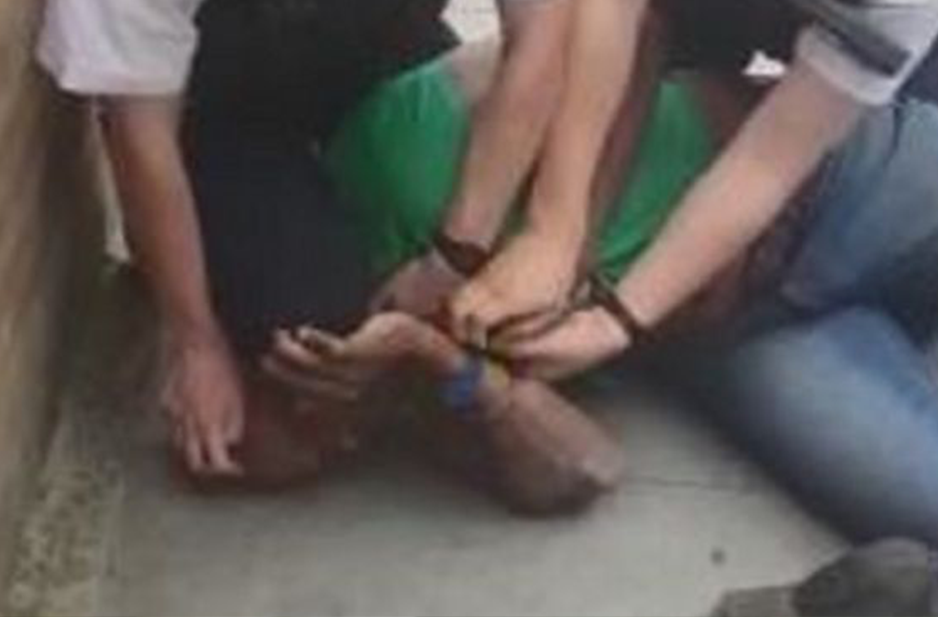
The Metropolitan Police must formally apologise to a man who was detained while a police officer appeared to kneel on his neck, his lawyer has said.

Marcus Coutain, 48, was filmed telling officers "get off my neck" as he was arrested in north London, in the UK. His lawyer Tim Rustem said the events "mirrored almost identically what happened to George Floyd", who died after being restrained in the US. One Met officer has been suspended and another placed on restricted duties.

The Met "quickly assessed the incident" and referred it to the Independent Office for Police Conduct (IOPC), which is conducting an investigation. The force said it would not be issuing any further statements.

Mr Coutain pleaded not guilty at Highbury Corner Magistrates' Court to possessing a knife in public. Police said officers were called to reports of a fight in the city. Footage posted on social media that evening shows two officers holding a handcuffed black man on the pavement. In court, Mr Rustem said the police should apologise.

Speaking outside court, Mr Rustem said the Crown Prosecution Service should review the case, drop the charges and offer a "formal apology" to Mr Coutain. He (Mr Rustem) said his client was legally carrying a blade for the purposes of repairing his bicycle.

"Essentially Mr Coutain was stopped and searched for matters for which he has not been charged," he said. "It is the use of what I would regard as excessive force, a knee being placed on his neck ... references which mirror exactly what happened to George Floyd in America.

"A man saying 'I can't breathe' and 'get your knee off my neck', while he was already handcuffed and while he was restrained by two police officers."

He said his client was lucky to have only "minimal" injuries to his wrists and neck, adding: "Fortunately it didn't lead to the tragic consequences that we saw in America."

Deputy Commissioner Sir Steve House described footage of the arrest in Islington as "deeply disturbing" and said some of the techniques, which were "not taught in police training", caused him "great concern".

In a statement, the Met Police said it had quickly assessed the incident, including the body worn video footage from the officers and their statements and justification for their use of force, and referred it to the IOPC.

In Islington, about 30 people gathered outside the police station in protest against how Mr Coutain was arrested. The case has been sent to Snaresbrook Crown Court on 17 August.

 
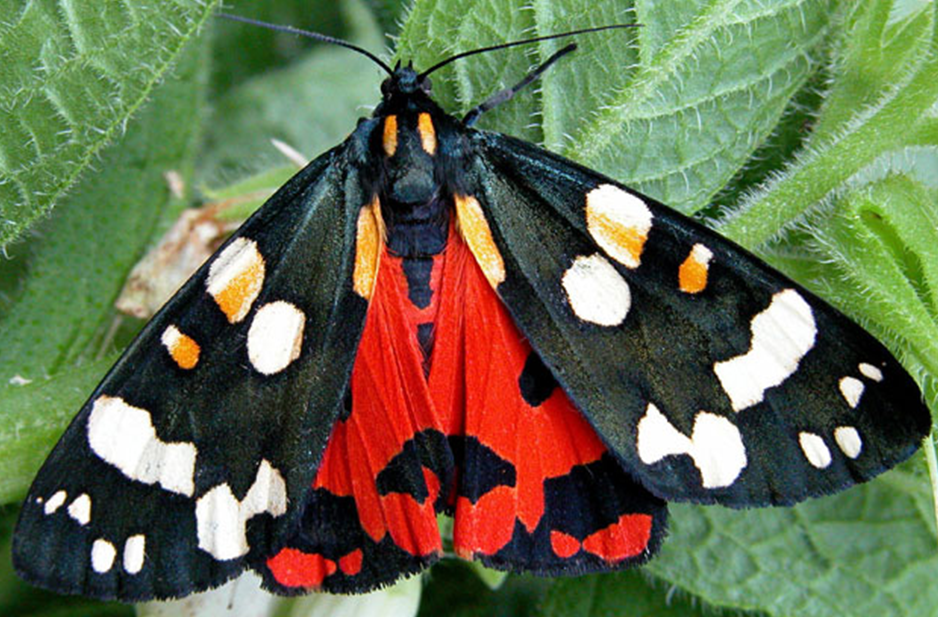
The Scarlet Tiger moth is moving out of the urban jungle and turning up in people’s gardens.  This spectacular moth, once rare in the region, is on the move and this summer is proving a bumper year.  National charity Butterfly Conservation’s West Midlands branch have received a record number of reports.
 
Mike Williams, volunteer Publicity & Marketing Officer for West Midlands Butterfly Conservation explains: “Numbers of the brightly coloured Scarlet Tiger moth this year are unprecedented and it is being reported from across the region.  Moths often have the reputation of being dull, brown and boring but the Scarlet Tiger is as attractive as any butterfly. 
 
“It was once found only in the south of Worcestershire but has spread northwards likely due to climate change and the spread of a plant called Green Alkanet which originally was a garden plant but has now escaped onto waste land and road verges.  

The caterpillars of the Scarlet Tiger which previously fed mainly on Comfrey, a plant of riverbanks and other damp places, has been able to take advantage of this new food source. It is now abundant in many areas and very noticeable as, unlike many moths, it flies in bright sunshine.  Its bright colours serve as a warning to birds that the moth is distasteful although it is completely harmless.  It will be on the wing until the end of July.”
 
The Scarlet Tiger is one of over 600 species of moth found in the area and featured in the recently published Moths of the West Midlands.  While some moths have declined in abundance over the past 50 years, others have increased in numbers and range as a result of improvements in air quality and changes in climate. 
 
Since the turn of the century, moth enthusiasts in the West Midlands have recorded over 50 new species of moth which have never been recorded before in this area. Increases in moth populations is generally to be welcomed as they are indicators of the health of the wider countryside and are important pollinators. It is hoped that the publication of this new book, which includes a section on gardening for moths, will make people more aware of moths and do what they can to encourage them into the garden.

Oil heated households in the West Midlands could face major costs for green heat under government plans

Rural homeowners living in the West Midlands, could face huge costs to install green heating systems if government plans go ahead, warns an industry trade association.
 
As part of the UK’s strategy to tackle climate change, consumers will be encouraged to replace fossil fuel heating systems with electric heat pumps at an average cost of over £10,000 to install.
 
The 8500 oil heated households in the West Midlands, will be amongst those targeted first. Government is already consulting on proposals to offer £4,000 ‘Clean Heat Grants’ to help supplement the cost of heat pumps, and in limited cases, biomass heating systems.

However, this still leaves a £6,000 shortfall for installation alone which many consumers will not be able to afford, especially during a post pandemic recession. OFTEC, which represents the liquid fuel heating industry, has written to all rural MPs to highlight the issue and is urging oil heated households across the West Midlands to raise the issue with their own local MP.

Resources to do this are available at OFTEC’s website (www.oftec.org/future-heating)
Malcolm Farrow of OFTEC explains: “We know that rural households are already more likely to be in fuel poverty and face the largest fuel poverty gap. Many also fall into the low to middle income bracket with little or no savings. These financially stretched homeowners are struggling to pay their existing bills, so there is no way they will be able to fund expensive green heating systems such as heat pumps, particularly post Covid-19.
 
“Government should be backing more cost-effective options such as renewable liquid fuels which can provide a simple, drop in replacement for heating oil. Failing to do so will mean that rural households in particular continue to suffer and progress on climate change will continue to stall.”

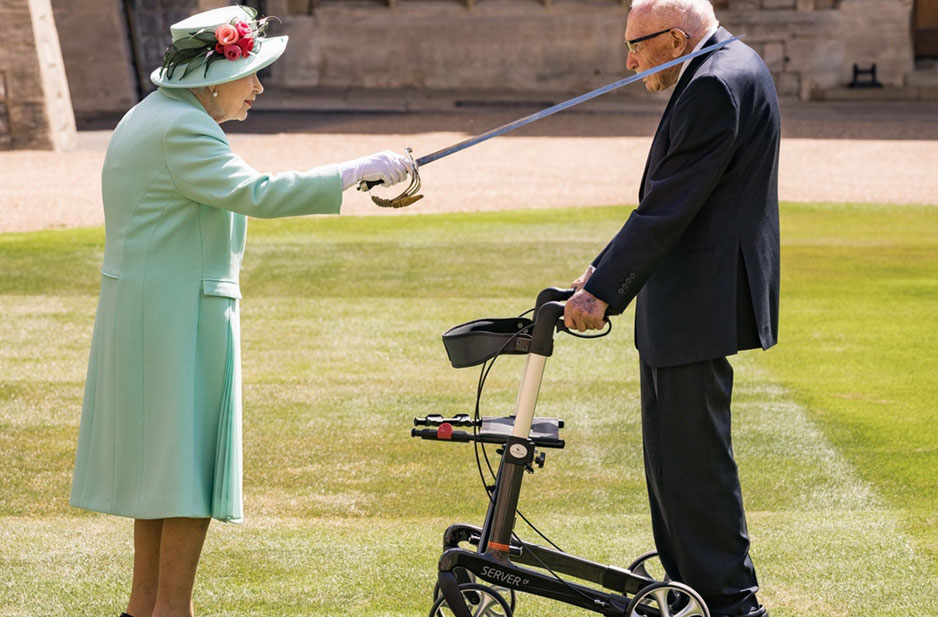
Captain Sir Tom Moore was knighted in the Queen's first official engagement in person since lockdown during an investiture to honour the 100-year-old, who raised more than £32m for NHS charities, was staged in a "unique ceremony" at Windsor Castle.

He was recognised for walking more than 100 laps of his garden in Marston Moretaine, Bedfordshire. Capt Sir Tom, originally from Keighley, West Yorkshire, said it was "the most special of days for me".

"I am absolutely overawed," he said, "This is such a high award and to get it from Her Majesty as well - what more can anyone wish for? This has been an absolutely magnificent day for me.

"The money [raised] is very useful but you've only one Queen and when you get a message from the Queen there's no value that can be placed on that."

The Queen personally praised Capt Sir Tom, telling him: "Thank you so much, an amazing amount of money you raised." Prime Minister Boris Johnson had previously made a special nomination for the war veteran to be knighted.

Buckingham Palace believes it is the first time the ceremony has been held in the strictly socially distanced format.

Her Royal Highness used the sword that belonged to her father, George VI, to bestow the insignia of Knight Bachelor upon Capt Sir Tom. The Queen’s arrival was announced by the sound of bagpipes played by the Queen's Piper, Pipe Major Richard Grisdale, of The Royal Regiment of Scotland. Earlier, Her Majesty, the Duke of Edinburgh and other close family attended the unannounced wedding of their granddaughter Princess Beatrice to Edoardo Mapelli Mozzi in a nearby chapel.

Other Royal investitures have been put on hold during the pandemic with those scheduled to take place at Buckingham Palace and the Palace of Holyroodhouse in Edinburgh in June and July postponed.

Capt Sir Tom was joined at the ceremony by his family - daughter Hannah Ingram-Moore, son-in-law Colin Ingram, grandson Benjie and granddaughter Georgia. Mrs Ingram-Moore said: "It is just the most sensational day, of all of the things Tom's been honoured by this is truly the icing on the cake."

Captain Sir Tom, who was given the honorary title of colonel on his 100th birthday, had initially set out to raise £1,000 for NHS charities by repeatedly walking an 82ft (25m) loop of his garden. But he eventually raised £32,794,701 from more than one and a half million supporters.


Coronavirus restrictions will ease further in England under plans for a "significant return to normality" by Christmas, Boris Johnson has announced.

Under the new guidelines, people may use public transport for journeys immediately, while advice for employers will change from 1 August. Companies will have more discretion to bring staff back to workplaces if it is safe to do so, the PM explained.

Mr Johnson added he was "hoping for the best and planning for the worst".
At a news conference at Downing Street, the prime minister said the plans "remains conditional" on continued progress in controlling the virus and preventing a second wave of infections that could overwhelm the NHS.

"It is my strong and sincere hope that we will be able to review the outstanding restrictions and allow a more significant return to normality from November at the earliest - possibly in time for Christmas," he said.

Devolved administrations in Scotland, Wales and Northern Ireland have the power to set their own timings for the easing of restrictions.
In the announcement, Mr Johnson said the government was making it clear to people in England they may use public transport now.

From 1 August, he said: "Instead of government telling people to work from home, we are going to give employers more discretion, and ask them to make decisions about how their staff can work safely." He explained that could mean "continuing to work from home, which is one way of working safely and which has worked for many employers and employees".

However, the Welsh government said it would carry on advising people to work from home.

Responding to Mr Johnson's announcement, First Minister Mark Drakeford said: "I positively don't want people to be returning to offices in the way that we did before coronavirus happened." The government's current social distancing guidance requires people to stay at least 1m apart with certain precautions.

A further 114 coronavirus deaths were announced, taking the total number of people who have died with the virus in the UK to 45,233.

Tthe government's chief scientific adviser, Sir Patrick Vallance, told MPs there was "absolutely no reason" to change the government's current guidance on working from home.

They have advised people to "work from home if you can" since March, and Sir Patrick said home working was still a "perfectly good option" for many.

Asked about those comments at the news conference, Mr Johnson said he "totally agrees" with Sir Patrick and that it was not for the government to tell employers where their workforce should be.

Labour leader Sir Keir Starmer said he will look at the details of the government's plan to get people back to work but stressed "this can't be done on a wing and a prayer and requires a credible plan and national leadership".

Business groups warned any mass return to work immediately was unlikely.
Smaller companies in particular would need more support to get workers back, Mike Cherry from the Federation of Small Businesses said. "Small firms are being tasked with consulting employees and putting the right measures in place to ensure a safe return to work," he said.

"After weeks of little or no income, they will need help - both funding and advice - to make that happen."

Director of Policy at the Institute of Directors, Edwin Morgan, said childcare and concerns about using public transport were still issues for many employees.

Trade union body the TUC accused ministers of "passing the buck on this big decision to employers" and said more investment in public transport would be needed to make commuting safer.


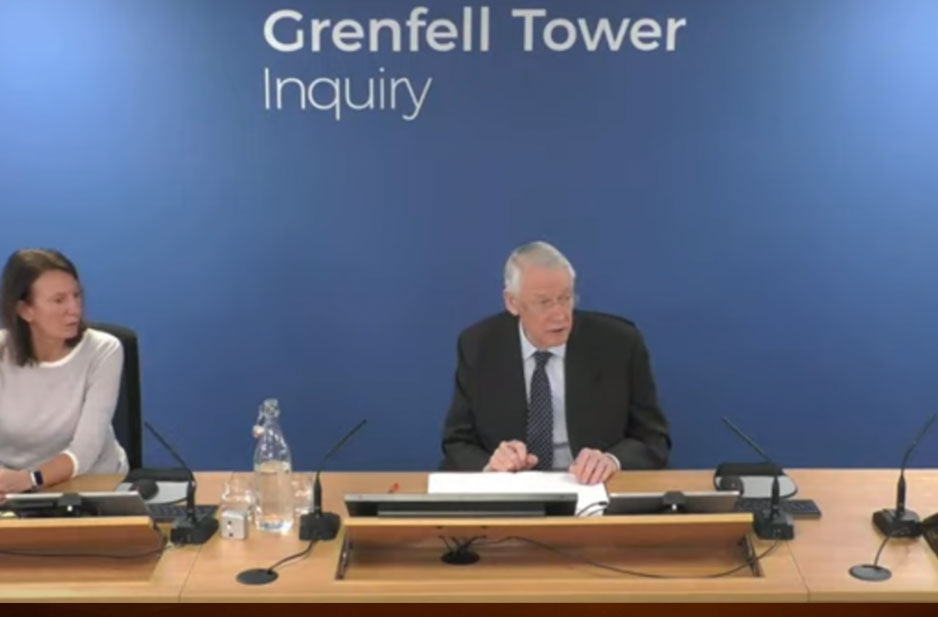
The main contractor on the Grenfell Tower refurbishment overlooked a key fire safety document, the inquiry into the blaze has heard. It included requirements regarding the fire hazards of certain cladding materials and had to be kept on-site. But Simon Lawrence, contracts manager at building firm Rydon, said the "sheer amount of information" involved in the project led to it being missed.

The inquiry's first phase found that cladding fuelled the June 2017 fire. Hearings in the second phase of the inquiry returned last week after a four-month break due to coronavirus.

This second phase is examining the refurbishment of the 24-storey residential block in North Kensington, west London, in which 72 people died. The inquiry heard that a copy of the Standard for Systemised Building Envelopes, compiled by the Centre for Window and Cladding Technology, had to be kept on-site under National Building Specifications.

The document states that "the building envelope shall not be composed of materials which readily support combustion, add significantly to the fire load, and/or give off toxic fumes".

Asked about the guidance by inquiry lawyer Richard Millett QC, Mr Lawrence said: "We wouldn't have had a copy on site.

"It obviously wasn't picked up in all the documents we had to go through... it obviously wasn't noticed." Mr Lawrence said the "sheer amount of information" led to it being missed, but said he was familiar with the "principle" of the guidance but not the "technical part".

Asked about what steps Rydon took to supervise the overall project and ensure the works were being completed with safe materials, he said: "I think it would be using a competent design team, competent specialist contractors, backed up by building control and all the layers within." He said it was up to Rydon's sub-contracted design team including architects Studio E and external wall firm Harley Facades to check that any materials being used on the tower block refurbishment were safe and complied with the regulations.

Mr Lawrence, who was involved in the project between June 2014 and October 2015, agreed that this boiled down to Rydon being "reliant on others". He said in his witness statement that "at no point" did he "have any reason to believe" materials were to be used which did not meet legal requirements.

The appearance before the inquiry was the first time that Rydon, the company at the centre of the refurbishment, had given evidence.

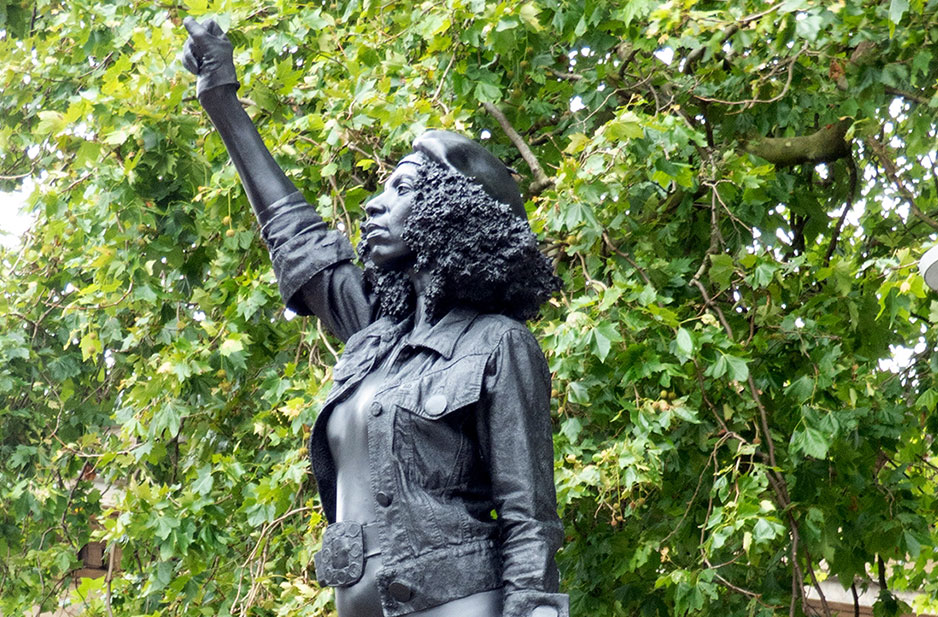
A figure of a Black Lives Matter protester appeared on the empty plinth previously occupied by the statue of slave trader Edward Colston.

A sculpture of protester Jen Reid was erected in Bristol city centre where the Colston statue was pulled down last month.

Ms Reid had been photographed standing on the empty plinth after the statue was toppled during the march. Artist Marc Quinn said the sculpture did not have formal consent.

He said the black resin statue - called A Surge of Power - was only meant to be temporary, adding that he was inspired to create it after seeing an image of Ms Reid standing on the plinth with her fist raised during the Black Lives matter protest before then contacting her through social media and both working together on the statue, which was erected.

Ms Reid said: "I think it's something the people of Bristol really appreciate seeing. My husband took the photo on the day of the protests and put it on his social media. He was contacted by Marc Quinn who then contacted myself.

"I was in his studio after the protest with 201 cameras surrounding me, taking pictures of me from every conceivable angle. That went into a 3D print and a mould was made."

Ms Reid said the sculpture was important because it helped "keep the journey towards racial justice and equality moving", adding that she had felt an "overwhelming impulse" to climb on plinth in last month's protest.

"When I stood on the plinth, and raised my arm in a Black Power salute, it was totally spontaneous," she said. "I didn't even think about it. It was like an electrical charge of power was running through me.

"This sculpture is about making a stand for my mother, for my daughter, for black people like me."

Artist, Quinn, said the sculpture was meant as a temporary installation to continue the conversation about racism and did not know how long it would remain in place.

He said: "It was not going to be there forever. I saw pictures of Jen on the plinth and she spontaneously made this gesture and I thought this is amazing. She's made an extraordinary artwork just by doing that and it needed to be crystalised into an object and put back onto the plinth.

"It had to be in that public realm and I wanted to put it in that charged spot where Edward Colston had been before."

Protesters pull the Colston statue - which had been at the Bristol city centre site since 1895 - from its plinth. It was dragged to the harbourside, where it was thrown into the water at Pero's Bridge - named in honour of enslaved man Pero Jones who lived and died in the city.

The sculpture of a Black Lives Matter protester has now been removed from the plinth by Bristol City Council contractors removed the sculpture of Ms Reid and took it away in the back of a lorry.

Mayor Marvin Rees said it was up to the people of Bristol to decide what would replace Colston's statue.

Speaking in a Facebook Q&A, Mr Rees said it was important to gauge people's opinions on a replacement for the Colston statue, but he felt an empty plinth was "a very powerful statement at this time". He said that that how race was navigated in the UK was a "delicate balance", adding: "Running around provoking debate without any awareness of the potential consequences of that debate is not OK.

"We have to approach things with wisdom, which is why we've set out a process that revolves around a history commission telling the full story of Bristol so that the city is much more informed and is in a better position to collectively decide who it wants to honour and where."

Photo by Sam Saunders from Bristol