
In 1912, Jamini Sen became the first woman ever to be admitted as a Fellow of the Royal College of Physicians and Surgeons of Glasgow - an institution founded in 1599 and long closed to women.
Yet, unlike many pioneers of modern medicine, her story largely disappeared from view. But now, more than a century later, Sen's remarkable life - spanning palace wards in Nepal, examination halls in Britain and epidemic-stricken towns in colonial India - has been reconstructed in Daktarin Jamini Sen, a new biography by her great-niece Deepta Roy Chakraverti. The biography draws on letters, diaries, a slim journal kept by Sen herself, her article in a journal called Mahila Parishad, and a synopsis written by her elder sister, Kamini.
The book restores to history a woman of fierce intellect and radical resolve from pre-independent Bengal. Born in 1871 in Barisal in the Bengal Presidency, Sen's was educated at Bethune College in Kolkata, where she qualified from Calcutta Medical College in 1897, entering a profession that remained overwhelmingly male and rigidly stratified by race.
After graduating, she accepted a post in Nepal as house physician to the royal household and head of the Kathmandu Zenana Hospital. For nearly a decade she practised medicine at the highest level, earning the confidence of King Prithvi Bir Bikram Shah while introducing modern clinical methods within deeply traditional settings.
Amid looming palace unrest and rumours of coups, she eventually left the country. And, in 1911, with support from the Lady Dufferin Fund, she travelled to Britain, took a medical licence in Dublin, in Ireland, studied at the London School of Hygiene and Tropical Medicine, and went on to sit the fellowship examinations in Glasgow.
The Royal College had only just opened its exams to women and, in 1912, she passed, becoming the first female Fellow at an institution founded in 1599. However, the college's records note that Sen "was unable to hold office... meaning that her privileges as a female Fellow were restricted compared to those of her male counterparts".
In 1912, she travelled to Berlin, before returning to India, where she joined the Women's Medical Service - working in cities including Agra, Shimla and Puri. In Agra Sen was brought in to steady tensions. Her presence as an Indian woman physician proved crucial.
In Shimla and Puri, she continued working through outbreaks of epidemics and difficult conditions that some colonial doctors resisted. "The greatest improvement has taken place in maternal cases," she wrote in her journal.
While in Nepal, Sen adopted a baby girl, Bhutu, whose mother had died in childbirth. She balanced professional rigour with private responsibility within the confines of traditional Bengali society. But the child died after a debilitating illness.
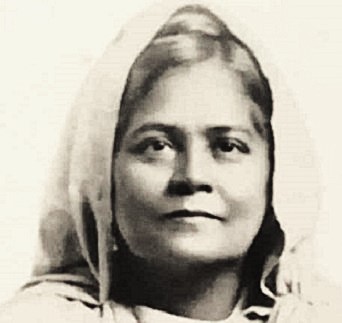
To date, only two grainy black-and-white photographs of her remain, now submitted to the Glasgow College archives. "In celebrating Dr Jamini Sen today, we honour not just a doctor but a trailblazer whose courage laid the groundwork for generations of women in medicine both in India, in Britain, and beyond," Chakraverti wrote.
His portrait is of a woman shaped equally by ambition and sorrow - a doctor who confronted racism in pre-independence India and sexism in Britain yet remained steadfast in her vocation.
She died in 1932.