Colors: Blue Color

Coronavirus restrictions will ease further in England under plans for a "significant return to normality" by Christmas, Boris Johnson has announced.

Under the new guidelines, people may use public transport for journeys immediately, while advice for employers will change from 1 August. Companies will have more discretion to bring staff back to workplaces if it is safe to do so, the PM explained.

Mr Johnson added he was "hoping for the best and planning for the worst".
At a news conference at Downing Street, the prime minister said the plans "remains conditional" on continued progress in controlling the virus and preventing a second wave of infections that could overwhelm the NHS.

"It is my strong and sincere hope that we will be able to review the outstanding restrictions and allow a more significant return to normality from November at the earliest - possibly in time for Christmas," he said.

Devolved administrations in Scotland, Wales and Northern Ireland have the power to set their own timings for the easing of restrictions.
In the announcement, Mr Johnson said the government was making it clear to people in England they may use public transport now.

From 1 August, he said: "Instead of government telling people to work from home, we are going to give employers more discretion, and ask them to make decisions about how their staff can work safely." He explained that could mean "continuing to work from home, which is one way of working safely and which has worked for many employers and employees".

However, the Welsh government said it would carry on advising people to work from home.

Responding to Mr Johnson's announcement, First Minister Mark Drakeford said: "I positively don't want people to be returning to offices in the way that we did before coronavirus happened." The government's current social distancing guidance requires people to stay at least 1m apart with certain precautions.

A further 114 coronavirus deaths were announced, taking the total number of people who have died with the virus in the UK to 45,233.

Tthe government's chief scientific adviser, Sir Patrick Vallance, told MPs there was "absolutely no reason" to change the government's current guidance on working from home.

They have advised people to "work from home if you can" since March, and Sir Patrick said home working was still a "perfectly good option" for many.

Asked about those comments at the news conference, Mr Johnson said he "totally agrees" with Sir Patrick and that it was not for the government to tell employers where their workforce should be.

Labour leader Sir Keir Starmer said he will look at the details of the government's plan to get people back to work but stressed "this can't be done on a wing and a prayer and requires a credible plan and national leadership".

Business groups warned any mass return to work immediately was unlikely.
Smaller companies in particular would need more support to get workers back, Mike Cherry from the Federation of Small Businesses said. "Small firms are being tasked with consulting employees and putting the right measures in place to ensure a safe return to work," he said.

"After weeks of little or no income, they will need help - both funding and advice - to make that happen."

Director of Policy at the Institute of Directors, Edwin Morgan, said childcare and concerns about using public transport were still issues for many employees.

Trade union body the TUC accused ministers of "passing the buck on this big decision to employers" and said more investment in public transport would be needed to make commuting safer.


The main contractor on the Grenfell Tower refurbishment overlooked a key fire safety document, the inquiry into the blaze has heard. It included requirements regarding the fire hazards of certain cladding materials and had to be kept on-site. But Simon Lawrence, contracts manager at building firm Rydon, said the "sheer amount of information" involved in the project led to it being missed.

The inquiry's first phase found that cladding fuelled the June 2017 fire. Hearings in the second phase of the inquiry returned last week after a four-month break due to coronavirus.

This second phase is examining the refurbishment of the 24-storey residential block in North Kensington, west London, in which 72 people died. The inquiry heard that a copy of the Standard for Systemised Building Envelopes, compiled by the Centre for Window and Cladding Technology, had to be kept on-site under National Building Specifications.

The document states that "the building envelope shall not be composed of materials which readily support combustion, add significantly to the fire load, and/or give off toxic fumes".

Asked about the guidance by inquiry lawyer Richard Millett QC, Mr Lawrence said: "We wouldn't have had a copy on site.

"It obviously wasn't picked up in all the documents we had to go through... it obviously wasn't noticed." Mr Lawrence said the "sheer amount of information" led to it being missed, but said he was familiar with the "principle" of the guidance but not the "technical part".

Asked about what steps Rydon took to supervise the overall project and ensure the works were being completed with safe materials, he said: "I think it would be using a competent design team, competent specialist contractors, backed up by building control and all the layers within." He said it was up to Rydon's sub-contracted design team including architects Studio E and external wall firm Harley Facades to check that any materials being used on the tower block refurbishment were safe and complied with the regulations.

Mr Lawrence, who was involved in the project between June 2014 and October 2015, agreed that this boiled down to Rydon being "reliant on others". He said in his witness statement that "at no point" did he "have any reason to believe" materials were to be used which did not meet legal requirements.

The appearance before the inquiry was the first time that Rydon, the company at the centre of the refurbishment, had given evidence.

A figure of a Black Lives Matter protester appeared on the empty plinth previously occupied by the statue of slave trader Edward Colston.

A sculpture of protester Jen Reid was erected in Bristol city centre where the Colston statue was pulled down last month.

Ms Reid had been photographed standing on the empty plinth after the statue was toppled during the march. Artist Marc Quinn said the sculpture did not have formal consent.

He said the black resin statue - called A Surge of Power - was only meant to be temporary, adding that he was inspired to create it after seeing an image of Ms Reid standing on the plinth with her fist raised during the Black Lives matter protest before then contacting her through social media and both working together on the statue, which was erected.

Ms Reid said: "I think it's something the people of Bristol really appreciate seeing. My husband took the photo on the day of the protests and put it on his social media. He was contacted by Marc Quinn who then contacted myself.

"I was in his studio after the protest with 201 cameras surrounding me, taking pictures of me from every conceivable angle. That went into a 3D print and a mould was made."

Ms Reid said the sculpture was important because it helped "keep the journey towards racial justice and equality moving", adding that she had felt an "overwhelming impulse" to climb on plinth in last month's protest.

"When I stood on the plinth, and raised my arm in a Black Power salute, it was totally spontaneous," she said. "I didn't even think about it. It was like an electrical charge of power was running through me.

"This sculpture is about making a stand for my mother, for my daughter, for black people like me."

Artist, Quinn, said the sculpture was meant as a temporary installation to continue the conversation about racism and did not know how long it would remain in place.

He said: "It was not going to be there forever. I saw pictures of Jen on the plinth and she spontaneously made this gesture and I thought this is amazing. She's made an extraordinary artwork just by doing that and it needed to be crystalised into an object and put back onto the plinth.

"It had to be in that public realm and I wanted to put it in that charged spot where Edward Colston had been before."

Protesters pull the Colston statue - which had been at the Bristol city centre site since 1895 - from its plinth. It was dragged to the harbourside, where it was thrown into the water at Pero's Bridge - named in honour of enslaved man Pero Jones who lived and died in the city.

The sculpture of a Black Lives Matter protester has now been removed from the plinth by Bristol City Council contractors removed the sculpture of Ms Reid and took it away in the back of a lorry.

Mayor Marvin Rees said it was up to the people of Bristol to decide what would replace Colston's statue.

Speaking in a Facebook Q&A, Mr Rees said it was important to gauge people's opinions on a replacement for the Colston statue, but he felt an empty plinth was "a very powerful statement at this time". He said that that how race was navigated in the UK was a "delicate balance", adding: "Running around provoking debate without any awareness of the potential consequences of that debate is not OK.

"We have to approach things with wisdom, which is why we've set out a process that revolves around a history commission telling the full story of Bristol so that the city is much more informed and is in a better position to collectively decide who it wants to honour and where."

Photo by Sam Saunders from Bristol

Banksy has returned to the London Underground with a piece encouraging people to wear a face mask.

A video posted on his Instagram page shows a man, believed to be the enigmatic artist, disguised as a professional cleaner. He can been seen ordering passengers away as he gets to work, stencilling rats around the inside of a carriage.

The artist's name is also daubed across the driver's door of a train. The work, called If You Don't Mask, You Don't Get, features a number of rats in pandemic-inspired poses and wearing face masks.

One rodent stencilled on the Circle Line train appears to be sneezing, while another is shown spraying anti-bacterial gel.

At the end of the video, the words "I get lockdown" appear on the side of a station wall, followed by "but I get up again" as the train's doors close, while Chumbawamba's 1997 song Tubthumping plays.

All users of public transport in London must wear a face mask.

Transport for London has said it is not yet able to comment. The BBC has asked if the travel authority worked with Banksy on this artwork and, if not, whether it posed a security risk.

Early on in his career Banksy, who is originally from Bristol, often spray-painted rats and monkeys on to Tube trains.

BBC Children in Need has announced it will be matching Stormzy in pledging £10m to fight racial inequality in the UK. It'll donate the money over 10 years and work with Radio 1Xtra to develop young Black talent in the media.

The rapper says the money will help "in supporting and strengthening the young black community". The donation will also be used to help young business owners and offer skills to help boost employability.

Stormzy made his donation commitment after the death of George Floyd, saying he recognised what he had been able to achieve in his life but wanted more Black people to have the same opportunities.

In 2018 he committed to paying for two Black students to go to Cambridge University and also has a deal with Penguin to help young Black authors get published in the UK.

Children in Need currently funds over 3,000 charities and projects in the UK that help disadvantaged children and young people. It says its donations are used to help young Black people but that the additional funding will go even further to create opportunities.
A panel of "young people and volunteers with direct experience of the Black British experience" will help decide who gets funding from this new scheme.

BBC Radio 1Xtra will also be involved in the process, helping to develop future radio presenters but also telling the stories of the people and communities who are receiving the Children in Need funding.

Kenny Imafidon, trustee of BBC Children in Need, said: "I can speak for the entire Board of Trustees and all the staff at BBC Children in Need when I say; we were really inspired by Stormzy's pledge.

"I am excited about this new fund and I truly believe that this is the beginning of greater things to come, as we continue on our mission to support children and young people most in need."

Stormzy has urged others to join in pledging.

Wolverhampton residents are being urged to take extra care to prevent the spread of coronavirus and help Avoid a Local Lockdown.
 
Significant changes to the lockdown measures came into effect on July 4, as the Government allows more businesses and activities to reopen to the public and social distance guidance changes from 2m to 1m-plus in instances where remaining 2m apart is not possible.
 
Councillor Jasbir Jaspal, the City of Wolverhampton Council’s Cabinet Member for Public Health and Wellbeing, said: “The reopening of more businesses is of course very welcome news, but it is also a time of heightened risk for us all because Covid-19 has not gone away.
 
“If we were to let down our guard and allow the virus to begin spreading more easily, we risk not only a second wave of cases and more deaths, but also the re-imposition of lockdown measures as we have seen in Leicester.
 
“We need to do all we can to ensure that we avoid a local lockdown in Wolverhampton, and we all have a key role to play in this.
 
“As part of gradually lifting lockdown there are additional freedoms from this weekend. More places will be able to open – but only if they can do so in a safe and ‘Covid-secure’ way, but how safely the city can re-open depends on all of us doing our part.

“It is absolutely vital that if anyone choses to go out they must stay alert and keep a safe distance from others at all times to reduce the risk of transmission. Failure to do this will increase the chances of seeing a local spike in cases or outbreaks.”
 
Wolverhampton Police Chief Superintendent, Andy Beard, said: “Everyone that lives, works or socialises in Wolverhampton has a personal responsibility to stay alert and comply with the latest Governmental restrictions. We have all made so many sacrifices over the last 15 weeks and I feel sure that none of us would want to see this undone.
 
“Local Police Officers and PCSOs will continue to be on patrol, engaging with the public, businesses and City Council to ensure everyone is aware of the latest restrictions.  Let’s all continue to help each other to avoid a local lockdown across Wolverhampton.”
 
People are now able to go to a pub, cafe or restaurant, the hairdressers, museums, theme parks, bingo halls, cinemas and places of worship, or stay in a hotel, bed and breakfast or on a campsite, as long as the venue in question is able to operate in a Covid-secure way.
 
In addition, more places of worship have opening their doors with services permitted from this weekend.
 
‘Close proximity’ venues, such as swimming pools, gyms, nightclubs, casinos, bowling alleys, soft play centres, spas, nail bars, beauty salons and tattoo parlours will remain closed at this time.
 
Not all venues which are permitted to reopen from Saturday will do so, and people are advised to check before travelling. Please note that the City of Wolverhampton Council’s museums, art galleries, libraries and archives service will not be reopening this weekend; announcements about plans for their reopening will follow in due course.
 
Social distancing guidelines will also change tomorrow, from 2m to '1m-plus'. People should continue to remain at least 2m away from anyone who is not a member of their own household but, in instances where this is not physically possible, members of the public can be 1m away from each other as long as other measures are put in place to limit the transmission of the virus.
 
These include wearing a face covering, installing screens, making sure people face away from each other and providing extra handwashing facilities.
 
In addition, from Saturday, people will be able to spend time indoors or outside with another household. Outside, up to six people from different households can meet, while inside six people from no more than two households can meet. Social distancing should apply in all cases.
 
Residents are reminded they must continue to:
 
Stay at home as much as possible
Work from home if you can
Limit contact with other people
Keep your distance if you go out, at least 2m or 1m-plus if 2m is not possible
Wash your hands regularly.
 
Anyone, irrespective of age, should be tested if they have symptoms of Covid-19, including a high temperature, a new, continuous cough, or a loss or change to your sense of smell or taste.

For more information, and to apply for a test, go to www.gov.uk/coronavirus. If anyone does not have access to the internet, they should call 119. All appointments must be booked in advance.
 
Anyone in Wolverhampton who tests positive for Covid-19 will be contacted by NHS Test and Trace and will need to isolate and share information about people that have been close contacts recently.
 
The latest information and guidance around coronavirus is available at www.gov.uk/coronavirus and on the council’s own coronavirus pages at www.wolverhampton.gov.uk/coronavirus. There’s lots of advice on how people can protect themselves and their families from coronavirus from the NHS at www.nhs.uk/coronavirus.
 
The council’s Stay Safe, Be Kind campaign offers clear and simple advice about how people can help themselves, and how they can support others who may be particularly vulnerable at this time.

Thousands of protesters marched through Brighton in support of the Black Lives Matter movement.

Demonstrators wearing black, and many with face coverings, held placards and shouted "Black lives matter every day" and "UK is not innocent".

They were serenaded by a string quartet as they passed the war memorial.

It follows an outcry over a video showing a man shouting "I can't breathe" while being restrained on the ground by three Sussex Police officers.

The force said the man was arrested and became aggressive towards officers before being placed on the ground.

The incident has been referred to the Independent Office for Police Conduct (IOPC).

Last month, more than 10,000 protesters marched through the East Sussex city in solidarity with the Black Lives Matter movement worldwide.

It followed the death of George Floyd, an unarmed Black man who died after a white police officer knelt on his neck for almost nine minutes in the US city of Minneapolis on 25 May.

His death sparked a wave of Black Lives Matter protests, including in the UK.

A family learning service has been recognised for its work by Festival of Learning 2020.

The Jubilee Partnership, run by SAFL, Sandwell Council’s Sandwell Adult and Family Learning service and the Jubilee Park Community Centre, Tipton has been recognised for their work in promoting learning in the community.

Festival of Learning, originally Adult Learners Week, is an organisation dedicated to the promotion of adult learning and rewarding organisations who promote, support and provide adult learning opportunities.

Over the last few years, Jubilee Partnership has delivered ICT and iPad classes and family learning events, free of charge to Sandwell residents.

These classes have led to more people enrolling on SAFL courses and more people using the Jubilee Centre; which is managed by the Bangladeshi Women's Association.

Sandwell Council Deputy Leader Councillor Danny Millard said: “Jubilee Partnership has done so much for the local community and this award is a great acknowledgement of all hard work that the teams have put in. Learning is vital for everyone, the more we can learn and develop new skills, the more we can help ourselves, our families and our community.”

A village procession and a Battle of Britain flypast will take place as Dame Vera Lynn's family, friends and fans say goodbye to the Forces' Sweetheart.

Dame Vera died last month at the age of 103 and her funeral will be held later.

The East Sussex village of Ditchling, where she lived for 50 years, will be at a standstill as police close off roads for her cortège.

It will make its way to Woodvale Crematorium from the family home at 11:40 BST.
A tribute was paid to the singer as a picture of her, accompanied with a video, were projected on to the White Cliffs of Dover ahead of her funeral. The lyrics of We'll Meet Again appeared as the music was played across the Channel.

The projection on to the 350ft cliffs was visible to ships and planes. It could also be seen from the main road and from some back gardens.

The funeral procession later will stop shortly at the crossroads in the centre of Ditchling to allow those who live there to pay their respects.

A flypast, consisting of a Spitfire and a Hurricane, was also set to take place, with a private service at the crematorium chapel expected to include a bugler from the Royal Marines providing music. The family said a full memorial service was planned to be held at a later date.

The singer was best known for performing hits such as We'll Meet Again to troops on the front line.

Dame Vera, who had sold more than a million records by the age of 22, was also remembered for singing The White Cliffs Of Dover, There'll Always Be An England, I'll Be Seeing You, Wishing and If Only I Had Wings.


The police watchdog is launching a review into whether officers across England and Wales racially discriminate against ethnic minorities. Stop-and-search and the use of force will be among the issues examined by the Independent Office for Police Conduct (IOPC).

It follows criticism of the police in recent cases caught on camera.
The Metropolitan Police apologised this week to athlete Bianca Williams over a stop-and-search incident.

IOPC director-general Michael Lockwood said the review's focus on racial discrimination is intended "to establish the trends and patterns which might help drive real change in policing practice".

Stop-and-search powers are nine times more likely to be used against black people than against white people in England and Wales, but Mr Lockwood said they needed to better understand how these disparities occurred and how they could be addressed.

He said the review will involve independently investigating more cases where racial discrimination may be a factor to "develop a body of evidence" and identify systemic issues
.
The IOPC is currently investigating a series of cases in London, Birmingham and Greater Manchester in which it is alleged police used excessive force, and in some cases Tasers, against Black men.

It is also looking into claims of racial profiling after Team GB sprinter Bianca Williams and her partner Ricardo dos Santos, who are both black, were handcuffed and searched by police during a vehicle stop.

After footage of the incident was posted online by former Olympic 100m champion Linford Christie, Metropolitan Police Commissioner Dame Cressida Dick apologised for the "distress" it caused Ms Williams.

The IOPC will also investigate more cases where victims from BAME communities felt unfairly treated by police, Mr Lockwood said.

These could include whether the police are treating allegations of hate crime seriously, or if there are cases where police are failing to treat them as victims of crime

"We know this is an issue of community concern. Our police forces can only police effectively with the trust and confidence of the community they serve," he said.

A number of pubs in England have shut after customers tested positive for coronavirus.

At least three establishments announced they had shut their doors again just days after reopening at the weekend.


They were among hundreds of venues that welcomed customers after three months as lockdown measures were eased - most apparently with no problem.

But crowds descending in some towns and cities prompted fears social distancing was being disregarded.


The Lighthouse Kitchen and Carvery in Burnham-on-Sea, Somerset, said it was "slowly" working through a list of customers who had left details at the weekend and that all staff had tested negative for the virus. In Batley, West Yorkshire, the Fox and Hounds said a customer had phoned to say they had tested positive for coronavirus. Meanwhile the landlord of the Village Home Pub in Alverstoke, Hampshire, said his team were awaiting test results after someone in a member of staff's "family bubble" tested positive.


Jess Green, manager of the Lighthouse Kitchen, said that she decided to close to "put everyone's health and safety first".


"I felt I had to keep my customers and my staff safe which is why I chose to shut the pub. I'm gutted, but safety comes first. We could have opened today but chose not to as I think that's the right thing to do."


Indian takeaway Saagar, also in Burnham, said it would be closing until Friday to undergo a deep clean after one if its drivers had been to the Lighthouse Kitchen, along with bar the Vape Escape, which has also closed for a full clean after a customer's positive test.


Leanne Underhill, owner of the Vape Escape, told burnham-on-sea.com all staff tests had been negative and customers in the bar on Saturday have been contacted, in accordance with government advice.


Somerset County Council said it was not treating the case as an "outbreak" and asked people to keep to social distancing guidelines and to regularly wash their hands.


The Fox and Hounds said staff had taken tests and the venue would be deep-cleaned prior to reopening. The Batley pub said it had taken a number of measures ahead of Saturday's reopening, including limiting numbers allowed inside, a one-way system around the building and a one-in one-out policy on use of toilets.


Georgia Gosling visited the Fox and Hounds over the weekend and said it had "all the right procedures in place" but called the news a "wake-up call".


"We were told to get a test and luckily everyone I know has come back negative," she said.

Despite saying she was "a bit scared to go out now", Ms Gosling said she would return to the pub once it reopened. I've been going there for years and once they've done a deep clean it's not like it's contagious forever. I'll definitely will go back."


Customers of the Village Home who had visited at the weekend have been told there was "no need to isolate" unless they showed symptoms or were contacted by tracers.


Landlord Robby Roberts said: "A member of staff, one of my barmaids, has someone in her family bubble who has tested positive." He said she was on shift on Saturday when the pub was open for 11 and a half hours and about 150 customers visited.


"All five staff who were on shift on Saturday have now been tested and we are waiting for the results," he said. "The pub is being deep cleaned and I have contacted the council. I am awaiting advice from them."


A second pub in Alverstoke, The Fighting Cocks, has announced it will also close temporarily despite "having no suspected or confirmed cases".


The pub said on Facebook it "cannot guarantee that someone who has been in contact with a confirmed case has not been in the pub, nor will they come in over the coming days".


Crowds were seen across England on "Super Saturday", as thousands flocked to enjoy a pint. There were reports of arrests and early venue closures around the country, but police said a majority of people had acted responsibly.


UK pub and hospitality trade bodies have published guidance for bars and restaurants on how to operate contact tracing. Contact details only need to be taken from one person in a group and must be kept for 21 days.


Owners are also asked to note the arrival times of customers and how long they stay.

People can refuse to give information, but owners can choose not to serve them.


The Grenfell Tower fire inquiry "must not ignore" the impact of race and poverty on the disaster, a lawyer representing survivors has said. Leslie Thomas QC, also representing bereaved families, said the 2017 fire was "inextricably linked with race". And he urged the inquiry to be on the "right side of history" when considering how the issue contributed towards the deaths of the 72 victims.


The inquiry returned after a four-month break due to coronavirus.


"The Grenfell fire did not happen in a vacuum," said Mr Thomas in his opening statement. "A majority of the Grenfell residents who died were people of colour.


"Grenfell is inextricably linked with race. It is the elephant in the room. This disaster happened in a pocket of one of the smallest yet richest boroughs in London. Yet the community affected was predominantly working-class. That is the stark reality that cannot be ignored."


The Grenfell Next of Kin group has called for the inquiry to "investigate the extent of institutional racism as a factor" in the fire in June 2017.


Legal submissions made to the inquiry explain there were four visitors to the tower among the dead and also stillborn Baby Logan Gomes and then adds: "Of the remaining 67, 57 were from BAME (black, Asian and other ethnic minority) communities.


"In the English Housing Survey 2017-2018, it was found that 40% of those living in high-rise buildings in the social rented sector are black, Asian or other. This, compared to the per cent of the population (14%), is high."


Mr Thomas told the inquiry chairman Sir Martin Moore-Bick: "This is your time of action to break the cycle of disengagement with the issue of race and inequality. What will this inquiry be remembered for? You will undoubtedly want it to be on the right side of history."


The inquiry recently heard how a senior fire safety engineer did not think putting cladding on Grenfell Tower would pose any "issues" for safety.


In its first phase, the inquiry concluded that cladding fuelled the fire in June 2017. The second phase is examining how it could have happened in the first place.


At a time when the subjects of racial discrimination and equality are in the spotlight, people in the West Midlands are asking questions about the diversity – or lack of it – amongst the management and executive of the 2022 Commonwealth Games to be held in Birmingham.

Of the 13 directors and seven members of the executive team, 13 are men and seven are women. However, what has drawn everyone’s attention is that 19 are white and only one is black (and no Asians at all).

The question being asked is – how, in a diverse and multi-ethnic city like Birmingham, could this have happened?

This is a fair question. However, if one looks at the roles and people involved, one can begin to understand how it all came about.

First – the board of directors. Of the fourteen, eight were nominated by partner organisations, chairman John Crabtree was appointed by Theresa May, the then Prime Minister and five (Simmonds, Jackson, Timothy, Browning and one other) were appointed by the Department for Digital, Culture, Media and Sport (DCMS). So, the team at Birmingham 2022 had no say in the makeup of the board.

Due to a resignation at the end of last year, there is currently one vacancy, to be appointed by the Secretary of State. The recruitment process to fill that vacancy will begin soon. The other thirteen are:

  1. John Crabtree, Chairman – appointed by Prime Minister Theresa May, a former president of Birmingham Chamber of Commerce & Industry.
  2. Ian Ward, Leader of Birmingham City Council.
  3. David Grevemberg, Chief executive of the Commonwealth Games Federation.
  4. Dame Louise Martin, President of the Commonwealth Games Federation.
  5. Helen Judge, Director general of the DCMS.
  6. Dame Julie Moore, Second representative of the DCMS.
  7. Ian Metcalfe, Chairman of Commonwealth Games England.
  8. Simon Ball, Non-executive director on the board of Commonwealth Games England.
  9. Derrick Anderson, Representative of West Midlands Combined Authority.
  10. Ellie Simmonds, Paralympian, winner of gold medals in three Paralympic Games.
  11. Lyndsey Jackson, Deputy chief executive of Edinburgh Fringe.
  12. Nick Timothy, Former special adviser to PM Theresa May.
  13. Jonathan Browning, Chairman of Coventry and Warwickshire Local Enterprise Partnership.

The seven-strong Executive Management Team is made up of five members that are employed directly by Birmingham 2022 (the organising committee) and two that are employed by CGF Partnerships (CGFP). Those employed directly by Birmingham 2022 were recruited through a well-publicised recruitment process using recruitment agencies. It is not known if any other newspapers with links to the Commonwealth, that clearly demonstrate diversity, were used to publicise this.

The other two members are seconded to the organising committee by CGFP, a company which is jointly owned by the Commonwealth Games Federation and sporting rights marketing agency SportFive. CGFP supports the long-term planning and delivery of the Games and leads the commercial programme.

The CGFP employees are employed on long-term contracts to travel from one staging of the Games to the next, which is why they are currently seconded to Birmingham 2022.

The seven members of the executive team are:

  1. Ian Reid, Chief Executive - Chief financial officer and company secretary for the Glasgow 2014 Commonwealth Games
  2. Josie Stevens, Communications and Marketing - Three years in the US as director of global PR for Reebok. Worked at five Olympic Games, three Cricket World Cups and the 2006 Doha Asia Games.
  3. Martin Green, Creative - Planned the opening of the 2012 Olympic and Paralympic opening and closing ceremonies and the opening ceremony of the 2014 Tour de France Grand Départ in Leeds.
  4. Caroline McGrory, Legal - Legal director of F1 racing team BAR, worked for the Mercedes F1 Team and was general counsel for Leicester City FC.
  5. Charles Quelch, Operations (CGFP secondee) - Stadium manager for the London 2012 Olympics and head of venues for the Commonwealth Games in Glasgow in 2014 and Gold Coast in 2018.
  6. David Grady, Finance - Chartered accountant who was previously corporate services executive and chief financial officer of Central England Co-Operative.
  7. Adrian Corcoran, Information (CGFP secondee) - Director of Technology for Baku 2015 European Games, technology consultant for Glasgow 2018 European Championships, Los Angeles Olympic Bid Committee, London 2017 Athletics World Championships, Baku 2017 Islamic Solidarity Games, 2015 Rugby World Cup, 2015 European Games, Commonwealth Games Federation Partnerships.

So, on the face of it, the people in the two teams seem eminently suited to their roles, and most of the directors were appointed by outside bodies. Birmingham 2022 had little say in their appointments, which begs the question, during the London 2012 Olympics, how many were recruited from outside of London?

Perhaps the four non-executive directors could have been chosen to redress the balance, and there may have been other candidates with a more diverse background. But there is a fine line to walk between choosing the best person for the job (true non-discrimination and UK law) and using positive discrimination to ‘even up the balance’ (which is illegal in the UK).

Still, having a row of white faces on the website does look unsettling. The sole black representative is Dr Derrick Anderson CBE (9 above). Born in London, he retired as chief executive of Lambeth Council in December 2014, having been chief executive since 1 March 2006. He was previously chief executive of the City of Wolverhampton Council for 10 years and is currently a member of University of Birmingham Council.

What can be done about it?

Ian Reid, chief executive officer for Birmingham 2022 (number 14 above), issued a statement: “The vision for the Birmingham 2022 Commonwealth Games is to be the ‘Games for Everyone’ – we are conscious of our responsibilities and passionate about making this a reality.

“As a company we are still establishing ourselves and we continue to recruit at speed. In the next two years, our staff numbers will increase ten-fold and we are committed to ensuring our workforce reflects the city and region in which we are operating.

“We are already taking steps to improve representation and ensure equal opportunity for all. At the end of 2019, we began working towards Leaders In Diversity accreditation with an action plan to get us there by the end of 2020. We established an internal Equality, Diversity and Inclusion working group in February and it has a mandate to challenge, improve on and further develop that action plan. We are working with our recruitment partner to ensure every vacancy reaches the widest possible pool of talent.

“We have recruited five prominent and skilled community representatives to our Legacy and Benefits Board Sub Committee to ensure we have a wide range of views, experience and expertise at the table. We are also looking at Board representation with our Games Partners, all of whom have a seat at that table.

“Our Executive Management Team (EMT) are best-in-class senior practitioners who are all experts in their field and highly experienced in major event delivery, which is vital as Birmingham 2022 has less than half of the planning time of any other Games. They were all recruited through an open public recruitment process to deliver a world-class Games in record time.

“Our EMT is currently looking at ways in which the senior executive decision-making body is more representative and is completely committed to ensuring our growing workforce is representative of the city and region that’s hosting the Games.

“We know there is more to do and we continue to actively consider how we make a meaningful contribution to equality, inclusion and diversity in the next two years. We have always been fully aware that in these Games we have a powerful platform which brings with it both responsibility and opportunity and we are committed to taking on both.”

He seems to be saying: “Give us time and we will sort it”. However one would have to ask, How can this be rectified? Will it be rectified? And at what level will it be rectified? While recognising there is a problem is an important first step, it needs to be followed by swift and decisive action at the correct level.

Questions still remains - the document is fair and non-judgmental and now it is up to the city to be on guard and to find a solution to give to the people so that the top of the organisation is not always white and black people crowded at the bottom.


The government has unveiled a £1.57bn support package to help protect the futures of UK theatres, galleries, museums and other cultural venues.


Culture Secretary Oliver Dowden told BBC Breakfast new grants and loans aim to preserve "crown jewels" in the UK's art sector as well as local venues.


It follows several weeks of pressure, with industry leaders warning that many venues were on the brink of collapse.


Independent cinemas, heritage sites and music venues will also be eligible.


Guidance for a phased return of the performing arts, starting with performances behind closed doors and rehearsals, is expected to be published by the government shortly.


Mr Dowden said the package is all "new money" and has two broad aims - to preserve "crown jewel" venues like the Royal Albert Hall and national galleries, while also helping local institutions across the UK.


He said institutions applying for the new grants and loans through industry bodies would have to prove how they contribute to wider economic growth.


A string of theatres have announced plans to make staff redundant in recent weeks, after being closed since the coronavirus pandemic took hold earlier this year.


Adrian Vinken, the chief executive of the Theatre Royal in Plymouth said it was "impossible to say" if the announcement would be enough to prevent up to 100 job losses there until more detail is released.


The announcement of the new funding comes just two days after theatres across the UK were covered in colourful messages of support.


The rescue package has been warmly welcomed by many arts leaders, some of whom said they thought it to be at the upper end of what had been hoped for. The Culture Secretary, Oliver Dowden, who has been under pressure from the arts and heritage sector to deliver a meaningful funding solution to a crisis brought about by Covid-19, feels vindicated that his behind-closed-doors approach to negotiations with the Treasury has paid off.


As always, the devil will be in the detail. The government has not specified how the money will be divided between competing art forms or regions, nor how the application process will work. There will be winners and losers.


And then there's the elephant in the auditorium: when will the rules around social distancing in performing arts venues be relaxed to allow the show to go on?


Many theatre producers are baffled by what they see as 'one rule for them, and one rule for us', approach by government, particularly when it comes to travel. Why is it OK for people to sit side-by-side on a train or plane for hours but not in a theatre, which they argue is a much more controllable environment? As far as they are concerned, that is the billion dollar question.


Birmingham City Council will ‘do all it can’ to help local restaurants, cafes, pubs and bars re-open safely following the Covid-19 pandemic.

A new government bill, which was discussed in Parliament, will mean that new temporary pavement licences can be applied for via a ‘fast-track’ application process, for a reduced fee of £100 and with a with a shortened 14-day process (5 working days for public consultation, 5 working day for considering the application).

The legislation is not expected to come into force until later this month, but the council is already starting work to ensure it is fully prepared for when it goes live. This includes the creation of an online application process and details around eligibility and enforcement.

Licences will be valid for up until September 30 2021; and must be approved by the council within 7 days subject to certain criteria, including the ability for pedestrians to use the highway safely.

Businesses that already have outside trading with tables and chairs can operate without applying for a license, however it is expected that existing arrangements will have to be risk-assessed to ensure safe queueing and social distancing. Eating and drinking establishments are being encouraged to implement ways to help this, including table service and app-based ordering.

Any new business who wants to create outdoor dining space on the adjacent pavement will need to apply for the new licence.

Councillor Ian Ward, Leader of Birmingham City Council said: “After a three-month absence from our city and suburbs, I know the industry will be keen to get back to businesses as quickly as possible and we are doing all we can to help businesses reopen in a safe and managed way.

“We know, for example, that some businesses may want to provide seating on the pavement outside their premises with the intention of serving more customers and potentially aiding social distancing. We want to support this, but again, safety must be the priority.

“So we are doing all we can to be ready for when the government introduces new legislation around temporary pavement licenses and in the meantime, I would urge businesses to read the government guidance on re-opening, risk-assess their premises and implement measures that will help their staff and customers stay safe.

“Understanding the maximum capacity of your business, coupled with the availability of hand washing facilities, stringent cleaning regimes, and one-way systems and barriers to separate bars and tables where possible.”

The UK government published guidance for hotels, pubs, bars, restaurants and cafes to re-open safely on June 24. Specifically, it requires each establishment to look at its individual needs and take appropriate action to ensure the safety of customers and staff.

The council is also working with Business Improvement Districts, West Midlands Police, businesses and residents to look at other measures to create space, as part of the Emergency Transport Plan. This includes bringing forward public realm changes to support spill-out activity, closing some roads at certain times of the day and widening pavements in appropriate areas of the city.

Pavement widening measures have already been implemented on busy high streets in Kings Heath and Erdington and on Ladypool Road. The council also unveiled new social distancing measures in the city centre earlier this month, in response to non-essential retail re-opening.

Retail businesses, such as shops and supermarkets, have been asked to continue to keep the pavements clear from goods and advertising boards. This is to ensure that pedestrians can queue and walk on pavements safely, maintaining social distancing where possible.


West Midlands secures a further £66m for ‘shovel ready’ schemes that can drive economic recovery

Up to an additional £66 million of Government funding has been awarded to the West Midlands in order to kick-start a series of ‘shovel ready’ schemes that can help drive the region’s post-Covid-19 recovery.


The money, from the Government’s Getting Building Fund, is in direct response to a list the region submitted two weeks ago of infrastructure schemes that can be underway within 18 months and get the local economy quickly moving again.


A separate £8m funding pot, which has also been confirmed by Robert Jenrick, Secretary of State for Housing Communities and Local Government, will be allocated to Warwickshire.


The list put forward by the West Midlands Combined Authority (WMCA), Greater Birmingham and Solihull LEP, the Black Country LEP and the Coventry and Warwickshire LEP covered a wide range of schemes including new railway stations and other transport infrastructure, 5G, digital and technology-based projects, life sciences and urban renewal.

The WMCA will now work with the three LEPs to send a finalised list of schemes back to the Government.


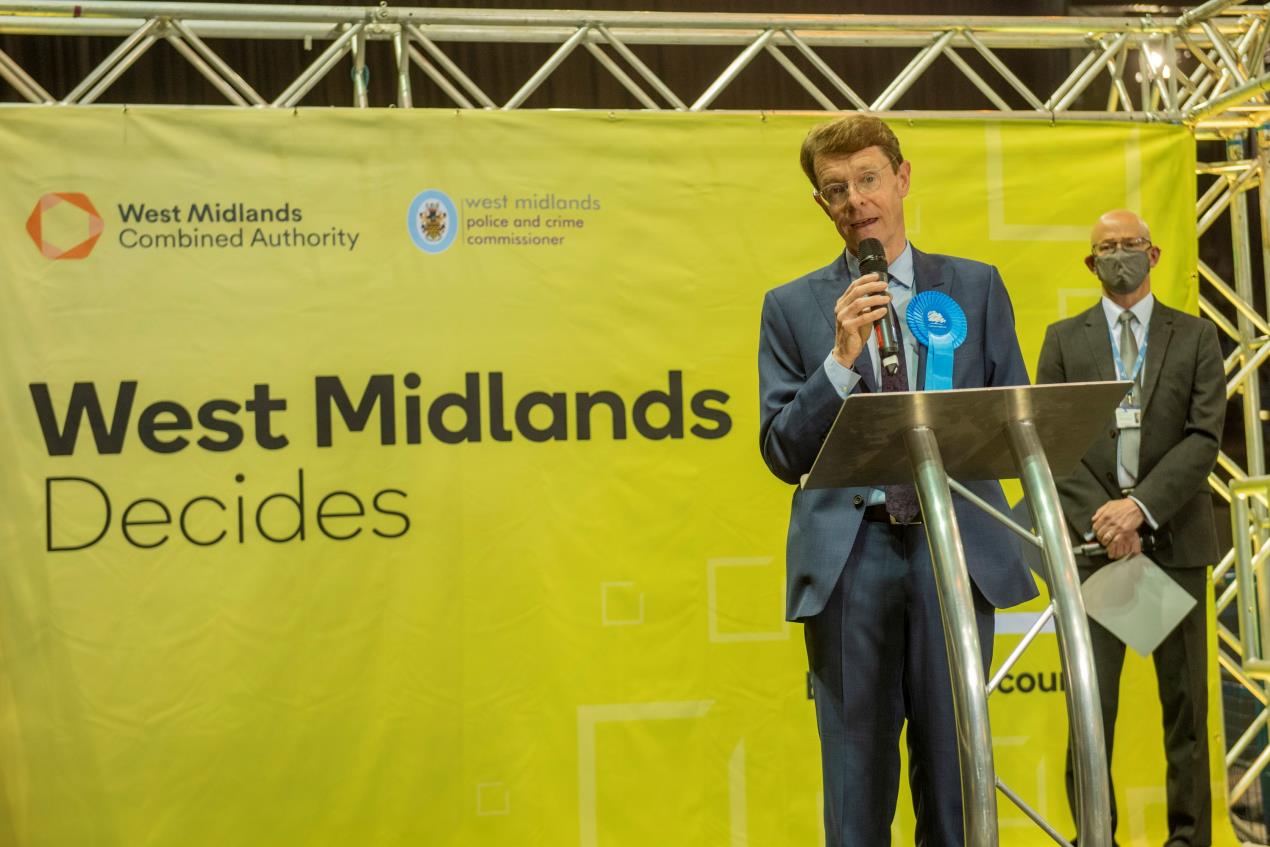
Andy Street, Mayor of the West Midlands, said: “This latest announcement means the West Midlands has now received £150m of Government funding in the space of just three days as we look to re-boot our regional economy from the devastating impact of the coronavirus pandemic.


“Infrastructure investment is going to be key to our economy bouncing back quickly from this crisis, and this new £66m funding means we can now press ahead, and in some cases accelerate, a number of important infrastructure schemes for the region.”


The latest funding comes hot on the heels of the Prime Minister’s ‘New Deal’ announcement in Dudley, which included £84 million for the WMCA to unlock more derelict industrial land for housing.


Last week the region also submitted to Government a £3.2 billion blueprint to kickstart the West Midlands economy and create long-term prosperity for the region and wider UK.

Cllr Ian Brookfield, leader of City of Wolverhampton Council and WMCA portfolio holder for economy and innovation, said: “The impact of Covid-19 has been unimaginable and unprecedented.


“Before the pandemic struck, major regeneration projects were making good progress and we had a strong portfolio of schemes in the pipeline.


“It is critical to the region’s economic recovery that we bolster these projects financially - and get our ‘shovel ready’ schemes moving swiftly.


“This funding will help us to do that, also delivering much-needed jobs and attracting further investment.”


In awarding the funding, the Secretary of State said he was pleased by the number of innovative and deliverable projects put forward by the region.


He also asked for the Mayor to lead and coordinate discussions with the WMCA Board and the three LEP chairs to agree a single prioritised list of projects.


Tom Westley, chair of the Black Country LEP (BCLEP), said: “This funding from Government is welcomed across the West Midlands as our entire region looks towards economic recovery.


“Investment in our Black Country infrastructure is fundamental for economic growth, we look forward to working with our partners to create jobs, homes and an improved transport network.”


Nick Abell, interim chair of the Coventry and Warwickshire Local Enterprise Partnership (CWLEP), said: “We represent the interests of Coventry and Warwickshire and while we welcome the ring-fenced £8 million for Warwickshire, we will strongly be putting forward the case to Government for infrastructure projects for Coventry – knowing that together they will serve our area and its economic geography in the best way possible.”


Tim Pile, chair of the Greater Birmingham & Solihull LEP (GBSLEP), said: “Confirmation of this funding for the region, in response to the huge challenges we are facing, is very positive news.


“This funding will immediately unlock projects ready to start in the next few months and provide an urgent stimulus to the economy, creating new job and new business opportunities which help accelerate our region’s recovery.


“We look forward to continuing our close collaboration with neighbouring LEPs and the WMCA to ensure the entire region receives maximum benefit from this welcome injection of funds.”