Colors: Blue Color

Art for Charity, a collective of creatives and entrepreneurs from Birmingham, has launched the ‘Forward In Unity’ art project with the creation of its first dedicated artwork in Digbeth, Birmingham.

Designed to unite together the population of Birmingham and mark this generational event, and to draw on the skills and experience of some of Birmingham’s most exceptional creative talent, the collective has taken the first steps in establishing a new fundraising initiative in the city.

Spearheaded by Paul Cadman, Nathaniel Hanna and world-renowned street artist Gent 48, the goal is to create a permanent memorial to the hard work and lasting effects of the coronavirus crisis.

Head of Operations, Nathaniel Hanna, who is the co-founder of the Melting Pot Digbeth, Birmingham’s foremost creative centre, said: “We want to harness the creative potential across Birmingham to create a landmark moment for the city. We want to celebrate the spirit of Birmingham communities while paying homage to the efforts of those on the front lines at hospitals, care homes, education establishments and everywhere else across the city.

“Our aim is the creation of an artistic piece that the entire city can be proud of, then utilising its qualities as a fundraising tool to give people across Birmingham the opportunity to contribute to our ideology that the city will emerge from this crisis stronger than when it entered.”

Gent 48’s artwork, which appears in a prominent position in the heart of Birmingham’s creative district, will serve as the basis for prints of various sizes. The Art for Charity initiative invites sponsorship and purchases, which will see many contributors receiving acknowledgement on a printed gratitude board adjacent to the original artwork, online recognition and a selection of perks and prizes.

Larger prints will bear the signature of the artist, along with numerous dignitaries, business leaders and celebrities from across the city, including the Lord Mayor. Proceeds from this sponsorship will be donated to the Lord Mayor’s Charity, ensuring that the efforts of those we celebrate result in improvements to their local communities.

The news that anyone in England can now move house, as long as they follow new government guidance, will be welcomed by the 450,000 buyers and renters who have been unable to move since March.

After the government announced plans to help people to move house safely, in-line with social distancing advice, flatsharing site SpareRoom surveyed its users to ask whether they feel confident to move now the new regulations are in place.

The results reveal that over half (54%) of renters do feel confident to view a property now the government has given the housing market the green light to reopen. One in three (32%) however, still feel wary and said they’d only feel comfortable to move if they absolutely had to.

The government are recommending that initial viewings take place virtually for now. If people view properties in person, there are specific guidelines to follow. It seems renters and landlords alike are embracing the virtual option. SpareRoom has seen a huge increase in the number of video adverts on the site. Since lockdown began, they’ve seen 6 times the normal volume of video uploads, showing renters, landlords & agents are keen to crack on with their search as safely as possible3. 

Matt Hutchinson, SpareRoom Director commented: “COVID-19 has put a pause on ordinary life for all of us. Allowing people to move, when they feel confident to do so, will be a huge relief for those who need to. 

“Even though viewing properties in person is now allowed, from our data it’s clear that people are embracing virtual methods to continue searching for properties safely. We’d encourage as many people as possible to upload a video to their ads, especially if it includes the people living in the property.

“Video is a great way for potential flatmates to find out more about each other and work out whether they click before needing to meet in person. We may well see video remaining a natural part of the way people find rooms and flatmates way beyond the end of social distancing.”

One in ten UK couples say lockdown has led them to plan a new baby, a national study* has revealed.
Those most likely to plan for a lockdown baby live in London (18%), the North-east (18%) and Yorkshire & The Humber (14%), according to research by financial comparison experts money.co.uk. 


Seven per cent of couples have already fallen pregnant while forced to isolate under the new quarantine regulations, according to the poll.
A third (34%) of couples said they are taking the opportunity to make more time for each other whilst conforming to ‘stay at home’ guidelines.
The personal finance experts at money.co.uk have now prepared a parental calculator https://www.money.co.uk/guides/parental-leave-calculator designed to easily show would-be parents how much maternity and paternity leave they can afford to take off, according to their personal financial situation.
Salman Haqqi, personal finance expert at money.co.uk, said: “It definitely looks like we can expect a lot of lockdown babies to be born in early 2021.
“Ensuring you are financially prepared for the arrival of a new addition to the family is really important, so if you are considering getting pregnant now is the time to start budgeting to avoid any costly surprises when the bundle of joy arrives in 2021.”


Lockdown has meant many couples are spending much less money, so can use that additional disposable income to press ahead with plans to have a baby.
Almost a quarter of couples (23%) said lockdown has meant they’ve had the opportunity to save money and try for a baby immediately. And yet, for most, the decision is an emotional one rather than a mathematical one. More than half (51%) said planning a baby is ruled by their heart, with 49% admitting the decision is ruled by their head.


Under lockdown, what’s the most popular way to break the happy news that a new baby is on the way? Seventeen percent of expectant couples will tell their loved ones their happy news through a video call via Skype, Zoom or other video apps. 16% would call their family on the phone, 15% will wait until lockdown is over and 12% would tell their family in person but at a safe distance.


Lockdown has made family far more important than ever before, the report shows. Three in 10 of those polled say they appreciate their family more than ever since lockdown started. And 28% say, as a result of being quarantined, they plan to make more time for their family after lockdown. Another 34% say they now speak to their family more than they ever did before lockdown.


The change in the priorities of UK families means a new baby boom could be on the cards too. 
Salman Haqqi added: “While having a child at any time is a true moment of happiness for everyone involved, it can also be a time of nervousness and worry. It is important to note that for most couples, 'is having a baby affordable' is the prime motivation behind their planning.


“With this in mind we’ve developed our parental calculator – which is designed to offer some reassurance to would-be-parents. Simply answer a few straightforward questions about your personal financial circumstances and our calculator will show you how much maternity and paternity leave you can afford to take off.
“It is also clear we are spending much more time together as families and we are not getting on each other’s nerves either – in fact, just 6% say lockdown has led to family fall-outs, with 30% of the UK claiming lockdown has changed their priorities and made them realise family is now much more important to them.”

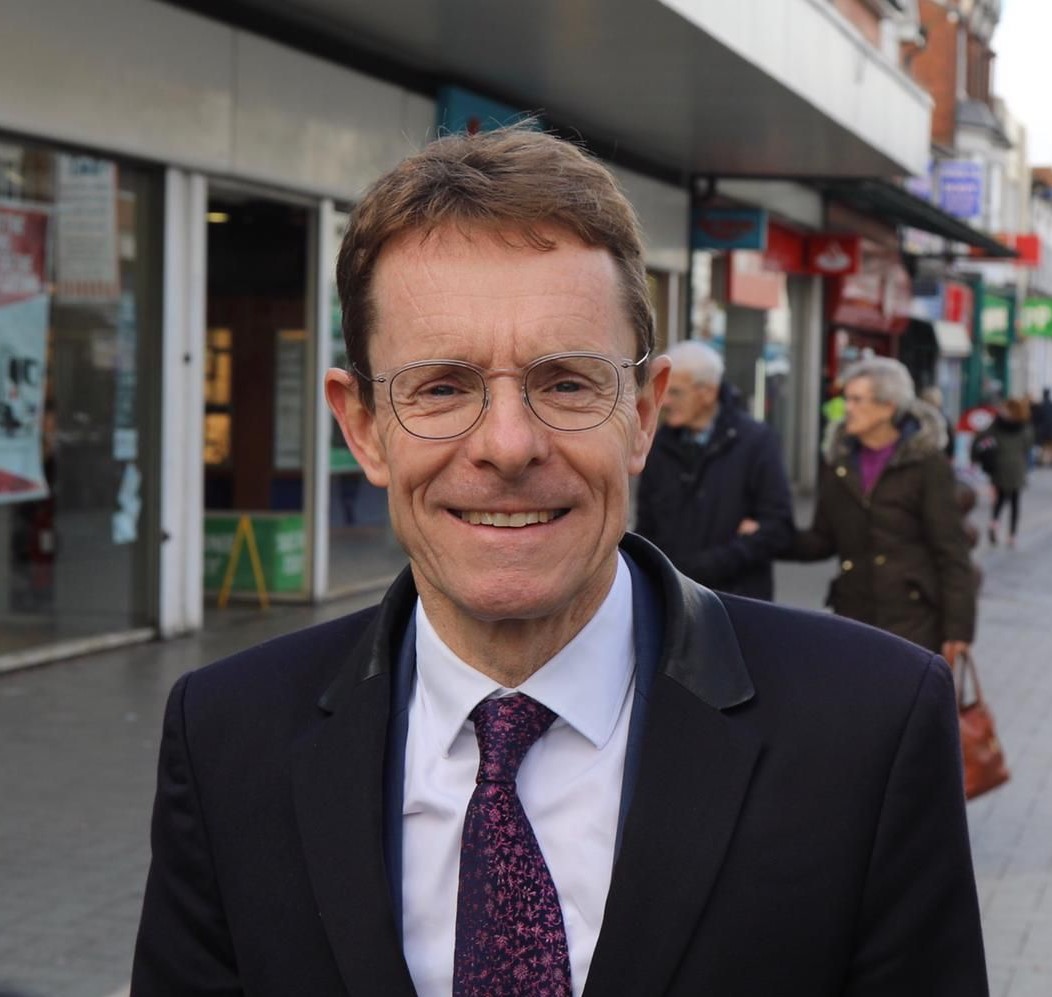
The Mayor of the West Midlands, Andy Street, is continuing to host conference calls on the COVID-19 crisis. These meetings are moving to every two weeks rather than weekly.

The next meeting will take place - Wednesday 3 June from 5.30pm. Each session will discuss a specific topic with this week’s theme on the subject of 'Places of Worship'. Andy will be joined by representatives from Public Health and the faith communities amongst others.

You are invited to listen to the discussions but you also have the opportunity to ask questions if you join by your computer. To ask a question please use the ‘Question’ facility in GoToWebinar or alternatively email your questions beforehand to This email address is being protected from spambots. You need JavaScript enabled to view it. (questions received after 3pm on the day of the webinar may not be included).

You can feel free to invite friends and colleagues by sharing the invite link with those in your networks that may wish to attend.

Fears of another Grenfell-type fire are stunting the spread of wood-based buildings in the UK.

The government is planning to reduce the maximum height of wood-framed buildings from six storeys to four.

The move’s been recommended by the emergency services in order to reduce fire risk.
But it contradicts other advice to increase timber construction because trees lock up climate-heating carbon emissions.

In France, President Macron has ruled all new publicly-funded buildings should be at least 50% timber or other natural materials by 2022.

And in Norway a new “ply-scraper” stretches fully 18 storeys – that’s the height recently deemed safe by standards authorities in North America.

Members of the timber trade say the Government in England has misunderstood the science behind timber construction.

They say timber walls can be made safe by methods including flame-retardant treatments and fire-resistant claddings.

They point out that it is futile planting millions of trees if they are left to rot and release the CO2 they previously captured.

In a consultation ending on Monday, ministers propose the height of timber-based flats, hotels, and boarding houses should be limited to 11 metres – that’s 3-4 storeys.

In higher buildings timber would be permitted in floors but banned from outside walls.
This further tightens rules introduced after the Grenfell disaster, following representation from fire authorities.

Matt Linegar from the Finnish timber giant Stora Enso said: “Obviously no-one wants to see another tragedy like Grenfell; protecting life is the main concern. But the government is over-reacting. Properly-constructed timber buildings can be safe in a fire – it depends on the design.

“Even with the current guidelines introduced after Grenfell there has been a chilling effect on the industry. People commissioning buildings think ‘I’d better not use timber’. The market has virtually dried up.”

A study from the Germany’s Potsdam Institute (PIK), found that a global boom in wood buildings could lock in up to 700 million tons of carbon a year.

It said a five-story residential building structured in laminated timber can store up to 180 kilos of carbon per square metre - three times more than in the trunk, branches and leaves of natural forests.

PIK’s Hans Schellnhuber said: “Societies have made good use of wood for buildings for many centuries, yet now the challenge of climate stabilisation calls for a very serious up-scaling.

"If we engineer the wood into modern building materials and smartly manage harvest and construction, we humans can build ourselves a safe home on Earth.”

The head of the Committee on Climate Change, Chris Stark, said: “Timber buildings can be tall and safe. Displacing cement, brick and steel with wood means more than double the carbon savings in buildings overall.

“With encouragement from the Government, we could triple the amount of carbon locked into buildings – one of the simplest steps we can take to help meet the UK’s climate goals.”

A government spokesperson said the consultation responses would be studied before final decisions were made. The fire authorities declined to comment.


Tributes have been paid following the death of well respected former Birmingham city councillor, Don Brown, who died following a long illness.

A former Labour Councillor, he was elected for the Handsworth ward, from 1995 to 2004, and the Lozells and East Handsworth Ward from 2004 to 2012. He also served on multiple committees including social services, public protection, environmental and contract services.

In 2012 he then became an Honorary Alderman.

Following the announcement of his passing, tributes poured in from fellow politicians including City Council leader, Ian Ward, who said: “This is very sad news and my thoughts are with Don’s family at this time.

"Don had an incredibly passion for the city that became his home for over 60 years.

“He was a good man who worked hard to make a difference after serving the people of Handsworth and Lozells for the best part of 20 years.”

Transport boss and Lozells Councillor, Waseem Zaffar, added: “Don was a friend and a colleague who I learnt a lot from.

“His passion to serve all his constituents irrespective of backgrounds is a crucial element of his outstanding legacy.”


Councillor Mahmood Hussain said: “Having worked together as councillors for many years, I found him to be a genuinely nice and humble person who was hardworking, with a lot of respect in the community.

“He will be missed by his family and by all of us. My condolences go to his entire family.”

His son Dexter said: “He was a loyal servant and very well respected by the community. We are all sad.”

A father of six children-four daughters and two sons-and 12 grandchildren, he was 87.

Newspapers will no longer have their sales figures automatically published, the industry's auditor has said.

The Audit Bureau of Circulations (ABC), which records and audits sales, usually publishes figures every month. But ABC said publishers were growing concerned about a "negative narrative of decline" in newspaper sales.

No national newspaper sold more than 1 million copies per day in the UK, as readers shopped less frequently under lockdown.a

Newspapers were already suffering falling print sales prior to coronavirus, and stories about the gradual decline of newspapers have been common in recent years.

All publishers will still have their circulation figures audited by ABC. As a result, newspapers will be able to tell advertisers what their sales are, regardless of whether or not they are made public.

Phil Smith, Director General of ISBA, which represents UK advertisers, said he "fully supported" the changes.

"These reporting updates will reduce the tendency for circulation to be seen as the only measure of Newsbrands' health in our multi-platform age," he said.

Newspapers have dramatically expanded their online operations in recent years in an effort to increase income from internet advertising.

It has been a difficult month for the newspapers. Traffic to websites may have risen but most papers are still heavily dependent on sales of print and many have seen a drop of around 30% over the last few weeks.

And it is not just sales revenue that has dropped, print advertising has also taken a nosedive.

But the decision to allow these figures to be a private matter between newspapers and advertisers is part of a bigger issue.

It's no secret the print newspaper business has been in long-term decline. Some are falling faster than others but over the last few years most have seen annual drops of around 7%.
The question for many is not if but when they stop the printing presses.

However, some papers, such as the New York Times, are showing that there may be a future with digital subscriptions. Digital advertising may also be a long term solution for some.

There are other ways then of measuring a news organisation's success and today's decision reflects that fact.

But this ever, it is also a little moment in the history of the British press. For years, the monthly sales figures were a proud boast to advertisers and politicians of a newspaper's power and reach. That era is over.

Labour’s Shadow Mayor of the West Midlands, Liam Byrne, is to establish a fact-finding taskforce across the seven boroughs and cities of the West Midlands to uncover the truth surrounding the higher than average Covid19 death rates among minority communities.

Data from the ONS and local authourities in the West Midlands shows that individuals in BAME communities are losing the battle against Covid-19 at a rate much higher than the general public.

Liam said: “Coronavirus is a killer disease which has taken too many lives but the evidence available suggests that you are four times more likely to die from Covid19 if you are black, and if you are from south Asian heritage, you also have a significantly higher risk of dying. There is therefore an urgent need to investigate whether the disproportionate impact of Covid-19 on BAME communities could have been prevented or mitigated and to act on any lessons learned.”

The Covid19 fact-finding taskforce will be co-chaired by Birmingham’s Councillor Paulette Hamilton, Wolverhampton’s Councillor Sandra Samuels OBE and Coventry MP, Taiwo Owatemi. Veteran equalities campaigner, Baroness Doreen Lawrence, will also be supporting the efforts in the region as part of her national role and representatives of the south Asian community are being identified.

Evidence and submissions have been requested from public health officials in each Borough and City as well as CCGs and hospital trusts. Members of the public will also be able to submit testimony of their experiences and virtual hearings will be arranged to hear, firsthand, how members of the BAME community have been affected by Covid19.

Anyone affected by the pandemic can submit their stories to This email address is being protected from spambots. You need JavaScript enabled to view it..


The UK government is considering the idea of introducing an extra bank holiday, possibly in October around the same time a half-term.

The original idea was put forward by the United Kingdom’s tourism agency Visit Britain.

Its acting head, Patricia Yates, told MPs that the industry has lost the benefit of the two bank holidays in May due to the current coronavirus pandemic and sub sequent lockdown.

The government did, however, warn that having an extra holiday break could have an economic downside.

Downing Street said that the government was supporting the tourism industry through this “challenging period” and would “respond in due course” to the proposal by Visit Britain.

A spokesperson said it was “worth acknowledging that extra bank holidays do come with economic costs”.

Ms Yates said an extra day in October would enable the UK tourism sector to extend the season. She said that the industry could not keep up with developments and it was very difficult to estimate the amount that would be lost because of the coronavirus lockdown.

She told the Digital, Culture, Media and Sport Select Committee: “Every time we do the modelling the figures get worse. So for inbound, I mean we were looking at the beginning of this year at about £26.6bn coming from inbound tourism, we reckon a £15bn drop on that.

She said ordinarily, the domestic tourism contributed some £80bn a year, but she was expecting that to be down by £22bn.

UK Hospitality, the trade group that represents leisure businesses from bars to hotels, approves of the move, but struck a note of caution.

Kate Nicholls, its chief executive, said: “A bank holiday in October may provide a welcome boost for hospitality businesses, not least at a time when consumer confidence will hopefully be returning to healthy levels”.

As the UK government have declared their intention to open an inquiry into the inexplicable inequality, the Mayor of London, Sadiq Khan, has called for the ethnicity of people who have died through the coronavirus pandemic to be recorded on their death certificates.

With people from Black, Asian, or of other ethnic backgrounds being prominent in Covid-19 fatality figures, Mayor Khan is set to gather some of the city’s leading figures to discuss the issue and to look at the best way forward.

He recently said: “The disproportionality of people who have been affected by coronavirus coming from a Black, Asian and/or other ethnic background is unacceptable”.

The increased impact on these communities has become increasingly clear with the Institute of Fiscal Studies estimating that hospital death rates are highest among people from these groups; although, they say, it is not possible to understand the full extent of this inequality as, unlike Scotland, in England ethnicity is not recorded on death certificates.

Mayor Khan has successfully lobbied ministers to routinely collect and publish demographics of those who are dying in hospital and welcomed the government’s review into the disproportionate effect of the virus, but only by adding ethnicity onto death certificates will we be able to get a complete picture of the impact on those from Black, Asian and/or other ethnic backgrounds.

Deputy Director of The Runnymede Trust, Dr Zubaida Haque, said: “We know from recent improvements in the official Covid-19 data that particular ethnic groups are oer-represented among hospital deaths with coronavirus, but we don’t know about deaths with Covid-19 in the community or in care homes.

“This is wholly inadequate during a pandemic. It is critical that we get the whole picture of who is being affected so that we can identify and shield the most vulnerable from Covid-19.

“We agree that it is important to have ethnicity recorded on death certificates, as it will allow us to identify any differences in mortality rates between ethnic groups”.

The Mayor of the West Midlands, Andy Street, will be hosting a national online Iftar, the meal that marks to Muslims the ending of daily fasting during Ramadan.
 
The event has been organised by the Ramadan Tent Project which since 2013 has been holding huge events at locations including Wembley Stadium and Trafalgar Square, attracting crowds totalling over 100,000.
 
This year, due to the government’s restrictions around coronavirus, they have organised online Iftars, using their hashtag #MyOpenIftar which they have been running during Ramadan. The virtual platform brings together families, friends and community groups alongside guest speakers.
 
On Friday 15 May the online Iftar will be hosted by Mayor of the West Midlands, Andy Street, in conjunction with Islamic Relief. The panel of guest speakers will be discussing what Ramadan means to them and what it means to be a leader during a crisis.
 
The Mayor said: “I am delighted to have been asked to host the Iftar on Friday.
 
“The current ban on gatherings to control the spread of coronavirus has resulted in the cancellation of religious services and gatherings for all faiths.
 
“However, it is so important that faith groups promote togetherness whilst apart and these virtual Iftars organised by Ramadan Tent Project fulfil this need by giving people the opportunity to come together during Ramadan – albeit through the use of technology.”
 
Ramadan Tent Project is a non-profit organisation founded in 2013 with a mission of bringing communities together to better understand each other. Normally their Iftars attract huge crowds but this year anyone can attend their virtual Iftars by using the link https://us02web.zoom.us/meeting/register/tZ0td-qhpjouEtflaVXP5XuXunZGtPwJBp4K  or following the live stream on Facebook.
Tufail Hussain, Director of Islamic Relief UK said: “Community iftars, where people have met and broken their fasts together have always been central to Ramadan. In these difficult times, it’s more important than ever for us to reach out.

“During this crisis, British Muslims have joined other faith communities in being some of the first to organise and respond – from delivering food parcels to the vulnerable and elderly, to setting up virtual counselling services to combat loneliness and isolation.”

Since the pandemic took hold West Midlands Combined Authority (WMCA) has been bringing together faith groups by holding weekly online meetings chaired by the Mayor. The virtual round tables provide faith leaders with updates on Covid-19 from local authorities and public health experts, and on funding such as the Government’s support for the charity sector. The forum also gives them the opportunity to grill each week’s panel about issues that directly affect their communities.

So far 272 people have dialled in to listen to the briefings on the COVID-19 crisis, which will continue until the end of May. The weekly briefings are held at 5.30pm on Wednesdays and anyone can listen in by using the link https://attendee.gotowebinar.com/register/5851449557036121611

Friday May 8 marked 75 years since Nazi Germany formally surrendered to the Allied Forces and World War Two (WW II) came to an end.

Prime Minister Boris Johnson thanked the VE Day generation, when he said: “Our gratitude to you will be eternal”.

As the UK held a two-minute silence to commemorate VE Day, it was extra poignant also was also a day to remember the ‘war’ (against coronavirus) that people throughout the world are going through today.

Events did continue to take place throughout the day, despite the cancellation of public gatherings.

In Berlin, in Germany, though, residents were given an unprecedented public holiday, by Chancellor Angela Merkel, who led a ceremony to the Central War Memorial. The rest of the country, however, remained in lockdown as protection against the on-going coronavirus pandemic.

Many people are of the understanding that VE Day marks the end of World War II, but, My 8 was not the end, as imperial Japan was not defeated by the Allied Forces until three months later, in August.

The 75th anniversary comes at a pivotal moment, as the Covid-19 virus has, to date, infected over three and a half million.

World War II accounted for some estimated 50 million lives.

One sad and extra-poignant point was the confirmation of nine Chelsea Pensioners who were confirmed to have died after contracting coronavirus at their home; the Royal Hospital Chelsea, a home for hundreds of armed forces veterans – which includes WWII.

Lest We Forget? – We never will!

This year’s Notting Hill Carnival has been cancelled due to the on-going coronavirus pandemic.

About one million people usually attend the annual event in west London, which was due to take place on August 30 and 31.”

Organisers said that the pandemic meant that calling off the weekend celebrations was “the only safe option”, but said that they were working on holding a celebration during the same weekend but in an alternative form.

It is the first time that it will not take place in more than 50 years.

A statement said: “After lengthy consultations with our strategic partners and our Advisory Council, the Board has taken the decision that this year’s Carnival will not take place on the streets of Notting Hill as it has done for over 50 years.

“This will also mean that Panorama, the annual steelband competition, will not take place”.

A sculpture that honours the work carried out by NHS and care workers has been revealed in a park in the West Midlands.

The four-metre tall structure made from steel and other metals is of a winged medical worker and stands bright and gleaming in Lightwood Park, in Bearwood, in Smethwick.

The temporary structure – which bears the inscription ‘Thank You NHS and Care Workers’ and privately funded - was created by local artist, Luke Perry, at his factory and he worked alongside his local Sandwell Metropolitan Borough Council to get it installed.

Of his creation, a proud Perry said: “I, like many other people, have friends and family members who owe their lives to the NHS. So, I just wanted to create a piece of public art that captures the huge public outpouring of thanks to our health and care workers during these troubled times.

“The structure also serves as a monument those who have lost their lives whilst fighting the coronavirus pandemic on the frontline. It’s a reminder of how important and vital that the NHS, key workers and everyone fighting this ‘was’ is.

Sandwell Council leader Councillor Yvonne Davies said: “This structure is a wonderful, visual symbol of the gratitude that we all feel to our NHS and care workers.

“I would like to thank Luke for creating this this inspirational piece of public art.

“We hope that when our medical and social care workers see the sculpture when driving to and from work along Hagley Road, that it would be a reminder of how much they mean to us and how much we appreciate them”.


A Birmingham city councillor has said that the UK government should hold a full public inquiry into the disproportionate number of coronavirus deaths in the Black, Asian and Multi-Ethnic (BAME) communities.

Councillor Paulette Hamilton, the city council’s Member for Health and Social Care, has demanded that an urgent public inquiry is needed, as a private inquiry would not go far enough.

The City Councillor for the Holyhead Ward, Cllr Hamilton, made the statement after reports came out which highlighted that the death rate of people from Black Caribbean African and Asian background, and because of the Covid-19 virus, in a British hospital stood at over two and a half times more than that of the indigenous white population.

The statement comes as Professor Chris Whitty, the government’s Chief Medical Officer, has commissioned PHE (Public Health England) to conduct a review into the health records following the deaths of people from a BAME background.

Based on the Inquiries Act of 2005, Cllr Hamilton said: “I am asking for a public inquiry – not something that is held privately.

“There are questions that the community are asking, which are simple. And deserve simple honest answers.

“We are going through one of the toughest times ever – and it is the disproportionality of the most vulnerable that has been most prominent in those who have suffered the most.

“As a politician, I would say that the government has been learning as they go along.

“If there’ve been found to be making mistakes, I do think that they should be held accountable for their actions.

“This is people’s lives that we are dealing with”.

Health Secretary, Matt Hancock, said: “All death caused by the virus is tragic. And every behind every statistic there’s a name – and a family that will never be the same again.

“As part of our efforts to reduce health inequalities, PHE is considering a variety of factors – which includes ethnicity – and how they may have impacted on people’s susceptibility to the virus.

“It’s a hugely complex task, but we owe it to the nation to find out it is affecting different groups, in different ways”.

Susan Hopkins, Deputy Director of the National Infection Service at PHE said: “Differences in the proportion of cases between ethnic groups can be due to multiple reasons, such as the difference in age and sex distribution, as well as the differences in the prevalence of co-morbidities, or where people live”.

The government has announced that it has put aside £30 million to keep trams and metro trains running for key workers for a further 12 weeks.

Millions of pounds have been lost due to the coronavirus lockdown.

But the Mayor of Greater, Andy Burnham, has said that the money was not enough.

The funding is split between Midlands Metro Nottingham Express Trains, Tyne and Wear Metro, Sheffield Supertram and Manchester Metrolink systems.

UK Tram’s Manager, James Hammett, said: There has been difficult times in securing a deal because of the different contractual obligations under which networks operate.

A DfT spokesperson added: “We are aware of the challenges faced by transport operators and continue to work closely with the sector and transport authorities to ensure that passengers can make essential journey”.

Transport Secretary, Grant Shapps, said that protecting transport was “vital”.