
Colors: Blue Color

The police watchdog is launching a review into whether officers across England and Wales racially discriminate against ethnic minorities. Stop-and-search and the use of force will be among the issues examined by the Independent Office for Police Conduct (IOPC).

It follows criticism of the police in recent cases caught on camera.
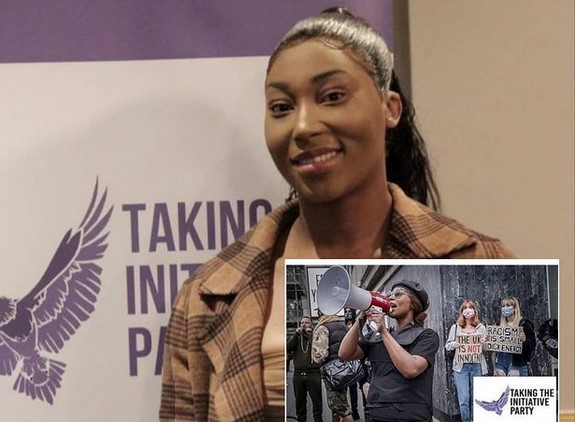
The Metropolitan Police apologised this week to athlete Bianca Williams over a stop-and-search incident.

IOPC director-general Michael Lockwood said the review's focus on racial discrimination is intended "to establish the trends and patterns which might help drive real change in policing practice".

Stop-and-search powers are nine times more likely to be used against black people than against white people in England and Wales, but Mr Lockwood said they needed to better understand how these disparities occurred and how they could be addressed.

He said the review will involve independently investigating more cases where racial discrimination may be a factor to "develop a body of evidence" and identify systemic issues
.
The IOPC is currently investigating a series of cases in London, Birmingham and Greater Manchester in which it is alleged police used excessive force, and in some cases Tasers, against Black men.

It is also looking into claims of racial profiling after Team GB sprinter Bianca Williams and her partner Ricardo dos Santos, who are both black, were handcuffed and searched by police during a vehicle stop.

After footage of the incident was posted online by former Olympic 100m champion Linford Christie, Metropolitan Police Commissioner Dame Cressida Dick apologised for the "distress" it caused Ms Williams.

The IOPC will also investigate more cases where victims from BAME communities felt unfairly treated by police, Mr Lockwood said.

These could include whether the police are treating allegations of hate crime seriously, or if there are cases where police are failing to treat them as victims of crime

"We know this is an issue of community concern. Our police forces can only police effectively with the trust and confidence of the community they serve," he said.

A number of pubs in England have shut after customers tested positive for coronavirus.

At least three establishments announced they had shut their doors again just days after reopening at the weekend.


They were among hundreds of venues that welcomed customers after three months as lockdown measures were eased - most apparently with no problem.

But crowds descending in some towns and cities prompted fears social distancing was being disregarded.


The Lighthouse Kitchen and Carvery in Burnham-on-Sea, Somerset, said it was "slowly" working through a list of customers who had left details at the weekend and that all staff had tested negative for the virus. In Batley, West Yorkshire, the Fox and Hounds said a customer had phoned to say they had tested positive for coronavirus. Meanwhile the landlord of the Village Home Pub in Alverstoke, Hampshire, said his team were awaiting test results after someone in a member of staff's "family bubble" tested positive.


Jess Green, manager of the Lighthouse Kitchen, said that she decided to close to "put everyone's health and safety first".


"I felt I had to keep my customers and my staff safe which is why I chose to shut the pub. I'm gutted, but safety comes first. We could have opened today but chose not to as I think that's the right thing to do."


Indian takeaway Saagar, also in Burnham, said it would be closing until Friday to undergo a deep clean after one if its drivers had been to the Lighthouse Kitchen, along with bar the Vape Escape, which has also closed for a full clean after a customer's positive test.


Leanne Underhill, owner of the Vape Escape, told burnham-on-sea.com all staff tests had been negative and customers in the bar on Saturday have been contacted, in accordance with government advice.


Somerset County Council said it was not treating the case as an "outbreak" and asked people to keep to social distancing guidelines and to regularly wash their hands.


The Fox and Hounds said staff had taken tests and the venue would be deep-cleaned prior to reopening. The Batley pub said it had taken a number of measures ahead of Saturday's reopening, including limiting numbers allowed inside, a one-way system around the building and a one-in one-out policy on use of toilets.


Georgia Gosling visited the Fox and Hounds over the weekend and said it had "all the right procedures in place" but called the news a "wake-up call".


"We were told to get a test and luckily everyone I know has come back negative," she said.

Despite saying she was "a bit scared to go out now", Ms Gosling said she would return to the pub once it reopened. I've been going there for years and once they've done a deep clean it's not like it's contagious forever. I'll definitely will go back."


Customers of the Village Home who had visited at the weekend have been told there was "no need to isolate" unless they showed symptoms or were contacted by tracers.


Landlord Robby Roberts said: "A member of staff, one of my barmaids, has someone in her family bubble who has tested positive." He said she was on shift on Saturday when the pub was open for 11 and a half hours and about 150 customers visited.


"All five staff who were on shift on Saturday have now been tested and we are waiting for the results," he said. "The pub is being deep cleaned and I have contacted the council. I am awaiting advice from them."


A second pub in Alverstoke, The Fighting Cocks, has announced it will also close temporarily despite "having no suspected or confirmed cases".


The pub said on Facebook it "cannot guarantee that someone who has been in contact with a confirmed case has not been in the pub, nor will they come in over the coming days".


Crowds were seen across England on "Super Saturday", as thousands flocked to enjoy a pint. There were reports of arrests and early venue closures around the country, but police said a majority of people had acted responsibly.


UK pub and hospitality trade bodies have published guidance for bars and restaurants on how to operate contact tracing. Contact details only need to be taken from one person in a group and must be kept for 21 days.


Owners are also asked to note the arrival times of customers and how long they stay.

People can refuse to give information, but owners can choose not to serve them.


The Grenfell Tower fire inquiry "must not ignore" the impact of race and poverty on the disaster, a lawyer representing survivors has said. Leslie Thomas QC, also representing bereaved families, said the 2017 fire was "inextricably linked with race". And he urged the inquiry to be on the "right side of history" when considering how the issue contributed towards the deaths of the 72 victims.


The inquiry returned after a four-month break due to coronavirus.


"The Grenfell fire did not happen in a vacuum," said Mr Thomas in his opening statement. "A majority of the Grenfell residents who died were people of colour.


"Grenfell is inextricably linked with race. It is the elephant in the room. This disaster happened in a pocket of one of the smallest yet richest boroughs in London. Yet the community affected was predominantly working-class. That is the stark reality that cannot be ignored."


The Grenfell Next of Kin group has called for the inquiry to "investigate the extent of institutional racism as a factor" in the fire in June 2017.


Legal submissions made to the inquiry explain there were four visitors to the tower among the dead and also stillborn Baby Logan Gomes and then adds: "Of the remaining 67, 57 were from BAME (black, Asian and other ethnic minority) communities.


"In the English Housing Survey 2017-2018, it was found that 40% of those living in high-rise buildings in the social rented sector are black, Asian or other. This, compared to the per cent of the population (14%), is high."


Mr Thomas told the inquiry chairman Sir Martin Moore-Bick: "This is your time of action to break the cycle of disengagement with the issue of race and inequality. What will this inquiry be remembered for? You will undoubtedly want it to be on the right side of history."


The inquiry recently heard how a senior fire safety engineer did not think putting cladding on Grenfell Tower would pose any "issues" for safety.


In its first phase, the inquiry concluded that cladding fuelled the fire in June 2017. The second phase is examining how it could have happened in the first place.


At a time when the subjects of racial discrimination and equality are in the spotlight, people in the West Midlands are asking questions about the diversity – or lack of it – amongst the management and executive of the 2022 Commonwealth Games to be held in Birmingham.

Of the 13 directors and seven members of the executive team, 13 are men and seven are women. However, what has drawn everyone’s attention is that 19 are white and only one is black (and no Asians at all).

The question being asked is – how, in a diverse and multi-ethnic city like Birmingham, could this have happened?

This is a fair question. However, if one looks at the roles and people involved, one can begin to understand how it all came about.

First – the board of directors. Of the fourteen, eight were nominated by partner organisations, chairman John Crabtree was appointed by Theresa May, the then Prime Minister and five (Simmonds, Jackson, Timothy, Browning and one other) were appointed by the Department for Digital, Culture, Media and Sport (DCMS). So, the team at Birmingham 2022 had no say in the makeup of the board.

Due to a resignation at the end of last year, there is currently one vacancy, to be appointed by the Secretary of State. The recruitment process to fill that vacancy will begin soon. The other thirteen are:

  1. John Crabtree, Chairman – appointed by Prime Minister Theresa May, a former president of Birmingham Chamber of Commerce & Industry.
  2. Ian Ward, Leader of Birmingham City Council.
  3. David Grevemberg, Chief executive of the Commonwealth Games Federation.
  4. Dame Louise Martin, President of the Commonwealth Games Federation.
  5. Helen Judge, Director general of the DCMS.
  6. Dame Julie Moore, Second representative of the DCMS.
  7. Ian Metcalfe, Chairman of Commonwealth Games England.
  8. Simon Ball, Non-executive director on the board of Commonwealth Games England.
  9. Derrick Anderson, Representative of West Midlands Combined Authority.
  10. Ellie Simmonds, Paralympian, winner of gold medals in three Paralympic Games.
  11. Lyndsey Jackson, Deputy chief executive of Edinburgh Fringe.
  12. Nick Timothy, Former special adviser to PM Theresa May.
  13. Jonathan Browning, Chairman of Coventry and Warwickshire Local Enterprise Partnership.

The seven-strong Executive Management Team is made up of five members that are employed directly by Birmingham 2022 (the organising committee) and two that are employed by CGF Partnerships (CGFP). Those employed directly by Birmingham 2022 were recruited through a well-publicised recruitment process using recruitment agencies. It is not known if any other newspapers with links to the Commonwealth, that clearly demonstrate diversity, were used to publicise this.

The other two members are seconded to the organising committee by CGFP, a company which is jointly owned by the Commonwealth Games Federation and sporting rights marketing agency SportFive. CGFP supports the long-term planning and delivery of the Games and leads the commercial programme.

The CGFP employees are employed on long-term contracts to travel from one staging of the Games to the next, which is why they are currently seconded to Birmingham 2022.

The seven members of the executive team are:

  1. Ian Reid, Chief Executive - Chief financial officer and company secretary for the Glasgow 2014 Commonwealth Games
  2. Josie Stevens, Communications and Marketing - Three years in the US as director of global PR for Reebok. Worked at five Olympic Games, three Cricket World Cups and the 2006 Doha Asia Games.
  3. Martin Green, Creative - Planned the opening of the 2012 Olympic and Paralympic opening and closing ceremonies and the opening ceremony of the 2014 Tour de France Grand Départ in Leeds.
  4. Caroline McGrory, Legal - Legal director of F1 racing team BAR, worked for the Mercedes F1 Team and was general counsel for Leicester City FC.
  5. Charles Quelch, Operations (CGFP secondee) - Stadium manager for the London 2012 Olympics and head of venues for the Commonwealth Games in Glasgow in 2014 and Gold Coast in 2018.
  6. David Grady, Finance - Chartered accountant who was previously corporate services executive and chief financial officer of Central England Co-Operative.
  7. Adrian Corcoran, Information (CGFP secondee) - Director of Technology for Baku 2015 European Games, technology consultant for Glasgow 2018 European Championships, Los Angeles Olympic Bid Committee, London 2017 Athletics World Championships, Baku 2017 Islamic Solidarity Games, 2015 Rugby World Cup, 2015 European Games, Commonwealth Games Federation Partnerships.

So, on the face of it, the people in the two teams seem eminently suited to their roles, and most of the directors were appointed by outside bodies. Birmingham 2022 had little say in their appointments, which begs the question, during the London 2012 Olympics, how many were recruited from outside of London?

Perhaps the four non-executive directors could have been chosen to redress the balance, and there may have been other candidates with a more diverse background. But there is a fine line to walk between choosing the best person for the job (true non-discrimination and UK law) and using positive discrimination to ‘even up the balance’ (which is illegal in the UK).

Still, having a row of white faces on the website does look unsettling. The sole black representative is Dr Derrick Anderson CBE (9 above). Born in London, he retired as chief executive of Lambeth Council in December 2014, having been chief executive since 1 March 2006. He was previously chief executive of the City of Wolverhampton Council for 10 years and is currently a member of University of Birmingham Council.

What can be done about it?

Ian Reid, chief executive officer for Birmingham 2022 (number 14 above), issued a statement: “The vision for the Birmingham 2022 Commonwealth Games is to be the ‘Games for Everyone’ – we are conscious of our responsibilities and passionate about making this a reality.

“As a company we are still establishing ourselves and we continue to recruit at speed. In the next two years, our staff numbers will increase ten-fold and we are committed to ensuring our workforce reflects the city and region in which we are operating.

“We are already taking steps to improve representation and ensure equal opportunity for all. At the end of 2019, we began working towards Leaders In Diversity accreditation with an action plan to get us there by the end of 2020. We established an internal Equality, Diversity and Inclusion working group in February and it has a mandate to challenge, improve on and further develop that action plan. We are working with our recruitment partner to ensure every vacancy reaches the widest possible pool of talent.

“We have recruited five prominent and skilled community representatives to our Legacy and Benefits Board Sub Committee to ensure we have a wide range of views, experience and expertise at the table. We are also looking at Board representation with our Games Partners, all of whom have a seat at that table.

“Our Executive Management Team (EMT) are best-in-class senior practitioners who are all experts in their field and highly experienced in major event delivery, which is vital as Birmingham 2022 has less than half of the planning time of any other Games. They were all recruited through an open public recruitment process to deliver a world-class Games in record time.

“Our EMT is currently looking at ways in which the senior executive decision-making body is more representative and is completely committed to ensuring our growing workforce is representative of the city and region that’s hosting the Games.

“We know there is more to do and we continue to actively consider how we make a meaningful contribution to equality, inclusion and diversity in the next two years. We have always been fully aware that in these Games we have a powerful platform which brings with it both responsibility and opportunity and we are committed to taking on both.”

He seems to be saying: “Give us time and we will sort it”. However one would have to ask, How can this be rectified? Will it be rectified? And at what level will it be rectified? While recognising there is a problem is an important first step, it needs to be followed by swift and decisive action at the correct level.

Questions still remains - the document is fair and non-judgmental and now it is up to the city to be on guard and to find a solution to give to the people so that the top of the organisation is not always white and black people crowded at the bottom.


The government has unveiled a £1.57bn support package to help protect the futures of UK theatres, galleries, museums and other cultural venues.


Culture Secretary Oliver Dowden told BBC Breakfast new grants and loans aim to preserve "crown jewels" in the UK's art sector as well as local venues.


It follows several weeks of pressure, with industry leaders warning that many venues were on the brink of collapse.


Independent cinemas, heritage sites and music venues will also be eligible.


Guidance for a phased return of the performing arts, starting with performances behind closed doors and rehearsals, is expected to be published by the government shortly.


Mr Dowden said the package is all "new money" and has two broad aims - to preserve "crown jewel" venues like the Royal Albert Hall and national galleries, while also helping local institutions across the UK.


He said institutions applying for the new grants and loans through industry bodies would have to prove how they contribute to wider economic growth.


A string of theatres have announced plans to make staff redundant in recent weeks, after being closed since the coronavirus pandemic took hold earlier this year.


Adrian Vinken, the chief executive of the Theatre Royal in Plymouth said it was "impossible to say" if the announcement would be enough to prevent up to 100 job losses there until more detail is released.


The announcement of the new funding comes just two days after theatres across the UK were covered in colourful messages of support.


The rescue package has been warmly welcomed by many arts leaders, some of whom said they thought it to be at the upper end of what had been hoped for. The Culture Secretary, Oliver Dowden, who has been under pressure from the arts and heritage sector to deliver a meaningful funding solution to a crisis brought about by Covid-19, feels vindicated that his behind-closed-doors approach to negotiations with the Treasury has paid off.


As always, the devil will be in the detail. The government has not specified how the money will be divided between competing art forms or regions, nor how the application process will work. There will be winners and losers.


And then there's the elephant in the auditorium: when will the rules around social distancing in performing arts venues be relaxed to allow the show to go on?


Many theatre producers are baffled by what they see as 'one rule for them, and one rule for us', approach by government, particularly when it comes to travel. Why is it OK for people to sit side-by-side on a train or plane for hours but not in a theatre, which they argue is a much more controllable environment? As far as they are concerned, that is the billion dollar question.


Birmingham City Council will ‘do all it can’ to help local restaurants, cafes, pubs and bars re-open safely following the Covid-19 pandemic.

A new government bill, which was discussed in Parliament, will mean that new temporary pavement licences can be applied for via a ‘fast-track’ application process, for a reduced fee of £100 and with a with a shortened 14-day process (5 working days for public consultation, 5 working day for considering the application).

The legislation is not expected to come into force until later this month, but the council is already starting work to ensure it is fully prepared for when it goes live. This includes the creation of an online application process and details around eligibility and enforcement.

Licences will be valid for up until September 30 2021; and must be approved by the council within 7 days subject to certain criteria, including the ability for pedestrians to use the highway safely.

Businesses that already have outside trading with tables and chairs can operate without applying for a license, however it is expected that existing arrangements will have to be risk-assessed to ensure safe queueing and social distancing. Eating and drinking establishments are being encouraged to implement ways to help this, including table service and app-based ordering.

Any new business who wants to create outdoor dining space on the adjacent pavement will need to apply for the new licence.

Councillor Ian Ward, Leader of Birmingham City Council said: “After a three-month absence from our city and suburbs, I know the industry will be keen to get back to businesses as quickly as possible and we are doing all we can to help businesses reopen in a safe and managed way.

“We know, for example, that some businesses may want to provide seating on the pavement outside their premises with the intention of serving more customers and potentially aiding social distancing. We want to support this, but again, safety must be the priority.

“So we are doing all we can to be ready for when the government introduces new legislation around temporary pavement licenses and in the meantime, I would urge businesses to read the government guidance on re-opening, risk-assess their premises and implement measures that will help their staff and customers stay safe.

“Understanding the maximum capacity of your business, coupled with the availability of hand washing facilities, stringent cleaning regimes, and one-way systems and barriers to separate bars and tables where possible.”

The UK government published guidance for hotels, pubs, bars, restaurants and cafes to re-open safely on June 24. Specifically, it requires each establishment to look at its individual needs and take appropriate action to ensure the safety of customers and staff.

The council is also working with Business Improvement Districts, West Midlands Police, businesses and residents to look at other measures to create space, as part of the Emergency Transport Plan. This includes bringing forward public realm changes to support spill-out activity, closing some roads at certain times of the day and widening pavements in appropriate areas of the city.

Pavement widening measures have already been implemented on busy high streets in Kings Heath and Erdington and on Ladypool Road. The council also unveiled new social distancing measures in the city centre earlier this month, in response to non-essential retail re-opening.

Retail businesses, such as shops and supermarkets, have been asked to continue to keep the pavements clear from goods and advertising boards. This is to ensure that pedestrians can queue and walk on pavements safely, maintaining social distancing where possible.


West Midlands secures a further £66m for ‘shovel ready’ schemes that can drive economic recovery

Up to an additional £66 million of Government funding has been awarded to the West Midlands in order to kick-start a series of ‘shovel ready’ schemes that can help drive the region’s post-Covid-19 recovery.


The money, from the Government’s Getting Building Fund, is in direct response to a list the region submitted two weeks ago of infrastructure schemes that can be underway within 18 months and get the local economy quickly moving again.


A separate £8m funding pot, which has also been confirmed by Robert Jenrick, Secretary of State for Housing Communities and Local Government, will be allocated to Warwickshire.


The list put forward by the West Midlands Combined Authority (WMCA), Greater Birmingham and Solihull LEP, the Black Country LEP and the Coventry and Warwickshire LEP covered a wide range of schemes including new railway stations and other transport infrastructure, 5G, digital and technology-based projects, life sciences and urban renewal.

The WMCA will now work with the three LEPs to send a finalised list of schemes back to the Government.


Andy Street, Mayor of the West Midlands, said: “This latest announcement means the West Midlands has now received £150m of Government funding in the space of just three days as we look to re-boot our regional economy from the devastating impact of the coronavirus pandemic.


“Infrastructure investment is going to be key to our economy bouncing back quickly from this crisis, and this new £66m funding means we can now press ahead, and in some cases accelerate, a number of important infrastructure schemes for the region.”


The latest funding comes hot on the heels of the Prime Minister’s ‘New Deal’ announcement in Dudley, which included £84 million for the WMCA to unlock more derelict industrial land for housing.


Last week the region also submitted to Government a £3.2 billion blueprint to kickstart the West Midlands economy and create long-term prosperity for the region and wider UK.

Cllr Ian Brookfield, leader of City of Wolverhampton Council and WMCA portfolio holder for economy and innovation, said: “The impact of Covid-19 has been unimaginable and unprecedented.


“Before the pandemic struck, major regeneration projects were making good progress and we had a strong portfolio of schemes in the pipeline.


“It is critical to the region’s economic recovery that we bolster these projects financially - and get our ‘shovel ready’ schemes moving swiftly.


“This funding will help us to do that, also delivering much-needed jobs and attracting further investment.”


In awarding the funding, the Secretary of State said he was pleased by the number of innovative and deliverable projects put forward by the region.


He also asked for the Mayor to lead and coordinate discussions with the WMCA Board and the three LEP chairs to agree a single prioritised list of projects.


Tom Westley, chair of the Black Country LEP (BCLEP), said: “This funding from Government is welcomed across the West Midlands as our entire region looks towards economic recovery.


“Investment in our Black Country infrastructure is fundamental for economic growth, we look forward to working with our partners to create jobs, homes and an improved transport network.”


Nick Abell, interim chair of the Coventry and Warwickshire Local Enterprise Partnership (CWLEP), said: “We represent the interests of Coventry and Warwickshire and while we welcome the ring-fenced £8 million for Warwickshire, we will strongly be putting forward the case to Government for infrastructure projects for Coventry – knowing that together they will serve our area and its economic geography in the best way possible.”


Tim Pile, chair of the Greater Birmingham & Solihull LEP (GBSLEP), said: “Confirmation of this funding for the region, in response to the huge challenges we are facing, is very positive news.


“This funding will immediately unlock projects ready to start in the next few months and provide an urgent stimulus to the economy, creating new job and new business opportunities which help accelerate our region’s recovery.


“We look forward to continuing our close collaboration with neighbouring LEPs and the WMCA to ensure the entire region receives maximum benefit from this welcome injection of funds.” 


A statue of former Ethiopian leader Haile Selassie has been destroyed in a park in Wimbledon, south-west London.

Police are investigating the incident, which took place in Cannizaro Park on Tuesday evening.

The damage to the bust was carried out by a group of around 100 people, according to an eyewitness.

It appears to be linked to unrest in Ethiopia sparked after a popular singer, Hachalu Hundessa, was shot dead earlier this week.

Demonstrations following his death saw a statue of royal prince Ras Makonnen Wolde Mikael, the father of Selassie, Ethiopia's last emperor, torn down in the city of Harar in eastern Ethiopia.

Hachalu's songs focused on the rights of Ethiopia's Oromo ethnic group and he had been a prominent voice in anti-government protests that led to a change in leadership in 2018.

Wimbledon resident Andrew Morris told the Press Association he had seen a mostly male group in the park, carrying fliers with Oromo slogans, while out walking his dog.

"I heard the statue being smashed up, but didn't actually see it happen," he added.

The Metropolitan Police said inquiries were ongoing and no arrests had yet been made after they were called to a report of criminal damage at 17:10 BST on Tuesday.

Selassie lived in Wimbledon in 1936 during his exile following the Italian invasion of his country.

The statue was sculpted by Hilda Seligman, while he stayed with her family, and later erected in Cannizaro Park.


It has been announced that funding of up to £1billion for some 50 school building projects in England is being promised by UK Prime Minister.

It was also announced that there will be a further £560million for repairs to existing crumbling school buildings.

The PM said: “It is important that we lay the foundations for a country where everyone has the opportunity to succeed”.

But head teachers in the country said that the National Audit Office had identified a backlog of £6.7bn of repairs that is needed across the 21,000 schools throughout England.

The Education Secretary, Gavin Williamson, also addressed whether there would be social distancing when all pupils return to school in the autumn.

He said: “It’s not about 1 metre it’s not about 2 metres.

“Safety was based on reducing the number of transmission points within schools for Covid-19 infections”.

It would mean whole classes becoming “bubbles” separated from other pupils, he suggested, with a promise to address the more “complex” arrangements needed for secondary schools , where pupils “criss-cross” between different sets and subjects.

He also promised that there would be comprehensive plans in terms of both testing and tracking.

The school rebuilding programme will tackle the problems of ageing, dilapidated school buildings and also the need to create extra spaces for the rising number of secondary age pupils.

Following a review in the UK Government's social distancing guidelines City Cruises, the largest tour boat operator on the River Thames with operations also in Poole and York, will resume sailings from 4th July 2020.

A reduced number of experiences will cast off across London, York and Poole with all sailings operating with social distancing measures in place. City Cruises has significantly reviewed passenger capacities and the customer journey from ticket purchase to boarding and disembarking, to ensure that customers can enjoy a day out.

To give passengers in London greater flexibility and alternative commuter options, City Cruises London will also launch from 4th July 2020 a new weekly and monthly commuter ticket. The Capital's operations will also introduce an incredible open ticket option for sightseeing, daytime dining, and dinner experiences, with customers able to purchase a ticket today and delay booking a sailing until a future date with tickets valid until the end of 2021.

From 4th July, social distancing will be in operation on all experiences. City Cruises will enable this by reducing the number of passengers admitted on each sailing. Seat capacity has been restricted on all cruises to fall in line with social distancing requirements to allow guests to enjoy a cruise with a select number of guests. Whilst on board, signs will indicate that some seats are not available to sit on to keep distance between passengers.

In addition to the high standard of cleanliness that City Cruises keeps on its boats, the operator has implemented extra measures to make them COVID-secure. All boats will be disinfected every day before going into service and then cleaned every 30 minutes on customer touch points whilst in operation. Hygienic screens will be in place to separate staff and customer interaction, and hand sanitiser will be available on all boats for customer use. City Cruises' staff will wear masks, gloves and other PPE as required and customers will be asked to wear face masks.  Customers are also asked to consider their health before joining a sailing and if they feel unwell to amend their ticket date.

Kyle Haughton, Managing Director of City Cruises, commented; “Passenger and staff safety is our number one priority and we have reviewed all aspects of our operations and service to offer our customers sailings that they feel safe to book and experience. From reducing sightseeing passenger capacity to increasing contactless payments to £45 per transaction, increased sanitisation of the boats and personal protection wear for all staff, we have put in place measures that allow our trade partners and travel agents to feel confident about selling our cruises to their customers.”


Wolverhampton has been selected as the opening city for next year’s prestigious British Art Show 9 – and one of the artists selected to exhibit is already finding his feet as an Artist in Residence at the University of Wolverhampton.

Hayward Gallery Touring, which organises contemporary art exhibitions at galleries, museums and other publicly funded venues throughout Britain, has announced the new dates and full list of artists for British Art Show 9 - the biggest touring exhibition of contemporary art in the UK.

The exhibition will travel to Wolverhampton Art Gallery and the Wolverhampton School of Art (6 March - 30 May 2021), before it heads to Aberdeen (3 July - 3 October 2021), Plymouth (6 November 2021 - 13 March 2022) and Manchester (6 May - 4 September 2022). 

Mark Essen, an Artist, Project Designer and Educator based in Birmingham, will have work on display at the exhibition. He is currently an AA2A Artist in Residence in the School of Art.

The AA2A project is a national set of schemes, providing visual artists and designer makers with the opportunity to undertake a period of research or realise a project, using workshop and supporting facilities in fine art and design departments of Higher and Further Education institutions.

Mark Essen said: “The University of Wolverhampton can trace its roots back to 1835 when it was formerly the Wolverhampton Mechanics' Institute and School of Art and I’m interested in exploring these roots through my residency.

“The British Art Show coming to Wolverhampton is really important for the City and across the West Midlands region. This show comes to Wolverhampton at a time when culture has a potential to lead a trajectory towards social rehabilitation within post-coronavirus life. 

“Working with the University is an opportunity to explore its past and it’s also a chance to address the many changes we need to make for the future and a cultural investment for people in the area.”

Mark studied sculpture at the Royal College of Art and Fine Art at Birmingham City University. His projects include;  Modern Clay - a socially engaged ceramic studio coop based in Digbeth, Birmingham; Utopia Bricks, Social enterprise brickworks;   Hinterlands – Canal and River trust commission program Birmingham Mainline canal in Birmingham and Sandwell, and he is also associate artist with the Growing Project, Grand Union. 

He is a founding member of artist-run space Grand Union in Birmingham and has participated in residency programmes at Wysing Arts Centre, Edinburgh Sculpture Workshop, The New Gallery Walsall, Doremifasolasido - Florence Arts Centre, UK-Korea exchange co-ordinated by Grizedale Arts & Wysing Arts Centre and Wolverhampton University. He has exhibited work at Jerwood Space London, Workplace Gateshead, Tate St Ives, Hauser & Wirth, Somerset and also the New Contemporaries.

The British Art 9 exhibition is renowned for its high volume of visitors to its touring cities and is widely recognised as a significant marker of recent developments in contemporary art, unrivalled in its scope and national reach.


CityFibre - the UK’s third national digital infrastructure company - has become the latest employer to sign the Wolves at Work pledge.
 
Its commitment includes supporting Wolverhampton residents into jobs and work experience, as well as upskilling its workforce and its supply chain to help nurture new talent while developing the first full fibre network in the city.
 
CityFibre is bringing £50million of private investment to the city that will enable every home and business to benefit from access to a full fibre broadband network. 
 
Once constructed, Wolverhampton will be one of the best digitally-connected areas in the country.
 
CityFibre is now one of more than 600 businesses that have pledged their support to the Wolves at Work programme, which has helped almost 5,500 local people into work since it was established as a partnership with the Department for Work and Pensions in 2017.
 
The network it is delivering will provide lightning-fast digital connections to everyone and everything – from the family at home and children at school, to the workplace - and even traffic lights and CCTV cameras.
 
It’s pledge builds on CityFibre’s recent national announcement of a three-year recruitment and training programme providing up to 10,000 people with jobs as part of up to £4billion being spent on rolling out full fibre infrastructure to over 100 towns and cities.
 
This supports the Council’s ambitions to futureproof the city’s digital infrastructure by enabling the rollout of next generation technology as outlined in Wolverhampton’s Digital Infrastructure Strategy (https://www.wolverhampton.gov.uk/business/digital-infrastructure-strategy).
 
City of Wolverhampton Council Leader, Cllr Ian Brookfield, said: “This is a challenging time for our families and businesses. The coronavirus crisis has highlighted the importance of having a strong and effective digital infrastructure to support us to stay safe, keep businesses going and, most importantly, save lives.
 
“CityFibre is rolling out this digital technology across our city to help bolster our economic recovery and future growth and we are delighted they have joined the Wolves at Work pledge to help our local residents into jobs get access to vital jobs and training.
 
“In Wolves at Work we are fortunate to have an excellent and well-established model of what collaborative working can achieve when it comes to getting people into and keeping them in work, as well as supporting businesses with skills development.
 
“The Wolves at Work partnership with CityFibre is now needed more than ever to help drive our recovery from this current crisis and reconnect people to job opportunities.”

Bashir Ahmed, CityFibre’s City Manager for Wolverhampton, added: “We are delighted to sign the Wolves at Work pledge as we commit to prioritising nurturing local talent. The digital infrastructure world is becoming increasingly critical in today’s society as we rely upon digital connections more and more. I am confident that there will be many young people who will thrive on the opportunities greater connectivity will create. Wolverhampton’s digital future is a bright one and I am looking forward to construction of our network beginning, unlocking unlimited possibilities for both business and residents.”
 
City of Wolverhampton Council’s Cabinet Member for Education and Skills, Councillor Dr Michael Hardacre, added: “The Wolves at Work team have forged a strong relationship with CityFibre, which will reap great rewards for city residents and their families.
 
“These are uncertain times for people and it is critical that they get the right advice and support.
 
“The Wolves at Work programme enables us to better connect residents to opportunities like the ones on offer with CityFibre.”
 

People in Wolverhampton with their own vehicles and a few hours to spare each day are being encouraged to join a team of volunteer drivers.
 
Children and Family Support Volunteers transport children and young people to and from school and adults to day services in and around Wolverhampton.
 
To become a Children and Family Support Volunteer, drivers must be over 21, have their own transport and will be required to undergo an enhanced DBS check. All volunteers will receive reimbursement for mileage as well as child protection, safeguarding, health and safety and first aid training to enable to them to carry out this important role.
 
In line with standards set by the Royal Society for the Prevention of Accidents standards, passengers are expected to travel in the back of the vehicle, so social distancing can be achieved. In order to further protect volunteers and drivers, personal protective equipment, or PPE, will be provided where appropriate.
Volunteers are usually asked for a commitment of at least six months but, in light of current circumstances, this has been reduced to three as the City of Wolverhampton Council recognises that many people may be keen to volunteer but are not currently in a position to make a long-term commitment.
 
Councillor John Reynolds, the City of Wolverhampton Council's Cabinet Member for Children and Young People, said: "We have a small group of dedicated volunteer drivers who transport children to and from school and adults to and from day opportunities, but many of our volunteers are having to shield and isolate during the pandemic.
 
“We would love to hear from anyone who has their own vehicle, enjoys driving and wants to give something back to the local community by joining our excellent team."
 
For further information, please contact Lisa Sidaway, Volunteer Co-Ordinator, on 01902 556703 or by emailing This email address is being protected from spambots. You need JavaScript enabled to view it..

“I joined to get my voice heard”, Citizens’ Panel member talks about hopes for the West Midlands
 
Members of the new Citizens’ Panel set up to help guide the West Midlands’ recovery from Covid-19 have been putting forward their views
 
The group, which is made up of 36 residents representing the diverse make-up of the region, are spending this month (June) learning about the impact of coronavirus on communities, and will help guide what recovery plans should focus on.
Panel member and IT project manager Punita Bhakta has been sharing her thoughts about the recovery of the West Midlands. She said: “I joined the Citizens’ Panel because I wanted to know more about what councils and government are doing to make the world restart again. I wanted to put my stance on this to a certain degree and make my voice heard.
 
“I think really the main thing to focus on is to get businesses and shops back up and running again in the manner they need to, purely so we can function again and people can go out and about and do their purchases, run their businesses and get the economy back up.”
 
The Citizens’ Panel has been commissioned by the West Midlands Recovery Co-ordination Group (RCG) - a collaboration of senior officials from the region’s local authorities, emergency services and Local Enterprise Partnerships.
 
This community engagement will complement the region’s ongoing economic recovery work, which is being spearheaded by the Economic Impact Group, which brings together business leaders, central government, banks, trade unions and local authorities.
 
The panel is now half way through its programme of meetings and group sessions which are being held online. The sessions involve members sharing their experiences, considering evidence on impacts from expert witnesses, and deliberating over challenging trade-offs, before putting forward a set of recommendations to the RCG.
 
Cllr Brigid Jones, the chair of the Citizens’ Panel steering group and WMCA portfolio holder for inclusive communities, said: “The panel members have been learning how key decisions that affect them and their communities are made.
 
“They are spending a considerable amount of their own time taking in a lot of information about how the region is run.
 
“They will be able to use their new-found knowledge to make suggestions about how to tackle the challenges that lie ahead.”
 
The RCG will use the recommendations of the Citizens’ Panel to help inform the region’s political leaders on their post-Covid-19 recovery plans.
 
The programme is being delivered by BritainThinks, an independent insight and strategy agency, and is supported by Engage Britain, which is a charity focused on bringing together people with different views, knowledge and experience to help tackle the biggest challenges facing the country.

Access to a decent life and dignity are rights that all citizens should be able to enjoy on a daily basis. While the words "sharing" and "solidarity" are less and less obvious to realize in a fast-paced, individualistic world, there are still simple ways to help, a little extra, those around us who are in need. You don't have to be a great philanthropist to make yourself useful and help the people around you to live better. In an era where there are still many inequalities that continue to widen, it is possible to do our part every day. Through many small acts, the snowball effect works and improves life little by little for our entire village, town and society.

Here's how, with simple gestures, you can contribute in 2017 to improving the lives of many people around you effortlessly. If you can donate your time as a volunteer, you can also bring back your old objects to associations or make a donation to support a cause, we tell you all about it here.

1. Acting as a volunteer
The associative and cooperative sectors in Quebec are full of possibilities. Whether it's personal assistance or the development of your neighbourhood through more political involvement, there are a multitude of choices to give a few hours a week of your time.

Here are a few ideas | Connecting Communities :

Retirement homes are often looking for people to give a little time to the elderly during special events or regularly to spend time with the elderly.

There are associations that help school children with difficulties with homework help after school.

In organizations helping immigrants with integration, you can help in many ways such as learning French, help with writing a CV, etc.
2. Give a second life to your used items
Do you regularly clean your wardrobe, attic or garage and have all sorts of household items, furniture, clothes that you no longer use? Why not give them to an association that will take care of redistributing them to people who need them or selling them to reinvest in rehabilitation.

Next time you have items you no longer know what to do with, think of the Salvation Army, Renaissance or Emmaus. These are non-profit organizations that reinvest the profits from sales in reintegration, in other words they train unemployed people and help them reintegrate into the job market. This is a wonderful virtuous circle!

The little extra? They often come to your home to pick up large items, such as household appliances, for example.

3. Organize a collection
If you have the soul of a leader and are ready to take a significant action, why not organize a collection yourself? Whether it's money or basic necessities, there are many ideas, just get started!

With your entourage, friends, family and colleagues, choose an association, a school, a retirement home, a rehabilitation centre, near your home for example, and collect objects or donations that are likely to help them.

Set a maximum time limit for your collection and advertise around you. There's nothing like getting together to help a cause.

4. Walk or run for a cause
There are many diseases for which effective cures have yet to be found, and research is expensive. Whether for genetic, degenerative or infectious diseases, research is more essential than ever if they are to be eradicated one day.

By taking part in a walk or a run, by raising funds in your entourage for every kilometre you walk or run, for example, you can help medical research in a great way.

5. Make a donation, support a cause | Connecting Communities !
You don't really have the time to volunteer, or objects to donate, why not make a donation and support a cause that directly affects children?

Sponsoring children living in countries with few resources is a great way to give, it's useful and very effective.

For less than one euro a day, you can sponsor a child who will be able to go to school, have clothes and a minimum of food every day.

The little extra? A sponsorship is a very enriching life experience! The organizations give you a feedback allowing you to get to know your godchild better and maybe one day go and meet him or her in his or her country!

A hungry hound ended up needing emergency treatment from charity vets at PDSA after getting her tongue stuck in a can of tuna.

Bonnie, a ten-year-old Staffordshire Bull terrier cross, had been given her favourite fish as a teatime treat, but when her owner put the discarded tin in the recycling bin, Bonnie saw her chance for an extra helping!

Owner Louisa Davis (45) from Nottingham said: “We heard some scuffling in the kitchen and the next thing we saw was a tuna can stuck to her face! It was shocking to see. Her tongue was trapped in the can and I tried to remove it myself but the tin was so sharp I didn’t want to make it worse and badly cut her. I called PDSA to see if they could help, and they told me to bring her straight in.”

Louise took Bonnie to Nottingham PDSA Pet Hospital, where vets are running an emergency-service during the Coronavirus lockdown. Bonnie was seen immediately for urgent treatment. She was becoming increasingly distressed, and the stuck tin was causing her pain.

PDSA Vet Sarah Campbell explained that removing the can would be too risky to do with her awake as she was becoming more anxious. She was given an anaesthetic so it could be removed safely by the vet team. She said: “Once she was under the anaesthetic the can was relatively easy to remove. We were able to carefully remove it so the cut to her tongue was small and luckily she didn’t need any stitches.

“It was a very unusual case to see, which could have become very serious if the tin had cut the tongue deeply. But thankfully we were able to remove the can safely and Bonnie was able to go home the same day to recover from her ordeal.”

Louisa said she was incredibly grateful to PDSA for the treatment Bonnie received, especially during lockdown when many vets are only open for emergencies. She added: “Bonnie has never done anything like this before but it’s a lesson learnt and we’ll be keeping a close eye on her to avoid something like this happening again.”

In times of uncertainty and hardship, much-loved pets like Bonnie will still need emergency care. That’s when PDSA steps in to help, but they are facing a crisis and need your help.

PDSA’s veterinary care – which is a lifeline to so many owners across the UK – costs £60 million a year to run. But with retail shops closed and fundraising events cancelled, the charity is losing around £3 million a month in income.

And with the country plunged into financial uncertainly, and more than a million extra Universal Credit claims, PDSA expects the number of pets needing care will increase by around 50,000.

Please help today by donating to ensure much loved pets have a tomorrow www.pdsa.org.uk/appeal.