Colors: Purple Color

With less than two months to go until the launch of Birmingham’s Clean Air Zone, the City Council has published its Air Quality Action Plan 2021.

The new Plan will replace the Council’s previous Air Quality Action Plan 2011 and outlines some key actions to improve air quality in Birmingham between 2021 and 2026. They include:

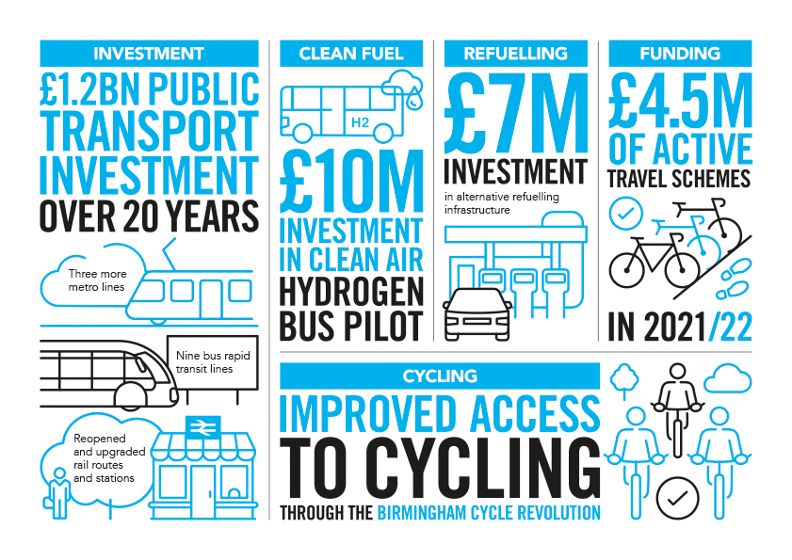
·         Supporting and implementing strategic transport improvements to continue work on delivering a £1.2 billion integrated public transport network within the next 20 years. This will incorporate three more Metro lines, nine cross-city bus rapid transit lines, reopening and upgrading rail routes and associated stations.

·         Promoting behaviour change away from single occupancy private vehicle use through improving public transport

·         Supporting behaviour change and promoting an increase in cycling through the Birmingham Cycle Revolution.

·         Promoting the use of alternatively-fuelled vehicles to reduce both air pollution and carbon emissions from transport

·         Providing the refuelling infrastructure to support private and personal decisions in choice of new vehicles as well as accessing grant funding to replace, upgrade or retrofit existing vehicles in key service areas.

·         Using traffic management solutions to improve air quality by reducing numbers of vehicles, smoothing traffic flow or holding queues and congestion away from relevant exposure locations.

The findings in the report also reaffirm the need for a Clean Air Zone to deliver air quality improvements in the city centre region.

Birmingham City Council’s Head of the Clean Air Zone, Stephen Arnold said: “Birmingham currently has unsafe levels of nitrogen dioxide, and we know this has a detrimental effect on the health and life expectancy of our citizens.


“The Clean Air Zone is a significant first step in tackling this issue, but – as this plan has shown – other actions must be taken alongside its implementation if we are to make meaningful improvements to air quality. We are already well on our way to delivering some of the priority actions in this plan, which align closely to the ambitions in Birmingham’s Clean Air Strategy and Route to Zero Action Plan.”

The Air Quality Action Plan also sets out a strategy for assessing air quality in key areas around the city, with an ambition to install six new air quality monitoring stations by December 2021. Further assessments will help to identify areas of poor air quality in Birmingham, the causes and what appropriate action can be taken to help improve it.  

The Air Quality Action Plan 2021 was consulted on from 21 September – 2 November 2020. 

Some people fret about every niggle and twinge, while others like to bury their heads in the sand when it comes to seeing their GP, and it is often difficult to know when an ache, lump or bump warrants a check-up.

The coronavirus pandemic has only added further uncertainty to the equation, with many people either anxious about visiting their doctor or worried that they would be taking up capacity from those who need attention more urgently. However, if you’re suffering from unexplained or concerning symptoms, it’s important to seek medical advice.

Cheryl Lythgoe, Matron at Benenden Health, shares 10 good reasons to see your doctor, at a time when individuals may be reluctant to do so. Here are 10 symptoms that might pass you by but deserve your attention – and that of your doctor.

1. Weight loss

For those of us who carry a few extra pounds, life can feel like a never-ending treadmill of dieting and exercise. To lose weight, your body must be burning up more energy than you are eating – and if you haven’t cut back on food or upped your exercise levels then something else must be causing it.

There are dozens of potential reasons: from digestive problems, to infection, to depression or anxiety. Unexplained weight loss can even be caused by an undiagnosed cancer, so always go to see a doctor if you start to shed pounds unexpectedly.


2. Nodding off at the drop of a hat

If you never feel refreshed, even after a good night’s sleep, or find yourself regularly dozing off in the daytime then you should see your GP.

In the UK, an estimated 750,000 people are unknowingly affected by a problem known as obstructive sleep apnoea – or OSA. The condition makes you feel perpetually exhausted and increases the risk of heart problems.

OSA isn't the only condition to look out for, however. These symptoms could also indicate other conditions like anaemia or thyroid problems. Your GP can give you a blood test to check for this.


3. Chest pain

Countless TV dramas and films have taught us to instantly know that a character who grips their left arm, winces with crushing chest pain and collapses to the floor has just had a heart attack.

In real life it isn’t always this way and, conversely, sometimes even the most distressing of chest pains are harmless. When the heart is starved of oxygen due to a heart attack or angina, it typically feels dull and heavy; sometimes a bit like ‘an elephant sitting on your chest’.

It usually gets worse with exercise and stress, can move into either arm, and may be accompanied by sweating and/or breathlessness. Reach for the telephone if you feel these symptoms because a medic may need to give you a clot-busting drug to reverse the problem.


4. A persistent cough

The lungs are one of the most vulnerable parts of the body, and the immune system is forever working hard to clear out the gunk and germs we breathe in every day, especially in smokers.

Whilst a new, continuous cough can be a symptom of COVID-19, if this is not the cause, a cough that goes on for two weeks or brings up blood should always be assessed by a doctor. Smokers and ex-smokers need to be especially conscious of getting long-standing coughs checked out without delay.


5. Yellowing skin

What’s in our blood can sometimes show in our skin - vegetarians and those who love their greens tend to have an orange-ish hue to their complexion, but if someone notices that you are looking a bit yellow around the gills then visit your doctor.

When the liver isn’t working at full capacity, a banana-coloured substance called bilirubin accumulates in the blood, which shows up in the skin. It also makes the whites of your eyes look a bit golden.

6. Headaches

Around 10 million people in the UK get headaches regularly, and nearly everyone suffers one at some point.

The most common – tension headaches – are fairly short-lived and are typically brought on by lack of sleep, stress, hunger, not drinking enough water or too much caffeine. They can be treated with paracetamol and/or ibuprofen. A severe throbbing headache at the front or side of the head may be a migraine which, while not life-threatening, is deeply unpleasant and needs prompt medical attention if not previously diagnosed. A sudden, blinding headache always needs immediate attention.


7. A new or growing mole

Spending time outdoors in the summer is vital for getting a good dose of the bone-strengthening vitamin D, but too much sun has a darker side.

Excessive sunbathing and increased use of tanning salons has led to rates of malignant skin cancer (melanoma) sky-rocketing in recent years: six people now die of melanoma in the UK every day. If you catch a skin cancer early, however, it can be removed without any lasting harm.

Check yourself every few months for new moles or freckles – even in winter. Any mole that has got larger, is itchy or bleeds, has raggedy edges or is made of different shades of brown should be shown to a doctor.


8. Flashes and floaters

Everyone sees things that aren’t real sometimes. Look at a bright white wall or stare up at a blue, cloudless sky and you will probably be able to spot some odd black wispy blobs floating across your vision.

These are perfectly harmless ‘floaters’, caused by tiny, near-transparent fragments of old tissue that have broken off from the back of the eye and are swimming around in the fluid inside the eyeball. A sudden ‘shower’ of lots of floaters may be the first sign of a retinal detachment or a retinal tear, which means that the delicate, light-sensitive sheet of tissue at the back of the eye is starting to peel away.

Getting help quickly means an eye doctor can fix the problem by ‘gluing’ the retina back in place with a surgical procedure.


9. Altered bowel habit

At least one in five of us gets a tummy bug each year, and most cases settle down quickly without ill effects.

 If, however, you are regular as clockwork and notice that you are going more or less frequently than normal for more than a few weeks then your doctor will want to know about it. For anyone aged over 60, current medical guidance states that any change in bowel habit warrants testing.

If stool is very dark or black, sticky, or contains blood, then it is even more important to get an appointment as soon as you can.


10. Back pain

Back pain is the bane of so many of our lives and is the number one cause of work absence but is rarely caused by anything serious.

Your GP or a physiotherapist can give advice on dealing with long-standing back pain, but there are some types of back pain that need swift medical advice. See a doctor as soon as possible for back pain that doesn’t improve with rest, is worse at night, or is accompanied by chest pain or fever.

Numbness or tingling around the groin or buttocks, losing control of your bladder or bowels or finding it difficult to urinate might mean the nerves at the very base of the spine have become trapped, and so require urgent attention. This list of symptoms is not exhaustive and there are of course plenty of other reasons why you should see your doctor.

If you notice any sudden changes in your body or health, be wary of investigating your concerns online as this is likely to bring up inaccurate information. Instead, make a GP’s appointment or call the NHS’s non-emergency line, 111.


Midlands Air Ambulance Charity (MAAC) has had a successful start to its Air30 Airbase Challenge with participants clocking up more than 12,000 miles of walking, running and cycling.

The local, lifesaving charity has seen its latest fundraising initiative take off with individuals and teams already signed up having pledged to cover more than 12,000 miles by challenging themselves physically. That’s the same distance which would be covered by travelling from the UK to Antarctica.

This has spurred the charity on and it now wants you to get involved and push that total to 15,000 miles by the time the challenge finishes on 31st May 2021  ten days after the charity’s 30th anniversary.

As well as being a physical challenge, which has drawn the attention of the charity’s former patients, volunteers and supporters, this activity helps to address the challenge of raising vital funds for the lifesaving service which attends an average of 13 missions each day. So far, in excess of £36,000 has been raised funding a total of 40 missions – 12 air ambulance and 28 in the charity’s two critical care cars which attend patients suffering from medical issues like strokes, cardiac arrests, heart attacks and convulsions.

Emma Gray, fundraising and marketing director for Midlands Air Ambulance Charity, said: “It’s been really exciting to see this fundraising initiative grow. We would like to thank everyone who has got involved already for their support in completing the challenge and raising vitally important funds for our rapid response, pre-hospital emergency service.

“However, reaching a record of 15,000 miles would give us a really great boost during 2021 and our ‘Air30’ anniversary year. With the nights getting lighter, warmer weather on the way, and some restrictions set to be lifted in the coming weeks, we hope more and more people will be encouraged to help us make future missions possible.”

Patients are being urged to make sure they know where to go for medical help and advice during the long Easter weekend.

With GP surgeries closed on Easter Monday (April 5), it’s important that patients across Birmingham and Solihull know their options. For any urgent health concerns, patients should think 111 first. Anyone can call NHS 111 or visit 111.nhs.uk and trained advisers will be able to offer advice, direct to the most appropriate service such a walk-in or urgent care centre or book a timeslot at A&E if needed.

Dr Rizwan Alidina, a local GP and member of NHS Birmingham and Solihull Clinical Commissioning Group’s Governing Body, said: “There are lots of options available to patients this Easter weekend to ensure they receive the right help when they need it.

“If you have over-the-counter medicines in your medicine cabinet, you should be able to treat common health issues such as colds, coughs, sore throats and headaches at home, or you could speak to your local pharmacist for advice. If you are not sure where to go, then you can always call NHS 111 or visit 111.nhs.uk online 24 hours a day, seven days a week.”

Some of the 300 pharmacies across Birmingham and Solihull will also be open to offer advice and guidance on medicines and minor illnesses, and to help signpost to further help if needed. Patients can find their nearest open pharmacy by visiting www.nhs.uk. Some GP practices may also be offering extended access appointments, or patients can call their practice as normal to hear what local arrangements there may be for out of hours care.

If a patient required urgent dental care on weekends or any Bank Holiday, they will need to contact 111. Out of hours providers are available via this route and can help where appropriate. It’s important anyone with urgent dental care needs who already has a dentist contacts their usual practice during normal hours if possible.


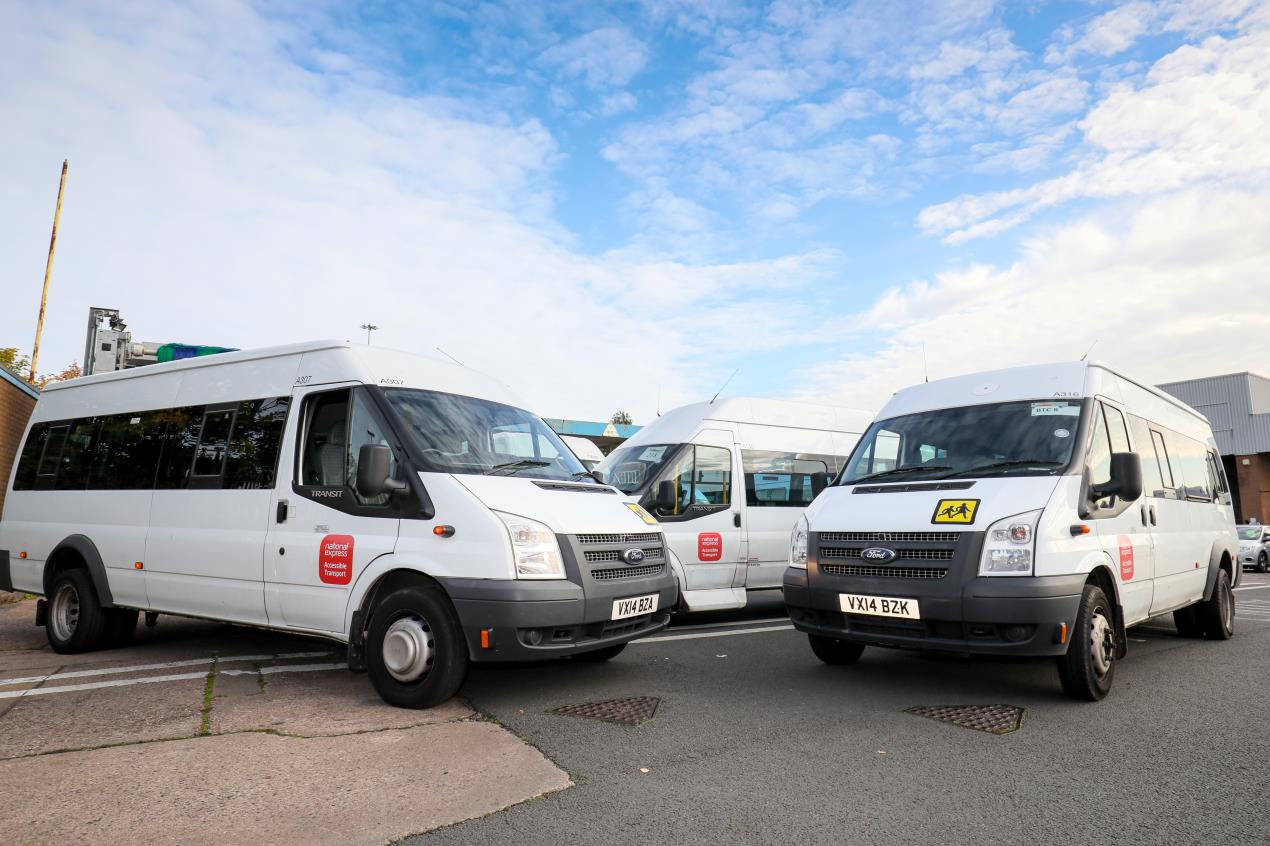
Free NHS shuttle bus services set up last year to support hospital staff during the Covid-19 pandemic are to return to their regular Ring and Ride service later this month. Transport for West Midlands (TfWM) redeployed the fleet of Ring and Ride minibuses to help get hospital staff to and from work last April – at the height of the first wave of the pandemic.

They have been providing the service for ‘NHS Heroes’ ever since but with lockdown restrictions now starting to be lifted and more train, tram and bus services being reintroduced for key workers and the wider public, the shuttle buses are set to return to normal duties from April 12. This decision has been taken in consultation with the NHS.

In total the service has provided more than 39,700 trips and at its peak was providing nearly 1,150 trips each day. In recent weeks there has been a significant decline in the number of users. At the same time, many regular Ring and Ride customers who spent much of the last year locked down or isolating have also now been vaccinated.

With the relaxation of lockdown, demand for the service is expected to return quickly. The Ring and Ride service is run by National Express Accessible Transport (NEAT) under contract from TfWM and provides door-to-door transport for anybody who finds it difficult to use regular public transport.

Linda McCord, chair of the West Midlands Bus Alliance, said: “The NHS shuttles provided a much needed service for hospital staff during the darkest days of this pandemic. We were delighted to provide this support for the last year.

“But as restrictions are lifted, with non-essential shops opening, outdoor socialising now allowed, and Ring and Ride users feeling more able to get out and about, the minibuses will be returning to their original duties from April 12. We would like to take this opportunity to thank all NHS staff for their hard work and dedication in the region during the last 12 months and we hope that the provision of the shuttle buses have gone some way to supporting them to undertake this heroic effort.

“We would also like to thank the NEAT drivers for stepping up to support the NHS over the last year.” The NHS shuttle buses have been running at New Cross Hospital, Wolverhampton, Russells Hall Hospital in Dudley, Walsall Manor Hospital and Good Hope Hospital in Sutton Coldfield.

Managing director of National Express Accessible Transport, Vinay Parmar, said: “I’m incredibly proud of our NEAT drivers and teams who have helped our local NHS heroes over the last 12 months. They have worked so hard to keep our communities safe and well during what has been a very difficult year.

“Our Ring and Ride service has continued operating throughout the pandemic and as restrictions ease and more shops and attractions start to open up, we are looking forward to welcoming many more of our customers back onboard to help them to get out and about this spring.”

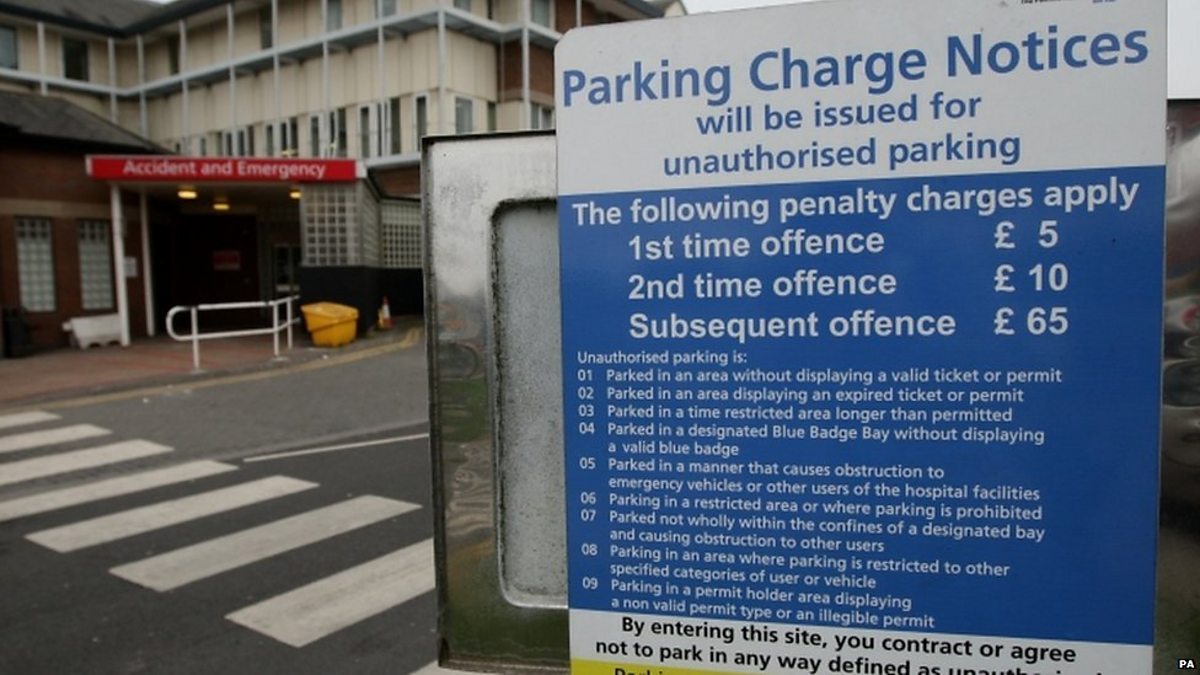
Over 20,000 NHS hospital staff in the West Midlands will receive parking refunds after a campaign by UNISON. 

The U-turn by University Hospitals Birmingham (UHB) NHS Foundation Trust follows a challenge on behalf of 6,000 health workers by the union against the charges. Some employees could now get up to £800 each backdated to last August when UHB scrapped a commitment to offer free parking during the pandemic.  

UNISON - the UK’s largest union, with more than 1.3 million members providing public services in education, local government, the NHS, police service and energy - says UHB has also agreed in principle to suspend further deductions until June. This is when the government is expected to lift all Covid-19 lockdown restrictions.

The Department for Health and Social Care informed all trusts last March that they would receive immediate financial backing to provide free parking. However, UHB reimposed charges over the summer and used the extra funding elsewhere.  

UNISON says the parking fees were an unfair levy on hardworking staff who were paying upwards of £100 a month. 

UNISON West Midlands regional organiser Chanel Willis said: “These charges were unfair, inappropriate and essentially a tax on staff who have given their all during the pandemic.   


“UHB shouldn’t have been charging employees for coming to work so everyone else could stay safe. UNISON is glad the Trust has seen sense and promised to refund the money.  

“Hard-pressed staff should have been due a pay rise today and will appreciate the extra cash in their pockets.” 

A Black Country man is fundraising to honour his wife’s memory after she lost her life to coronavirus just as the pair were about to become adoptive parents.

Geeta Kalsi, aged 45, who worked as a customer service manager at Tesco in West Bromwich, tested positive for Covid-19 in January this year and died in hospital five days later. Now her heartbroken husband, Harjinder Kalsi, aged 41, of Bilston, has embarked on a fundraising campaign for adoption charities in Geeta’s memory and wants to encourage more people from black, Asian and ethnic minority backgrounds to consider adoption – especially amongst the South East Asian community.

Harjinder, a call handler with Staffordshire Police, said: “Geeta was the warmest, kindest and most caring person you could ever meet, she was the light of our lives. Her family have lost a sister, a daughter, an aunt. Her work has lost a colleague and a friend, I have lost my wife, my partner, my soul-mate.

“We both wanted to be parents, it was her dream to become a mum, she would have been an amazing mum and when we couldn’t conceive naturally, we decided to pursue adoption rather than the intrusive procedures of IVF. We were so close to achieving our dream together, we had been through the process with Adoption@Heart and were looking forward to welcoming a child into our lives. We had decorated the house and created a nursery in anticipation.

“Then in January, we became unwell with Covid, Geeta was admitted to hospital and within just a few days she passed away. It was so sudden, so unexpected, nothing can prepare you for it and I still don’t think I have been able to grieve or come to terms with it. When Geeta died I felt like my dreams and my future died with her. The life we were planning together as parents was over.

“It is still incredibly raw, but what is keeping me going now is to do something positive in Geeta’s memory – something I know she would want me to do. I’m raising money for an adoption charity and I also want to get the message out there to encourage people to adopt – to tell them that the process is not as scary and daunting as they might think. Too often people think of adoption as a last resort, but I want people to think of it as a first resort. If you want to be a parent, you can fulfil that dream through adoption and at the same time give a life full of love to a child who has not had the best start in life.”

Harjinder and Geeta had always wanted to be parents. After struggling with fertility and deciding IVF was not the right path for them, they looked into adoption and got in touch with Adoption@Heart, the adoption agency run by the four Black Country councils, in early 2020. They were approved as adopters and were looking forward to welcoming home a child.

Tragically, the pandemic has not only taken away Harjinder’s wife, but also their dreams of starting a family. Fundraising efforts so far have mainly come from Harjinder and Geeta’s work colleagues, as well as donations from family and friends. A total of £2,800 has so far been raised in memory of Geeta and Harjinder hopes to raise much more by telling his story.

Harjinder is also keen to encourage more people to adopt, especially amongst the British Asian community. He said: “There is a stigma with some people in the Asian community around adoption, with many people not really understanding the process and those who are worried about what others may think. In fact, it took us a while to tell friends and family we were adopting, however once we did, everyone was very supportive.

“There are a lot of fears, myths and misconceptions within the community and I want to really get the message across that adoption is for everyone, there is no stigma or shame attached to it and within the Asian community, we should talk about it and consider it as a way of enabling people to fulfil their dream of becoming parents. There are so many children who need families, and so many people who want to be parents, so it’s about educating people that adoption can be your first choice, not your only choice.”

As a regional adoption agency run on behalf of local authorities, Adoption@Heart was honoured but unable to accept Harjinder’s fundraising donation, however, it put him in touch with Adoption Focus, a voluntary adoption agency in the region who it frequently works in partnership with.

Adoption Focus is a dedicated and experienced adoption agency that specialises in recruiting, assessing and approving adopters – it then works with Local Authorities to place children with them. It is working closely with Harjinder and Adoption@Heart to decide how the money should be spent.

Mark Tobin, Adoption@Heart head of service said: “We were incredibly sad to hear of the passing of Geeta and our thoughts and sympathies go out to her friends, family and her husband Harjinder.

“Everyone you speak to at our agency about Geeta, always remembers her as a happy, friendly and caring person. I know the money Adoption Focus will receive will make an amazing difference to the children and families they support, helping the most vulnerable children in our society achieve a happy and secure childhood.

“We will do all we can to help Harjinder honour his wife’s memory and support Harjinder at this incredibly difficult time.”

Anna Sharkey, chief executive officer at Adoption Focus, said: “All the staff at Adoption Focus would like to extend our deepest sympathies to Harjinder for the loss of Geeta. We’re extremely grateful to Harjinder for choosing to pay tribute to Geeta’s memory by raising funds for a generous donation toward the support we provide for adopters in the region.  

“Adoption Focus is also fully supportive of his drive to encourage people of Asian heritage to consider adoption and are looking forward to welcoming any adoption enquiries that we receive as a result of this.” Anyone can adopt, whether they are single, living together, married, a same-sex couple, in employment or not working, or already have children or not. Potential adopters must legally be a UK resident and have been so for at least 12 months, as well as being aged 21 or over.

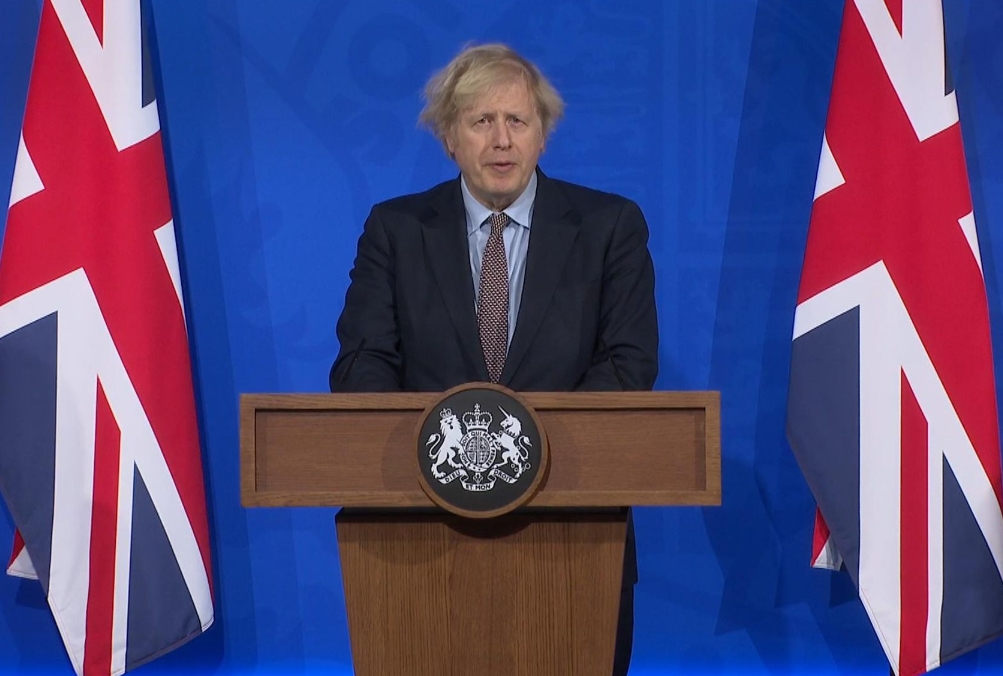
Tens of millions of doses of the Novavax vaccine are to be produced in the North East in England for use in the UK, the prime minister has announced.

Boris Johnson said a deal had been agreed with GlaxoSmithKline (GSK) to support the manufacturing of up to 60 million doses of the vaccine, which is yet to be approved. They will be manufactured at the Fujifilm plant in Stockton-on-Tees.

GSK will finish and bottle them at its facility in Barnard Castle. The pharmaceutical giant said it hoped the "fill and finish" processing can begin as early as May.

Novavax is currently being assessed by the Medicines and Healthcare products Regulatory Agency. The biotech company behind it, also called Novavax, recently announced its vaccine was 86% effective against the Kent variant of Covid-19 and 96% effective in preventing cases caused by the original strain.

Mr Johnson said: "I'm delighted by GSK's investment, which shows the strength of UK manufacturing, and will further boost our vaccine rollout. The Vaccines Taskforce has worked hand in glove with business to successfully deliver vaccines to the whole of the UK, and this agreement will continue to support our approach.

"We remain on track to offer a first jab to all over 50s by 15 April, and all adults by the end of July, and I want to once again encourage everyone to come forward for a vaccine when you're called."

Pubs and restaurants serving outside can reopen as planned next Monday, along with non-essential shops, gyms and hairdressers, as England's lockdown is further eased, the PM has said. But Prime Minister Boris Johnson urged caution, saying: "We can't be complacent."

Officials were examining the potential role of Covid status certificates, he told a Downing Street briefing. Pilot events will take place from mid-April to trial the system, with later events checking vaccinations.

He also said the government was hopeful international travel could resume in the next stage of lockdown easing on May 17, but cautioned against the effects of the surge of coronavirus in other parts of the world. He said the government would set out well before May 17 what is reasonable and aim to give the aviation industry as much notice as possible.

It comes as the government has published an update on a series of reviews into Covid certificates, the safe return of mass events, international travel and social distancing rules. In the document, the government says it cannot yet confirm international travel can resume on May 17 - given the state of the pandemic abroad - and advises people not to book summer holidays abroad until the picture is clearer. It also confirms further details on a risk-based "traffic light" system for foreign travel will be published in a report later this week.

On Covid status certification, the paper says such a scheme could have an important role to play both domestically and internationally and is likely to become a feature of our lives until the threat from the pandemic recedes. A certification scheme could record whether people had been vaccinated, recently tested negative or had natural immunity and is seen as a possible means of enabling mass-audience events to take place in the future.

The NHS is working on digital and non-digital ways for individuals to demonstrate their Covid status, according to the government paper, but there were no details on whether this might include using an app. More than 40 Conservative MPs have signed a cross-party letter opposing the use of vaccine passports for access to jobs or services, with critics calling such a move discriminatory.

PM Johnson said the question of a Commons vote was taking too many fences at once, and that the government needs to work out its proposal. He stressed that certification would not be introduced either for the April 12 lockdown easing or for the planned further changes from 17 May that would see pubs and restaurants serving customers indoors.

But he said: "The idea of vaccination status being useful for international travel is something that all countries are looking at. I do think that's going to be part of the way people deal with it and we need to think about that." The government's review said that public transport and essential shops and services would never require Covid status certification, but it could play a role in allowing people to return to theatres, nightclubs, and mass events such as festivals or sports fixtures.

It is also possible that requiring customers to prove their status could play a role in reducing social distancing requirements in other settings which people tend to visit more frequently such as pubs and restaurants, the document states. The government said this would be considered in consultation with the industry, and that businesses should continue to plan to reopen in line with the latest guidance.

Tory former chief whip Mark Harper, leader of the Covid Recovery Group of lockdown-sceptics, has called for Parliament to be given a vote on vaccine passports, warning they would lead to a two-tier Britain. Meanwhile, the Confederation of British Industry said firms would need help to navigate ethical, legal and practical implementation challenges around status certificates.

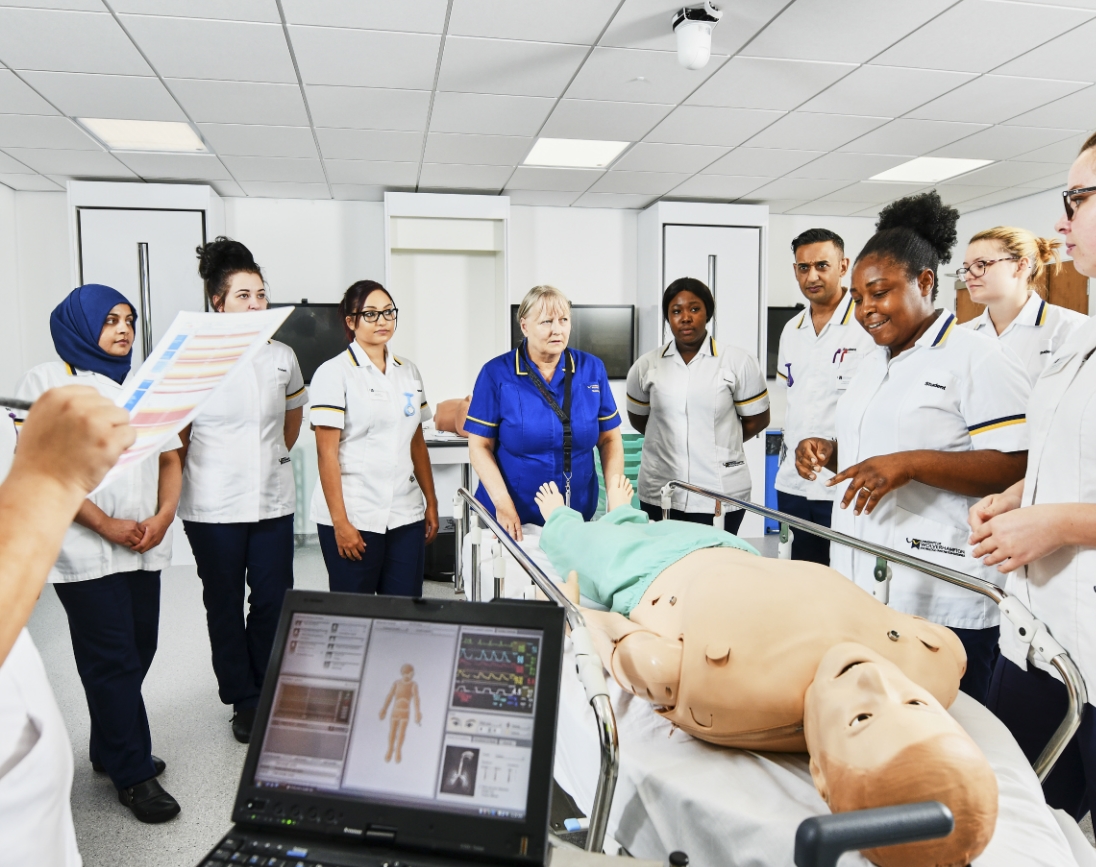
Apprentices at the University of Wolverhampton studying for Nursing Associate Foundation Degree Apprenticeships have attended a virtual celebration in recognition of their learning achievements during the challenges of the pandemic. 

61 Nursing Associates have passed the two-year Apprenticeship and will attend graduation ceremonies later this year when lockdown restrictions are lifted. The ‘Virtual Celebration’, which was held on Zoom, was attended by Apprentices and their employers as well as staff from the Institute of Health. 

The Higher Apprenticeship bridges the gap between healthcare support workers and registered nurses to deliver hands-on, person-centred care. The successful Apprentices are now members of the nursing “family” who, as part of their Apprenticeship, can gain a Nursing Associate Foundation Degree and are eligible to apply to join the Nursing and Midwifery Council (NMC) register. 

The role was introduced to help build the capacity of the nursing workforce and the delivery of high-quality care, while supporting registered nurses and wider multidisciplinary teams to focus on more complex clinical duties. The University has over 200 Nursing Associate Apprentices working on the frontline during the Covid-19 pandemic in a variety of healthcare roles for NHS Trusts and Care Homes across the region and further afield. 

Nicky Westwood, Director of Apprenticeships at the University, said: “Now, more than ever, we have seen the importance of upskilling keyworkers who are providing support for nursing teams as they continue to deal with the pandemic across our local communities. Three years after the new qualification was introduced, two Apprenticeship cohorts have successfully reached their end point assessment and will graduate later this year, an amazing achievement for all those individuals who have been inspired to take the opportunity to further their careers in the healthcare sectors.” 

Apprenticeships Manager at Cygnet Health Care who had 31 Apprentices studying at the University, Suzanne Smith, said: "We are so proud to see our Nursing Associates graduate and it’s wonderful to celebrate their achievements today with them. 

“The past year has been unlike any other and nurses have rightly been praised, appreciated and celebrated for their unwavering commitment to caring. The dedication and professionalism our graduates have shown is nothing short of remarkable and I wish them every success as they take their next steps into their nursing career. Thank you for the support and guidance of the team at the University of Wolverhampton who have enabled our Apprentices on their career journeys. 

"Apprenticeships really do unlock opportunities and I am truly proud to see how Cygnet values its staff to help them reach their true potential." 

Chris Longshaw, Nursing Associate graduate at Cygnet, said: “Throughout the programme, I felt supported every step of the way – through my mentor, my nursing colleagues, and the manager. They always pushed me to be the best that I could be. 

“There is not a thing that I would have changed about my Apprenticeship journey. Starting out as a Support Worker, the programme has developed my practical skills and has given me a greater understanding of inpatient care. Having a regular place of work to build my knowledge and skills was invaluable.” 

Practice Placement Facilitator for Nursing Associate Apprenticeships, Royal Wolverhampton NHS Trust, Phrechie Estoya, said: “We are so proud of our Apprentices and their achievements, especially this past year which hasn’t been a smooth journey.  Through loss and setbacks, the Apprentices have stayed afloat and they can cherish this day as the start of a new horizon.  All of these students are truly patient advocates.” 

Kiera Matthews is the first member of her family to graduate and works in Orthopaedics at New Cross Hospital, Royal Wolverhampton NHS Trust, who funded her studies through the Apprenticeship Levy. She said: “I’ve had lots of support from the University and my employer.  It hasn’t been an easy road to the finish-line but I always wanted to do better and I enjoy learning. I am extremely proud to say that I now have a degree with distinction and my NMC PIN. 

“I’ve made lots of friends, the module leads and tutors go out of their way to support you.  I’m looking forward to continuing to develop new skills in my new role as Nursing Associate and the wide-ranging responsibilities that go with that.” 

Tributes have been paid to Councillor Sandra Hevican who has sadly passed away.

Cllr Hevican had been in hospital for some weeks after testing positive for Covid-19 last month (February) and becoming seriously ill. Age only 55, she was first elected in 2014 and represented the Tividale ward.   

Deputy council leader Councillor Maria Crompton said: "Sandra was a hardworking councillor, and a very good friend and a dear colleague to many people.

"She was a lovely lady and so helpful to everyone. This is heartbreaking and we will all miss her so much. Our thoughts are with Councillor Hevican’s family, friends, colleagues and fellow councillors at this very difficult time."

Cllr Hevican's most recent positions within the council were Vice Chair of Planning, Member of the Ethical Standards and Member Development Committee and also a Member of the Audit and Risk Assurance Committee. She has sat on other various committees and panels during her terms of office.

These included Vice Chair of Safer Neighbourhoods and Active Communities Scrutiny Board, the Housing, Jobs and Economy Scrutiny Board, Rowley Regis Town Improvement Board and the Children’s Services and Education Scrutiny Board.

A charity in Moseley, in Birmingham, that has worked hard to ensure elderly people with disabilities are not forgotten during the pandemic has received a funding boost from one of the country’s leading housebuilders.

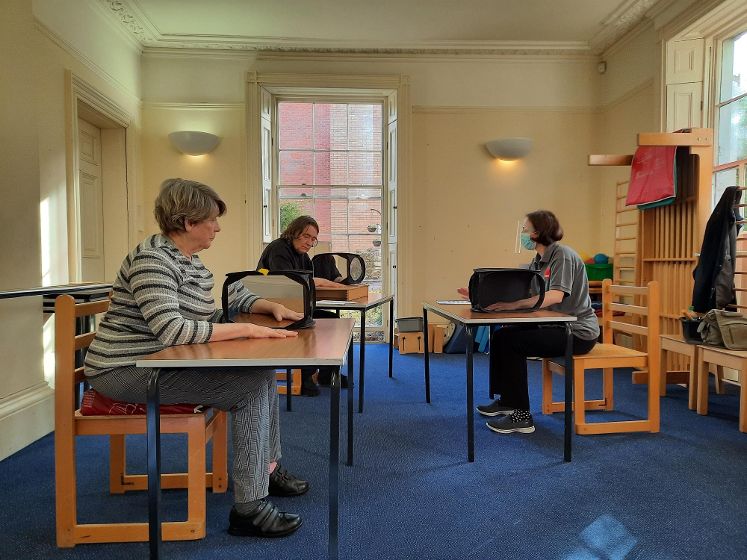
A donation of £1,000 has been made to The Foundation for Conductive Education by Persimmon Homes through its Community Champions scheme, a national programme where charities and groups can apply for funding. If a person finds that, due to a neurological problem, their movements are compromised, lacking or difficult to perform Conductive Education may be able to help.

Annie Smith, from the charity, said: “We deliver this system for the adults we support through our Road to Wellness project. We teach adults with conditions such as Parkinson’s, stroke, MS and cerebral palsy to gain greater control of their movements.

“We provide a full range of flexible services to meet individual needs, which are now even more complex due to Covid-19. We are raising funds to continue providing services for these people and crucially, we anticipate higher demands for Conductive Education to continue throughout 2021.

“Many adults have been diagnosed with a neurological condition during lockdown, while at the same time many hospital and community services such as physiotherapy, occupational therapy, speech and language therapy have been postponed. We know first-hand the devastating effects isolation and shielding measures have had on the over-70s living with disabilities, and we are preparing for even more adults who need our help to get them moving better with more control and confidence.”

NICE, the organisation based in Moseley, Birmingham, is based on a belief of human potential where people with neurological motor disorders have the capacity to learn and develop skills through structured teaching and learning programmes designed and delivered by professionally trained conductors.

One of the adult participants had this to say about the service: “Thank you for the continuing support. When the face-to-face sessions ended, I noticed the negative impact it had all-round including on my mobility.

“When the remote sessions started it was such a relief, helping improve, among other things, my mobility and posture again. Being able to see other group members and the conductors also helped to lift my mood through this isolating period.” Sarah Preston, sales director for Persimmon Homes Central, said: “We are delighted to be able to support such a worthwhile service.”

As the number of people returning to the workplace increases, Public Health England (PHE) in the West Midlands is urging employers and their workers to do all they can to break the chain of COVID-19transmission between homes and workplaces. PHE’s regional Health Protection Team and local authority public health partners are witnessing a cycle of COVID-19 transmission, where infection in the home is introduced to colleagues at work, and infection in the workplace is brought back to families and housemates; with shared travel to work also a key risk factor.

Kate James, workplace lead at Public Health England (PHE) in the West Midlands said: “While England is still in lockdown, the advice is to work from home where possible. Although the numbers of COVID-19 cases in the West Midlands are reducing, we continue to see outbreaks at work, notably manufacturing and office environments, and in households. There are things we can all do to break this chain and keep our families, colleagues and, if you are a business, your employees safe.

“Firstly, regular testing is vital; I urge all employers in the West Midlands to hurry and sign up for free coronavirus Lateral Flow Tests under the Government’s workplace testing scheme, before the registration deadline of March 31. Test kits, support, training and standard operating procedures will be provided by NHS Test and Trace. Businesses of any size can sign up at www.gov.uk/get-workplace-coronavirus-tests. The advantage is that individuals receive their results within an hour, and if anyone does test positive, they can self-isolate immediately and protect their colleagues, their household and reduce the risk of an outbreak in the workplace.”

Local authorities across the region are supporting businesses rolling out testing. When businesses do register, it is helpful if they also register with their local public health departments, once they have received confirmation of their acceptance onto the testing programme.

Kate said: “For employees in the workplace, if your business does not have workplace testing it is important that you get tested regularly, twice a week is advised. You may not have symptoms and be oblivious to having COVID-19, but you could still spread the virus to others. Local authorities across the West Midlands have set up testing facilities, and you will be able to find the one nearest to you on your council website.

“Hands, Face, Space is key to protecting against the virus in all areas of life, whether at home or at work. Most businesses have excellent procedures in place with clear demarcation for social distancing and clear advice to the workforce, plus increased access to handwashing and sanitising stations.”

PHE West Midlands Health Protection Team impresses upon employers how important it is to use PPE in the workplace, especially when employees are moving away from their personal workstation or around the building, and to divide workforces into smaller teams, with physical barriers if necessary.

Kate James added: “Establishing work bubbles is an important measure to limit transmission and workers going into isolation, if there is a positive case. Where it is difficult for employees to socially distance, the use of plastic dividers between workers is a helpful infection control measure. When people leave their workstation for a break, lunch or to visit smoking areas, they need to remember to stick to the Hands, Face, Space guidance. Once you leave work, you must continue to take care; we have seen examples of people catching COVID-19 from colleagues by stopping to chat on the way to the work car park.

“The safest way to get to work is walking or personal transport, if this is possible. If you must use public transport, you must wear a face covering unless medically exempt, and sanitise hands soon after leaving the bus or train. For people who find it necessary to car-share, the advice is to maximise the distance between people in the vehicle, open windows for ventilation, wear a facemask, and clean the car between journeys - focusing on door handles and other touch points. Also keep to the same ‘travel bubble’, preferably with people from your household (if appropriate) or people from your work bubble.

“Finally, do take up the offer of the vaccine. The vaccine, together with regular testing and Hands, Face, Space is our ticket out of restrictions.”

The Duke of Sussex is to become chief impact officer at the US coaching and mental health firm, BetterUp.

In a statement Prince Harry mentioned his excitement about taking on the new role. His exact duties, hours and any payment are not clear. It is his latest job move after he, and his wife the Duchess of Sussex, stepped back as senior royals last year.

It also comes after the couple recently gave their explosive interview to chat show queen, Oprah Winfrey – in which they mentioned a royal family member who had questioned how dark their son Archie's skin might be, before he was born. Buckingham Palace has said the claim is concerning, but it will be addressed privately.

Earlier this week, Buckingham Palace said a diversity review was under way across all royal households. In his statement, Prince Harry said his goal in his new function would be to "lift up critical dialogues around mental health, build supportive and compassionate communities, and foster an environment for honest and vulnerable conversations".

Prince Harry will not manage employees or have people report directly to him, but he is likely to spend some time in the company's San Francisco headquarters once it is safe to do so, BetterUp CEO Alexi Robichaux told the Wall Street Journal (WSJ). In his role as the company's first chief impact officer, Prince Harry is expected to have input into initiatives including product strategy decisions and charitable contributions, and advocate publicly on topics related to mental health, the WSJ reports.

Prince Harry said that when he met Mr Robichaux, they instantly recognised a shared passion for helping others realise their full potential. The chief impact officer position is relatively rare in the corporate world, notes the WSJ - it is seen more commonly in non-profit organisations such as Amnesty International.

BetterUp, which was founded in 2013, provides mobile-based professional coaching, counselling and mentorship. The firm says it has some 2,000 coaches offering services in 49 languages in 66 countries.

Prince Harry has previously launched initiatives such as the Invictus Games, which aim for members of the armed forces to use sport for psychological and physical rehabilitation. He has also advocated publicly on mental health issues. Harry and Meghan now live in California after confirming that they would step back as "senior" royals and work to become financially independent.

They announced last year that they had reached a deal with streaming giant Netflix to make a range of programmes, some of which they may appear in, as well as striking a deal with music streaming service Spotify.

Following on after the day that the nation reflected on one year since the first stay-at-home order of the Covid-19 pandemic, the British Psychological Society is calling for the psychological needs of healthcare staff to be front and centre of the nation’s recovery.

Coronavirus has cost more than 140,000 lives in the UK over the last year. The toll is unimaginable, and the effects so wide reaching that there is no one in the country whose life has not been profoundly affected by the pandemic.

There are few groups that have been impacted as significantly as the healthcare staff working on the frontline to treat Covid-19 patients and keep the NHS functioning during an unprecedented period. Psychologists have played a central role in developing the NHS’s early initiatives on staff support in response to the pandemic, including new wellbeing hubs, and it is vital that psychological expertise is incorporated into all future developments.

The recent NHS staff survey results showed a further increase in work-related stress levels in the NHS, and likelihood of staff burnout is only going to rise as the effects of working through the pandemic become more apparent. Risks are particularly high for the 40.3 per cent of NHS staff who were already experiencing stress at work before the pandemic hit, and for those working in intensive care units with the sickest Covid-19 patients.

It is key that the focus is now on rebuilding the NHS as psychologically healthy and resilient, supporting staff wellbeing on a cultural and organisational, as well as individual, level. Dr Julie Highfield, consultant clinical psychologist in Wales’ largest critical care unit and wellbeing project director for the Intensive Care Society, said:

“One year on, I welcome the progress in involving psychologists in staff wellbeing initiatives, however much of the focus is on individual mental health. Although this is helpful in part, it’s not the whole picture. When I meet with staff what they describe does not fit neatly into common mental health pathways, it is the way chronic excessive workload has changed their relationship with work.

“If we just focus on mental health provision and individual resilience, we miss the systemic factors that contribute to the experience of work such as workplace culture, leadership and sufficient staffing, education, equipment, and facilities. As psychologists, we should also support workforce sustainability for a future healthier NHS and social care sector.

“We need to utilise the skills, knowledge and evidence base of Psychologists to help organisations to understand how to provide the core conditions to thrive at work, therefore reducing the risk of psychological harm.”

Dr Adrian Neal, chair of the BPS Division of Clinical Psychology’s Leadership and Management Faculty, added: “As we mark the first anniversary of the UK’s pandemic lockdown, it seems a natural opportunity to reflect, take stock of the impact and look forward.

“Right now we are seeing an exhausted workforce, an increase in grief, burnout and more acute mental health difficulties (though less than we had expected), as well as changes in how people are relating to their work, peers, communities, and employers. It is widely recognised that employee and organisational wellbeing is going to be vital to the sustainability of our public sector systems, and resources have been mobilised at pace in an attempt to mitigate perceived needs.

“Perhaps the most useful thing we can do as psychologists is to encourage a calm and evidenced approach to fully understanding and formulating the psychosocial impact the pandemic in all of its unfolding complexity. If we can do this, psychologists will play an important role in supporting both individuals and organisations in how they recover, adapt and grow in the years to come.”

The BPS’s Covid-19 Staff Wellbeing Group produced a document on ‘The psychological needs of healthcare staff as a result of the Coronavirus pandemic’. It calls on leaders and managers to provide:

• Visible leadership
• A clear communication strategy
• Consistent access to physical safety needs
• Access to pre-existing methods of peer support
• Formal psychological care in stepped ways
• Innovative but coordinated psychological care

The UK Committee for UNICEF (UNICEF UK) and Crowdfunder together launch the VaccinAid campaign, calling on the nation to ‘Give the World a Shot’ and help provide Covid-19 vaccines to people around the world.

VaccinAid will help fund the biggest vaccine drive in history, providing nearly 2 billion Covid-19 vaccines to health workers and the most high risk and vulnerable people on our planet, no matter where they live. The campaign aims to harness the public sense of spontaneous gratitude for the UK’s vaccine programme and mobilise the collective power of the nation, turning optimism into action to give the world a shot.

It’s not just people who have been vaccinated who can support – anyone can donate or fundraise at vaccinaid.org to help protect the world from Covid-19. Crowdfunder initiated the idea behind vaccinaid.org after seeing a huge number of people who needed support due to the pandemic fundraising on their platform. Through VaccinAid, people can now get involved with the drive to tackle the biggest global crisis since World War Two.

The money raised will help UNICEF purchase and deliver nearly 2 billion Covid-19 vaccines this year, as well as tests and treatments, to 190 countries around the world through the global COVAX initiative. It is the biggest health operation in history, to ensure no one is left behind in the efforts to eradicate Covid-19 and its devastating impact.

Supported by the NHS, leading faith groups including Church of England, Office of the Chief Rabbi and the Mosques and Imams National Advisory Board, businesses and celebrity supporters, the campaign aims to reach as many people across the UK as possible. VaccinAid and the ‘Give the World a Shot’ campaign was created by Mother, one of the world’s leading creative agencies.

Vaccines are essential to overcoming the Covid-19 crisis. With half of UK adults having had their first dose, now is the time to support communities in low and middle income countries around the world with equal and free access to protection against the virus.

David Harewood, UNICEF UK Ambassador said: “Everyone deserves the opportunity to feel safe, no matter where they live, and the aim of the VaccinAid campaign is to protect everyone from Covid-19. I’ve seen the amazing lengths UNICEF goes to getting vaccines to those who need it the most – in Sierra Leone I saw them arriving in cold boxes on boats, in the remotest part of the country, to make sure they reach the arms of even the hardest to reach communities. The sheer logistical operation of it all is staggering yet well established – but we can’t do it without the support of the public to fund this historic vaccine drive. I really do believe that no-one is safe until we are all safe, and one thing I’ve learnt from the past year living through this pandemic is that kindness and fairness has the power to do incredible things. So let’s celebrate what unites us and come together to Give the World a Shot.”

UNICEF UK Ambassador, Gemma Chan, said: “I am incredibly proud to support the VaccinAid campaign as I truly believe we have a shared responsibility to give everyone a fair and equal chance at a route out of this pandemic, and an opportunity for children and families all around the world to not only survive but thrive for years to come. This can only happen if we stand up and Give the World a Shot, and help give everyone a chance at a better life. As someone who has seen some of the incredible life-saving work that UNICEF does every single day in over 180 countries around the world, I can honestly say the money you give will make an incredible difference.”

The Archbishop of Canterbury, Justin Welby, who initially brought together the organisations working on this project, said: “The Covid-19 crisis has had a profound impact on people here and around the world, but vaccines offer the hope of a brighter future. I’m delighted that churches and other faith groups in the UK are supporting the VaccinAid campaign. There is no better way to show our deep gratitude for the gifts of science and medicine than making sure vulnerable people around the world are also given a shot. At the heart of the Christian faith is Christ’s call to love our neighbour: keeping one another safe from this terrible disease is part of living that out. I encourage people to donate whatever they can, so we can build a better world together.”

Interim Executive Director, UNICEF UK Steven Waugh, said: “The launch of today’s VaccinAid campaign comes at a historic moment for UNICEF in the delivery of Covid-19 vaccines around the world. Having so many organisations and high-profile individuals come together to show their support for the appeal gives us a real chance of unlocking vital funds that will enable UNICEF to fulfil its critical mission of protecting the world against Covid-19. I am incredibly excited to be asking the nation to ‘Give the World a Shot’ over the next few months, as here at UNICEF we know it will ultimately help save lives around the world.”

Rob Love, Crowdfunder CEO said: "Crowdfunder is proud to be joining forces with UNICEF to launch VaccinAid and support the biggest vaccine roll-out in history. Over the past year, we have seen a sharp rise in people fundraising for causes linked to the Covid-19 pandemic on our platform. Crowdfunder was created to help solve the challenges that governments and charities cannot tackle on their own, by bringing organisations and people together and enabling connections that help our global community. By launching VaccinAid with UNICEF to Give the World a Shot, we are harnessing the power of the crowd to help bring an end to the pandemic and its devastating impact."

Partner at Mother’s Andy Medd, said: “As longstanding partners of Crowdfunder it has never made more sense to get involved – there is no bigger need for creativity to have a positive impact than here and no better partner than UNICEF.” The money raised for VaccinAid will help UNICEF get vaccines to the most remote places in the world by ensuring they are safely stored and transported, protect and train health workers to vaccinate their communities as well as test and treat those in need.

UNICEF is the only global organisation equipped to deliver an operation of this size. With more than 70 years’ experience, it is the world’s largest vaccine buyer and already helps vaccinate almost half the world’s children, travelling to some of the most remote places on earth to deliver nearly 2.5 billion doses of life-saving vaccines every year.